Check out our cars fors sale

Plymouth Road Runner and Superbird For Sale

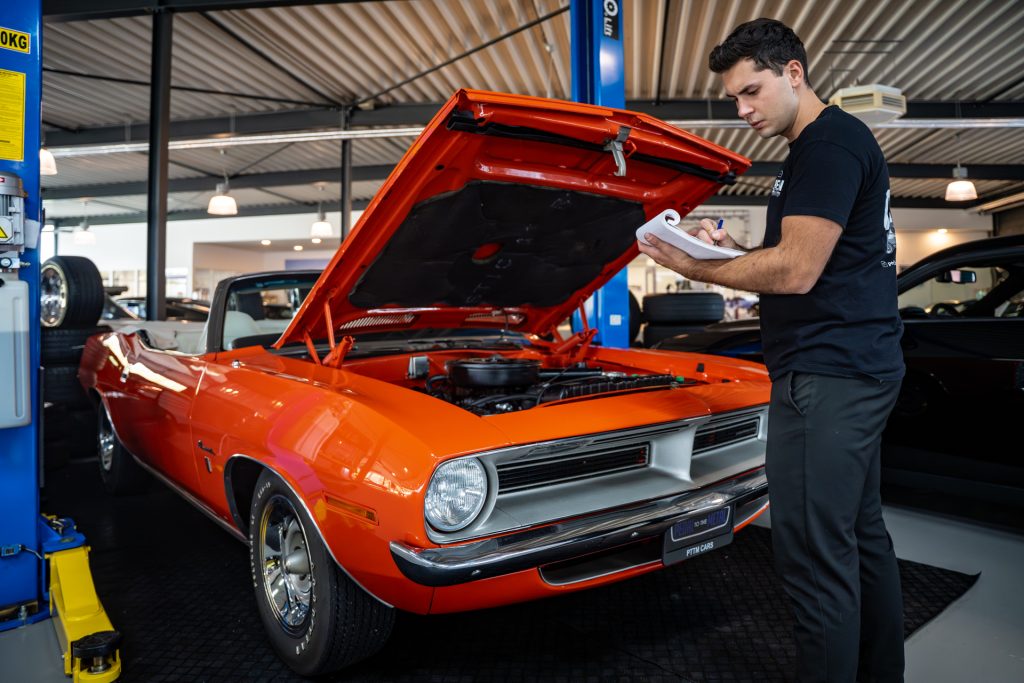
Check out Plymouth Road Runners and Superbirds for sale at Pedal to the Metal. Launched for 1968 as a lower-priced, no-frills muscle car on the B-body Belvedere, the Road Runner carried Warner Bros. cartoon branding and a ‘beep, beep’ horn. It was offered as a pillared coupé, a hardtop from later in 1968 and a convertible for 1969 and 1970, with the 383 V8 as standard and the 426 Hemi and, from 1969, the 440 Six Barrel as options. The 1970 Superbird added a nose cone and tall rear wing for NASCAR. The B-body cars continued until 1974, and the name later appeared on the Fury and Volaré.

If your ideal Plymouth isn’t in our current inventory, we can help you find it. PTTM sources high-quality classic and collector cars, with worldwide delivery available.
Filters
Price
Reset
0
0
Make
Reset
Model
Reset
Year
Reset
53187120-0.jpg
1969
Manual
95.334km
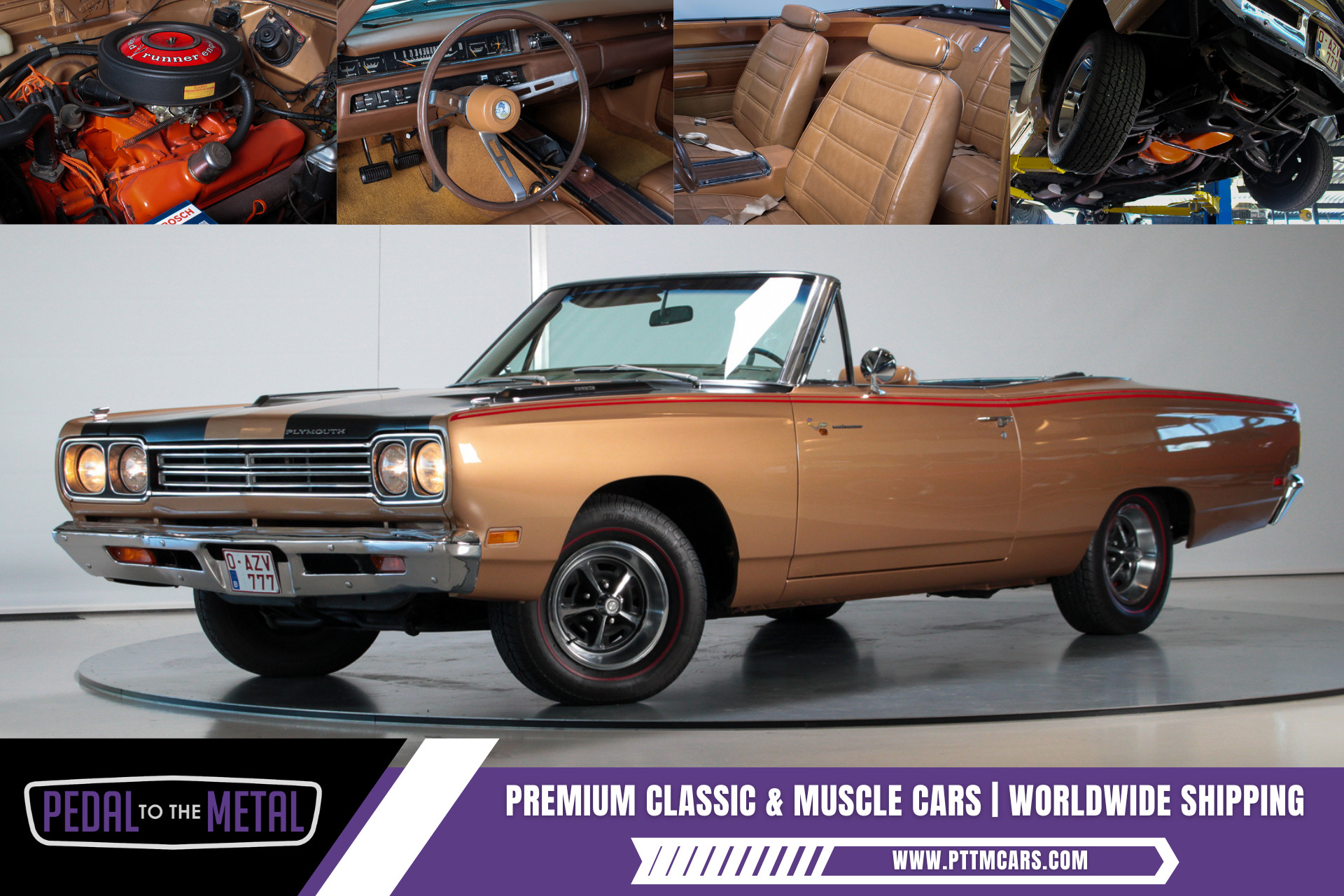
1969 Plymouth ROAD RUNNER 383 | 4-Speed |Matching Numbers
€89.750,-
View car
40437162-0.jpg
1978
Automatic
45.626km
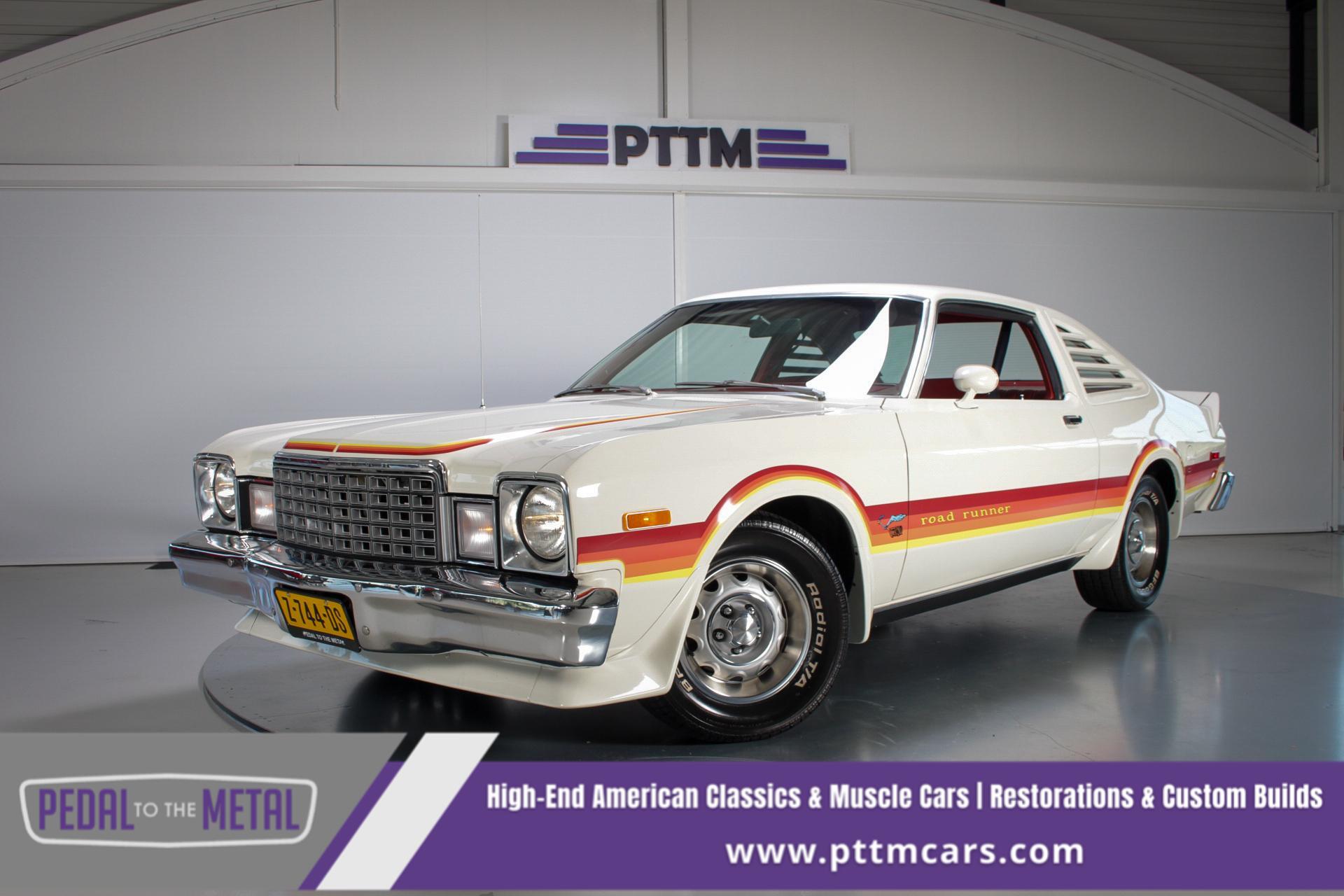
1978 Plymouth ROAD RUNNER
€35.000,-
View car
Filters
Price
Reset
0
0
Model
Reset
Year
Reset
53187120-0.jpg
1969
Manual
95.334km
1969 Plymouth ROAD RUNNER 383 | 4-Speed |Matching Numbers
€89.750,-
View car
40437162-0.jpg
1978
Automatic
45.626km
1978 Plymouth ROAD RUNNER
€35.000,-
View car

Frequently Asked Questions:

Choose by era, body style and engine. The 1968–1970 cars are the original formula, with the 383 as standard, the Hemi and 440 Six Barrel as options, and a convertible for 1969 and 1970. The 1969 Road Runner was Motor Trend’s Car of the Year. The restyled 1971–1974 cars kept the Hemi and Six Barrel for 1971 only, moved to a standard 400 for 1972 and a 318 from 1973, and absorbed the GTX as an option.

The 1975 Road Runner was Fury-based, and from 1976 to 1980 it was a trim package on the Volaré. The 1970 Superbird is a separate, one-year model.

The Superbird is a 1970-only Road Runner built for NASCAR homologation, which required one car for every two Plymouth dealers. Around 1,935 were shipped to US dealers, with a few dozen more for Canada. It added a pointed nose cone and a rear wing on tall struts, set high to work in clean air rather than to clear the boot lid. Engines were the 440 Super Commando with a four-barrel, the 440 Six Barrel, of which about 716 were built, and the 426 Hemi, of which 135 were built.

Start with identity, because Hemi, Six Barrel and Superbird clones are common, and conversion kits were sold to turn 1970 Road Runners and Satellites into Superbird lookalikes. The VIN records the model and engine, and the fender tag records much of the factory specification. Check that both match the car, its documentation and its drivetrain, and check engine numbers where they survive. Then inspect the unibody structure, floors, rear quarters and lower panels for rust and previous repairs.

On restomod and pro-touring cars, judge the quality of the components and workmanship. PTTM can share the information available on a car and discuss any further inspection.

Model, year and engine set the starting point. A documented Superbird, especially with the Hemi or Six Barrel, a Hemi Road Runner, a 1969–1970 convertible or a 440 Six Barrel car sits in a very different market from a later 318 Road Runner. Within any specification, value reflects originality and matching drivetrain components, documentation and condition, factory options and colour.

Unrestored survivors, restored cars and professionally built pro-touring cars and restomods are each valued on different terms. Compare the whole car and its records alongside the price, and PTTM can help you define a realistic search.

Registration or title documents with a VIN matching the car are the foundation. On a Road Runner or Superbird, the fender tag and the broadcast sheet, where it survives, record the factory build and can be decoded by Mopar specialists. Original paperwork such as a window sticker or dealer invoice adds weight, and a letter from a recognised Mopar authenticator can support a car’s identity. Imported cars should carry their import papers, and PTTM’s Registration Service can guide European registration.

Yes, PTTM can assess your current car and discuss a trade-in towards a Plymouth purchase. Send us its make, model, year, mileage, photographs and available history, along with details of the car you are interested in. Trade-ins are not automatic: each proposal is considered individually, based on condition, documentation and market demand.

Possible structures include equal-value exchanges and trades with a cash adjustment on either side, agreed transparently in advance.

The Road Runner was an immediate hit. Plymouth expected to sell 20,000 in 1968 and built about 45,000, and it paid Warner Bros. $50,000 for the name and likeness and $10,000 to develop the horn. Rare versions include the ten 1969 Hemi convertibles and the three US Hemi convertibles of 1970. In the Superbird’s only season, Richard Petty won 18 of the 40 races he entered. Individual cars stand out through originality, documentation, rare options and condition, and a well-sorted driver can be as rewarding as a concours restoration.

It depends on how you plan to use the car. A 1969–1970 convertible suits open-air touring, while the coupé and hardtop give a fixed roof. A 383 or 340 car suits regular road use, while Hemi and 440 cars deliver more torque. A Superbird is a collector car first, and its nose and wing need care when parking. An original or factory-correct restored car suits buyers who value authenticity, while a restomod adds modern brakes, suspension and comfort. PTTM offers both, from factory-correct restorations to custom restomod and pro-touring builds.

Yes. Our Personalized Car Search service can look beyond our current inventory. Tell us your preferred year and body style, engine and transmission, whether original or modified, and colour, condition and budget.

We identify suitable cars and help assess their condition, history and authenticity. Superbirds, Hemi Road Runners, 1969–1970 convertibles, 440 Six Barrel cars and documented four-speed cars can take longer to find, and we will give you an honest expectation of timing. Search terms are agreed before we begin, and you are never obliged to proceed with a car we present.

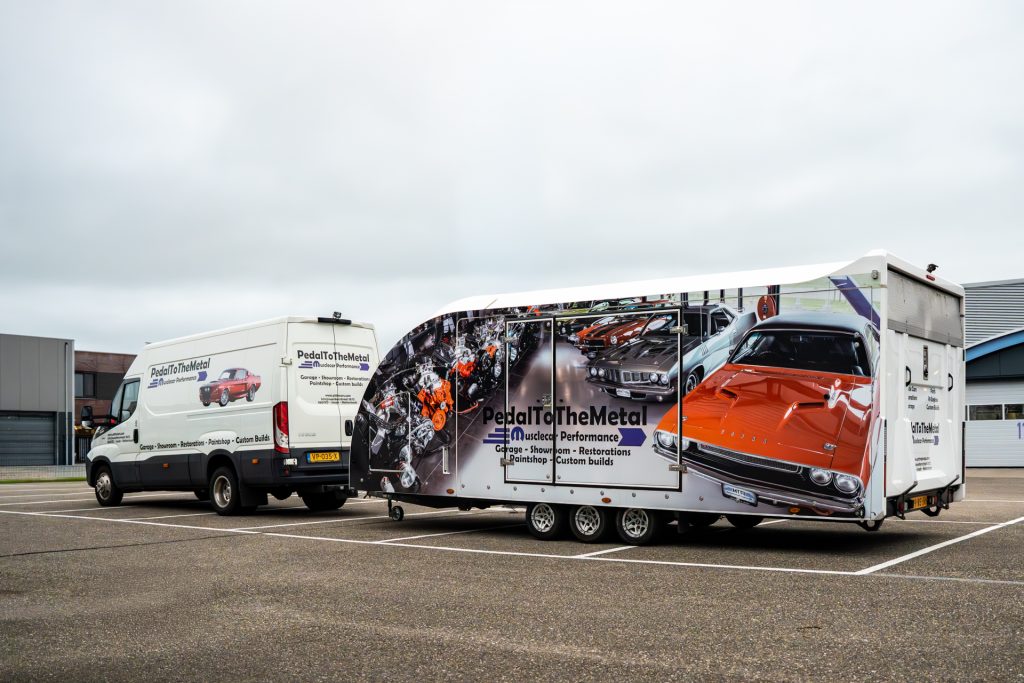
Yes. PTTM works with buyers across Europe and overseas and can coordinate transport to your country. Within Europe, cars travel by road with our own trailers or trusted partners. Intercontinental deliveries normally go by sea freight, and air freight is available on request. We confirm the transport method, insurance, costs and estimated timing for your destination before you commit. Import requirements vary by country, so share your destination when enquiring and we can explain the options.

What We Do

Our Services

Get in Touch

We’re happy to discuss your plans and advise on the right next steps. Whether you’re considering a purchase, planning a restoration or build, or exploring options for selling or registration.

CTA01_cta-pttm2x