
Engine Tuning & Diagnostics
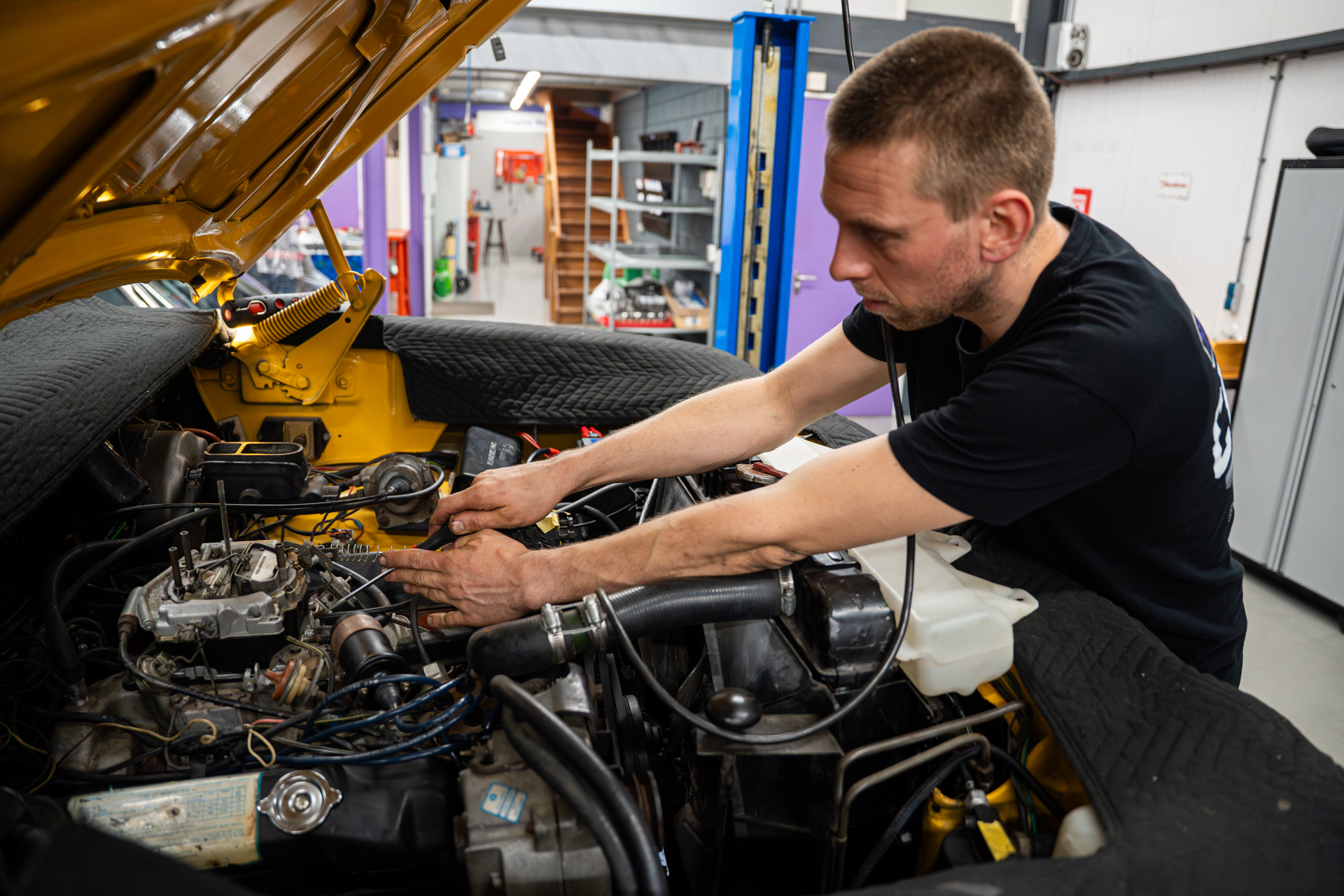
A classic American muscle car engine is a mechanical system, and its performance depends on how well every part works together. Fuel, air, spark and timing all need to be in balance. When they are, the car starts easily, idles smoothly, pulls hard and sounds the way it should. When they are not, you feel it straight away.
At PTTM, tuning and diagnostics are done by people who understand these engines, from the original carbureted V8s to modern fuel-injected conversions. We find the cause of a problem rather than treating the symptom.
What We Tune and Diagnose
- Ignition timing, including initial, mechanical and vacuum advance
- Distributor setup and curve, points and electronic ignition systems
- Carburetor adjustments, including idle, mixtures, accelerator pump and jetting
- EFI adjustments, including fuel and ignition mapping, sensors and base setup
- Fuel delivery, including pumps, regulators, lines and filters
- Cooling and charging systems where they affect engine behavior
- Strange noises, from ticks and knocks to rattles, whines and vibrations
- Hard starting, hesitation, backfiring, rough idle, overheating and poor fuel economy
Ignition Timing
Correct timing is one of the biggest factors in how an engine runs. Too much or too little advance can cost power, cause hard starting, create heat and, in the worst case, damage the engine. We set timing to suit your engine’s specification, fuel and the way you use the car, and we check that the advance curve behaves as it should across the rev range.
Carburetor Adjustments
Most drivability complaints on carbureted cars come down to the carburetor. We adjust and fine-tune it for smooth idle, crisp throttle response and a clean, strong pull. If a carburetor is worn, damaged or poorly matched to the engine, we will tell you honestly and advise on the right fix.
EFI Adjustments
Fuel injection brings reliability and drivability to a classic, but only when it is set up properly. We work on EFI systems to adjust fuel and ignition settings, check sensors and wiring, and resolve issues with cold starts, idle, hesitation or part-throttle behavior.
Diagnosing Strange Noises
A new sound is often the first sign that something needs attention. Our mechanics trace noises to their source, whether that is a valvetrain tick, a bearing knock, an exhaust leak or a failing accessory. Finding it early is almost always cheaper than finding it late.
Intensive Testing, On and Off the Test Bench
When a problem is not obvious, we test properly. This includes:
- Compression and leak-down testing to assess the health of the engine internally
- Vacuum, fuel pressure and ignition testing
- Exhaust gas and air-fuel ratio analysis
- Road testing under real driving conditions
- Test bench testing of engines and components, when a controlled environment gives clearer answers than the car itself
Testing on the bench lets us isolate an engine or component, run it under controlled conditions and measure what is really happening. The result is a diagnosis based on evidence rather than guesswork.
A Clear Answer, Not a Guess
After diagnosis, you receive a plain explanation of what we found, what it means and what we recommend. If the fix is a simple adjustment, we do it. If more involved work is needed, you decide how to proceed, and we help you prioritize.
Client Priority and Availability
Clients who have purchased a vehicle through PTTM are given priority for tuning and diagnostic work. We also consider cars from outside clients, depending on workshop capacity. Our focus is on quality and proper execution rather than volume.
Discuss Tuning or Diagnostics
If your car is not running the way it should, or you simply want it tuned to its best, please get in touch using the form below. Describe the car, the symptoms and when they appear, and we will advise on the appropriate next steps.
Frequently Asked Questions (FAQ):
Classic American V8 engines were built to different tolerances and require different fluids, different service intervals, and different diagnostic approaches than modern vehicles. Most flat-tappet camshaft engines used in these cars require engine oil with adequate ZDDP content – a zinc and phosphorus additive package that modern low-viscosity oils formulated for roller-cam engines do not provide in sufficient quantities. Using the wrong oil accelerates camshaft wear significantly. Carburetor-fed fuel systems, points-based or early electronic ignition systems, and manual drum brake setups all require hands-on knowledge that a general workshop without specific experience in these cars will not have. Our team works on these vehicles every day.
As a general baseline, engine oil and filter should be changed every 3,000 to 5,000 kilometres regardless of how much the car has been driven, because oil sitting in a non-running engine accumulates moisture and degrades over time. A full mechanical inspection covering the cooling system, brakes, fuel system, ignition, belts, and hoses should be carried out at least once a year even on cars used sparingly. Classic cars that are stored over winter should be correctly prepared before storage and inspected before being returned to road use in spring.
Cooling system work is the most frequent – radiator repairs or replacements, thermostat replacements, water pump rebuilds, and hose replacements. Carburetor rebuilds and fuel system work follow closely. Brake system repairs including drum adjustments, caliper rebuilds, and brake line replacements are regular workshop work. Ignition system faults, from distributor wear to coil failures, are also common on cars that have not been regularly maintained. We also carry out electrical system diagnosis, which on cars with 50-year-old wiring requires patience and specific knowledge of period-correct electrical systems.
Yes. Drivability issues on classic cars – rough idle, hesitation under acceleration, overheating, fuel delivery problems – often require someone with specific knowledge of the platform and the era to diagnose correctly. Modern diagnostic equipment is largely irrelevant on these cars. Experience with how these systems behave and fail is what matters. Bring us the car and describe exactly what it is doing – the more detail you can give us about when the problem occurs and under what conditions, the more efficiently we can find it.
Yes. We work on both original-specification cars and cars that have been fitted with modern LS, LT, or Coyote V8 engines, upgraded fuel injection systems, or other modern mechanical components. Our workshop handles the full range from period-correct original drivetrains through to fully modernized pro-touring builds.
Yes. Please contact us before bringing your car in so we can assess the scope of work, allocate the right workshop time, and ensure the correct parts and equipment are available. Walk-in work is not something we accommodate. Contact us at sales@pttmcars.com or call +31 6 25 19 61 76 to book.
Depending on your location and the nature of the work required, we can discuss transport arrangements. Contact us with your location and a description of the car’s condition and we will advise on the most practical approach.
Pedal to the Metal workshop is based in Sneek, Netherlands. Contact us at sales@pttmcars.com or +31 6 25 19 61 76 to discuss your car’s maintenance or repair needs.
Get in Touch
We’re happy to discuss your plans and advise on the right next steps. Whether you’re considering a purchase, planning a restoration or build, or exploring options for selling or registration.