Check out our cars fors sale

Premium Classic & Muscle Cars For Sale

Explore our curated selection of classic muscle cars and collector vehicles for sale. At Pedal to the Metal, we specialize in high-end classics that are ready to drive and available for worldwide delivery.

Filters
Price
Reset
0
0
Make
Reset
Model
Reset
Year
Reset
Filters
Price
Reset
0
0
Make
Reset
Model
Reset
Year
Reset
53374078-0.jpg
1969
Automatic
2.709km
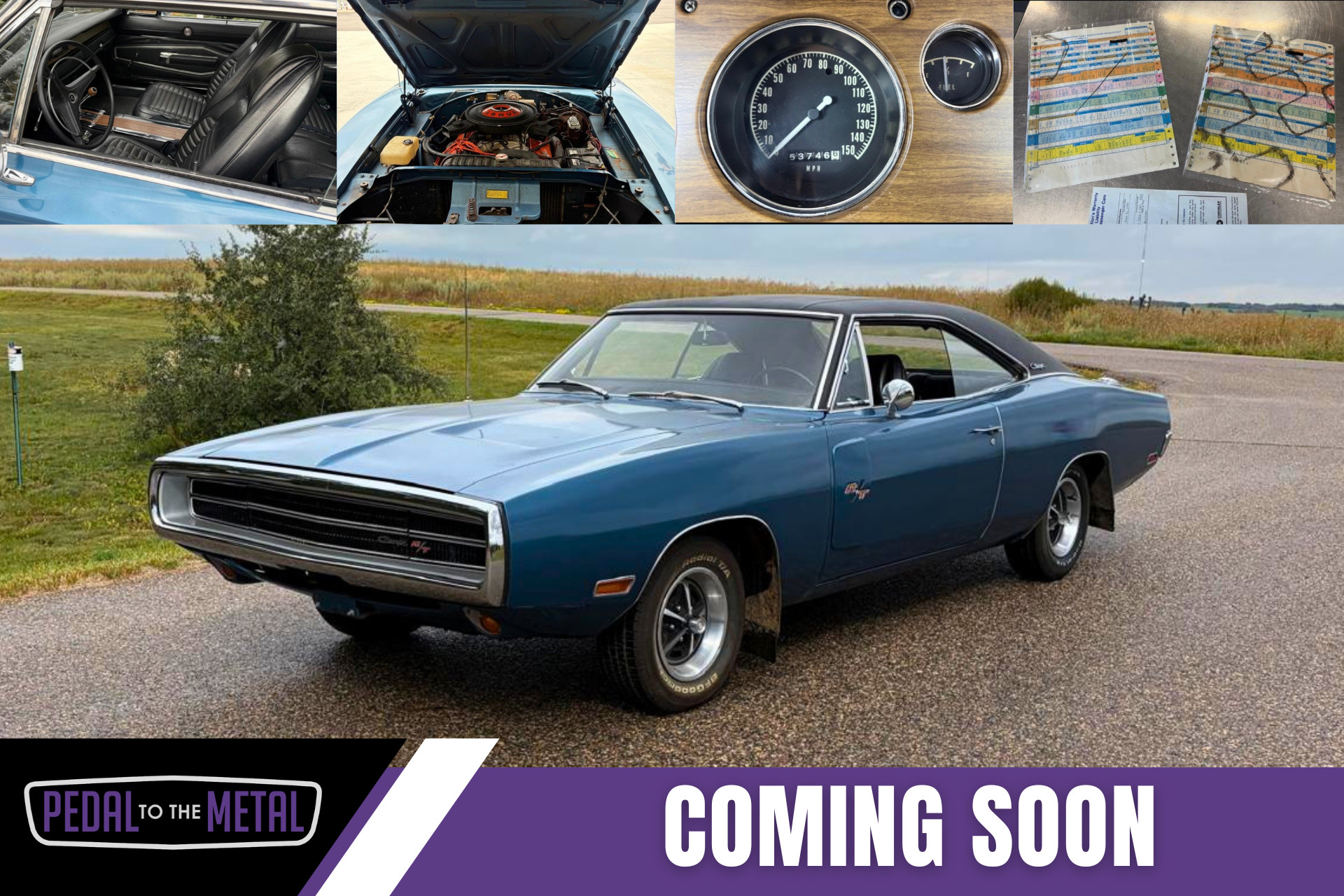
1969 Dodge CORONET R/T 440
€0,-
View car
53187120-0.jpg
1969
Manual
95.334km
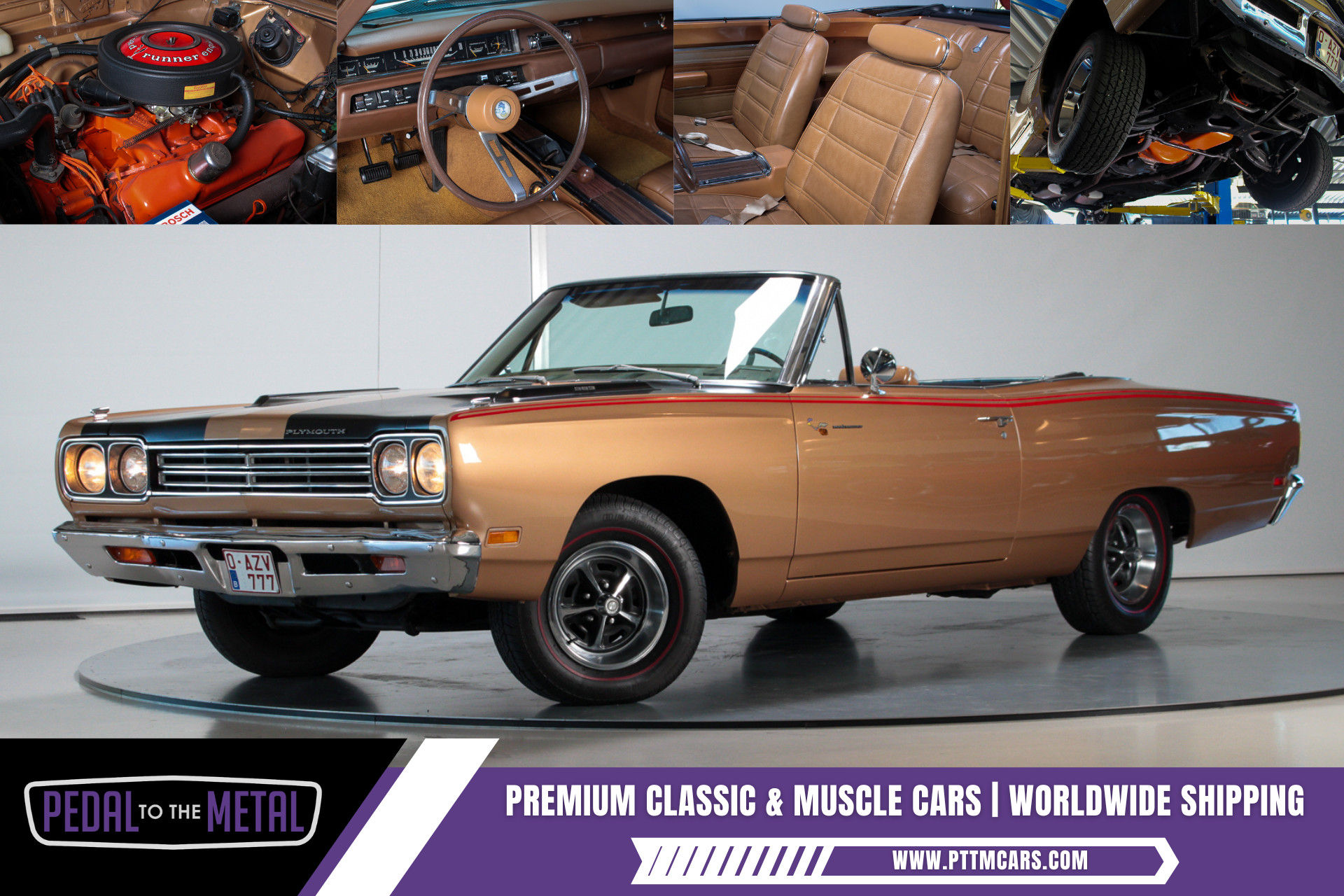
1969 Plymouth ROAD RUNNER 383 | 4-Speed |Matching Numbers
€92.750,-
View car
48536125-0.jpg
1970
Automatic
12.116km
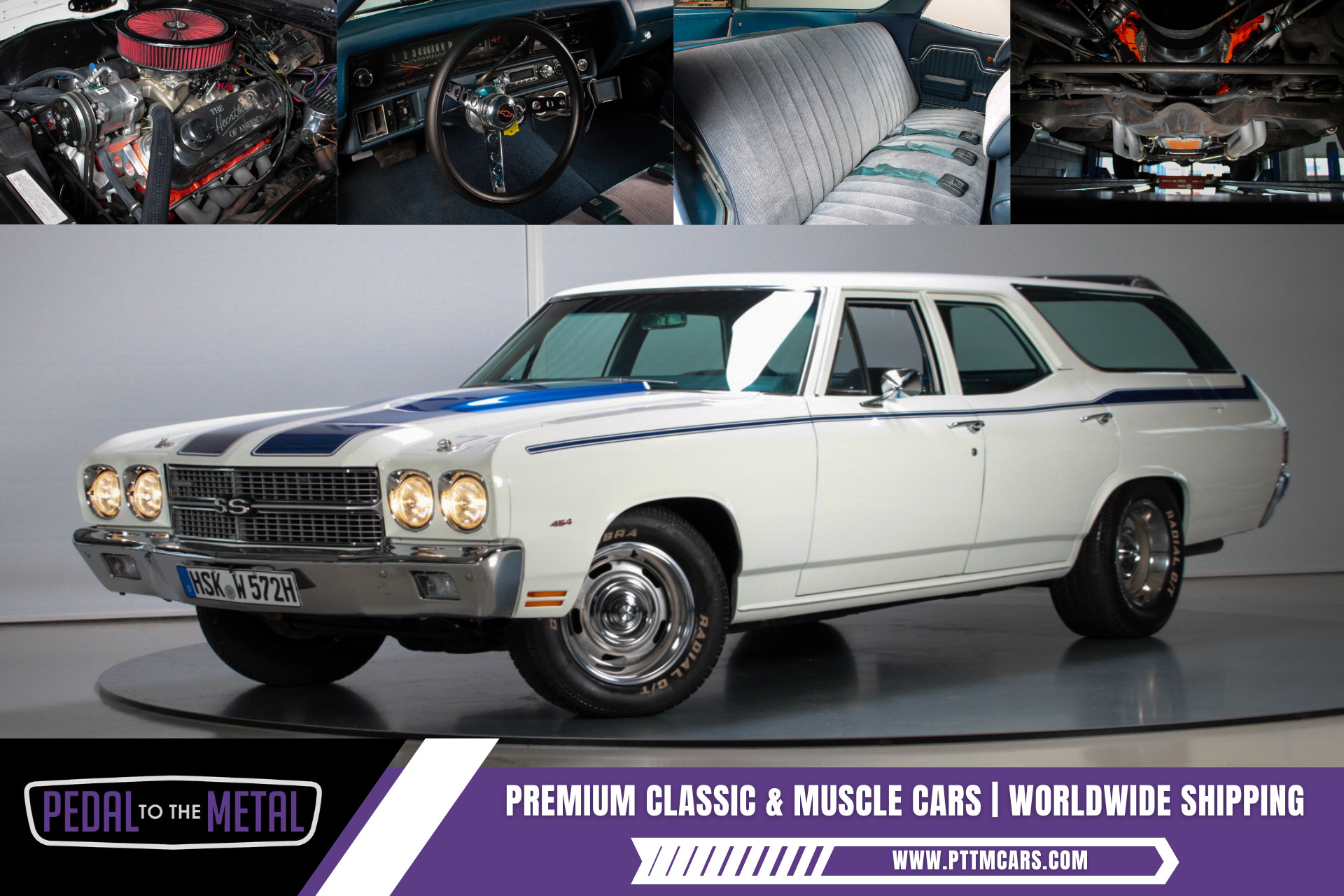
1970 Chevrolet Chevelle 454 Station Wagon
€54.750,-
View car
53273369-0.jpg
1967
Manual
1km
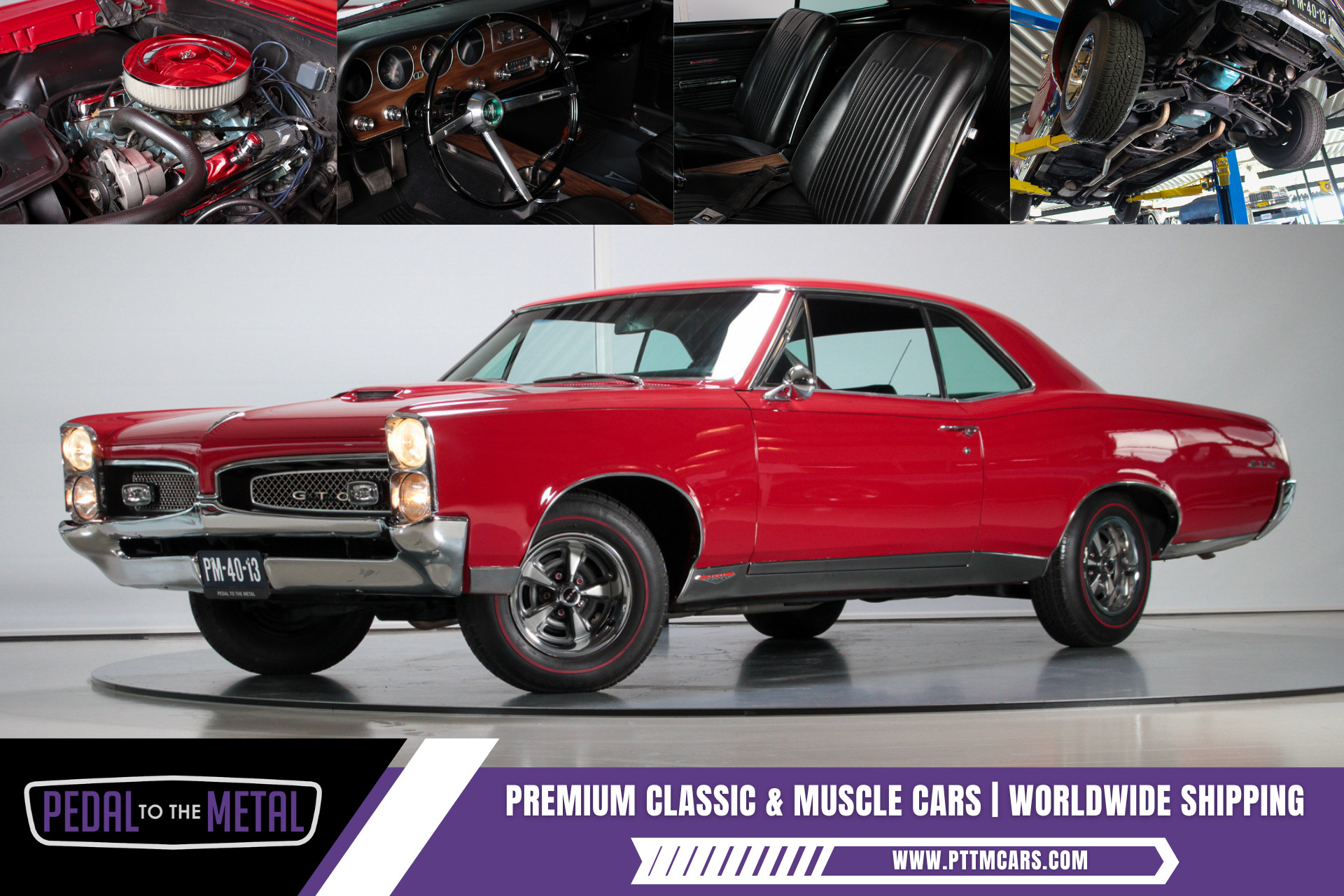
1967 Pontiac GTO 400 4-Speed – Coming Soon
€0,-
View car
50190475-0.jpg
1968
Manual
250km
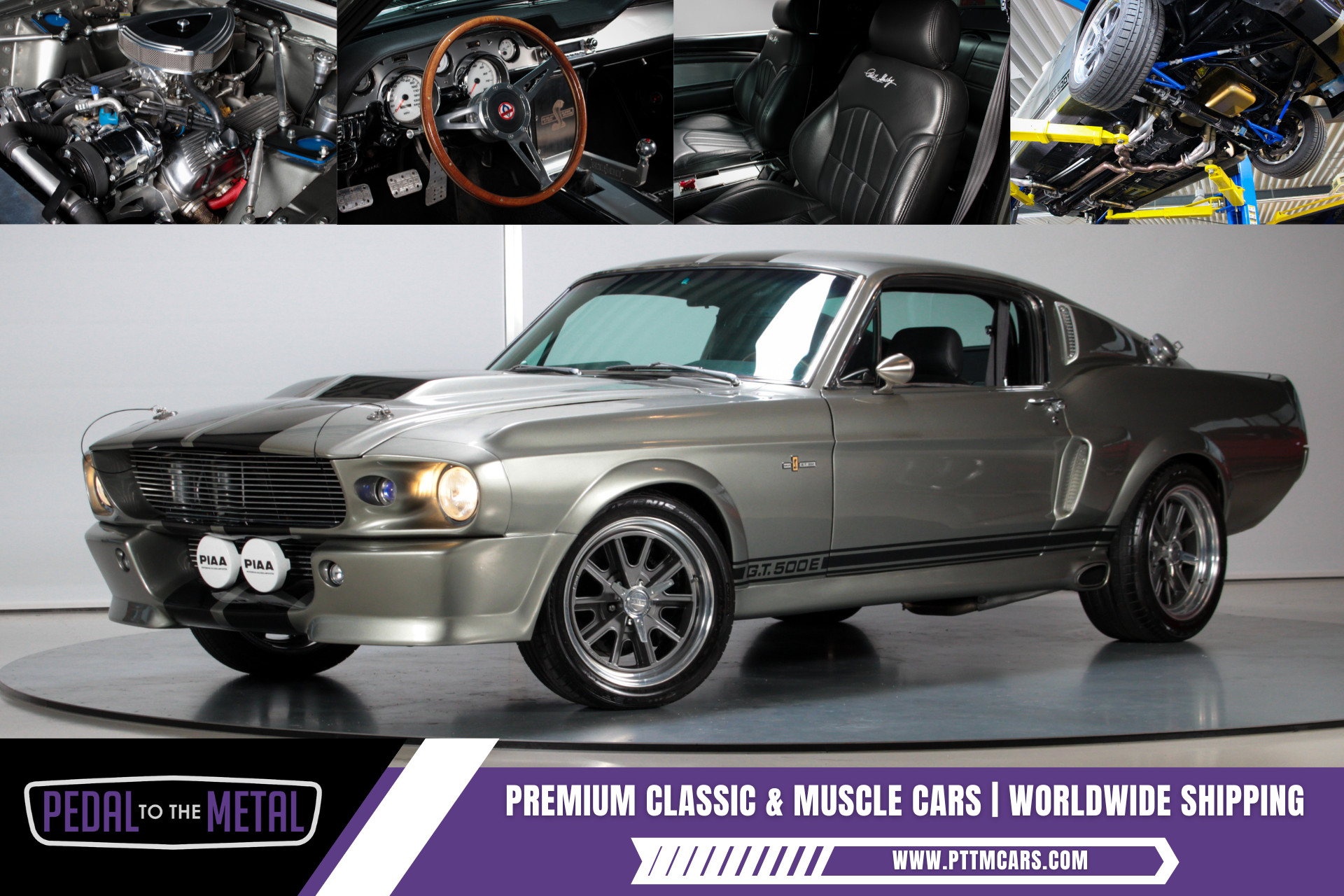
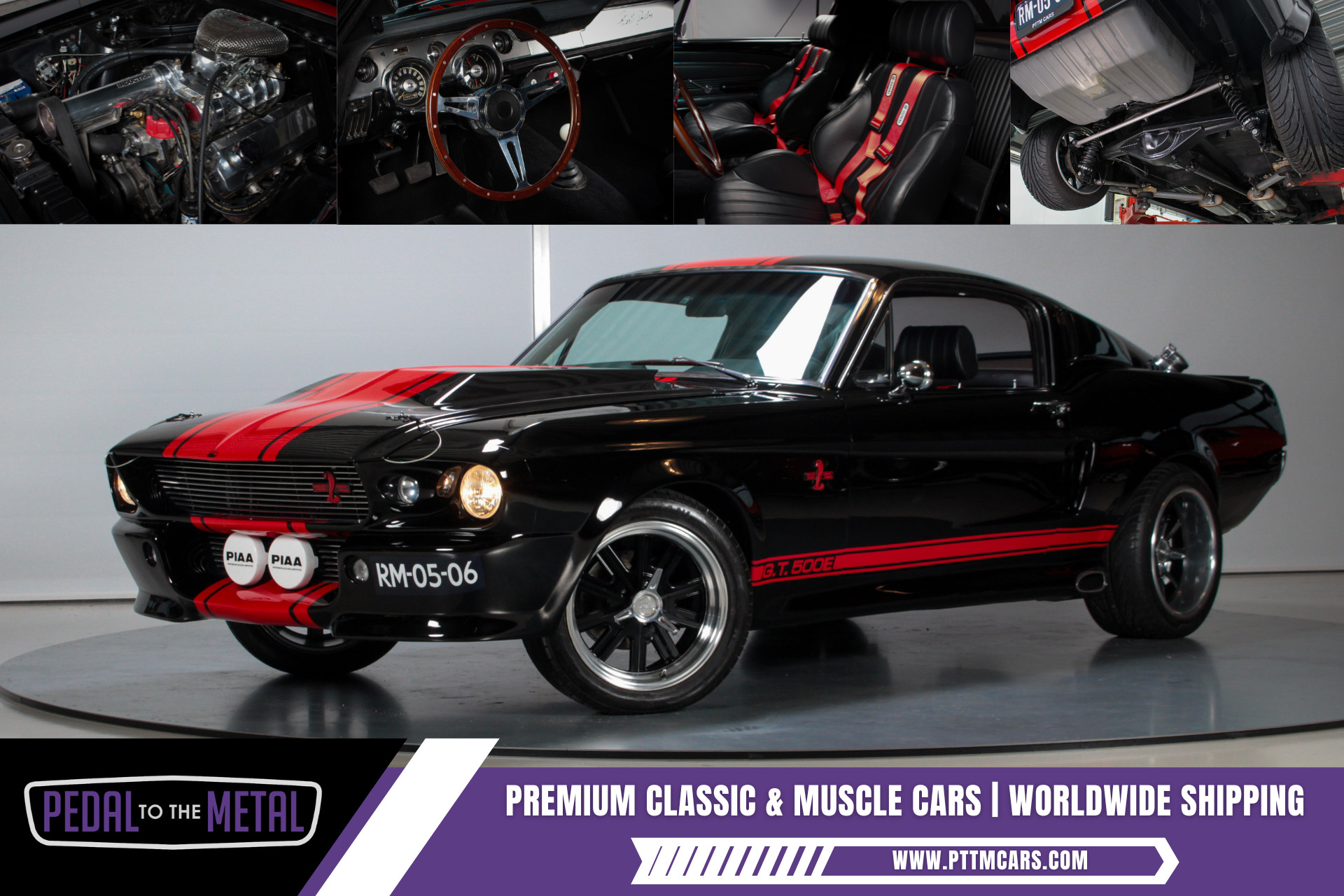
1968 Ford Mustang “Eleanor” GT500E
€375.000,-
View car
53185931-0.jpg
1970
Automatic
17.158km
1970 Plymouth ‘Cuda 383 Convertible Numbers Matching | Restored
€169.750,-
View car
53188673-0.jpg
1923
Manual
37km
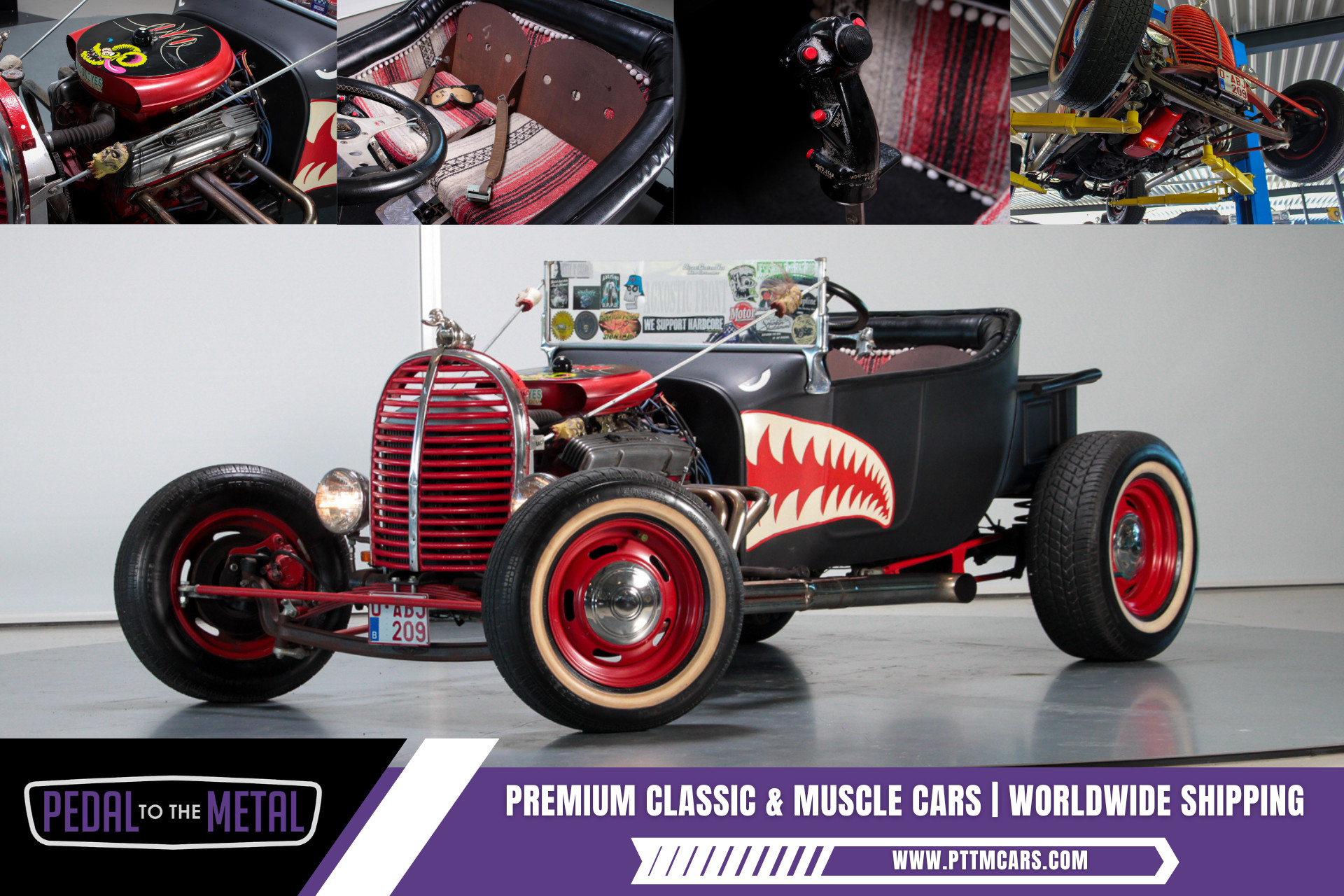
1923 Ford T-Bucket Hot Rod
€32.500,-
View car
53186900-0.jpg
1961
Manual
90.957km
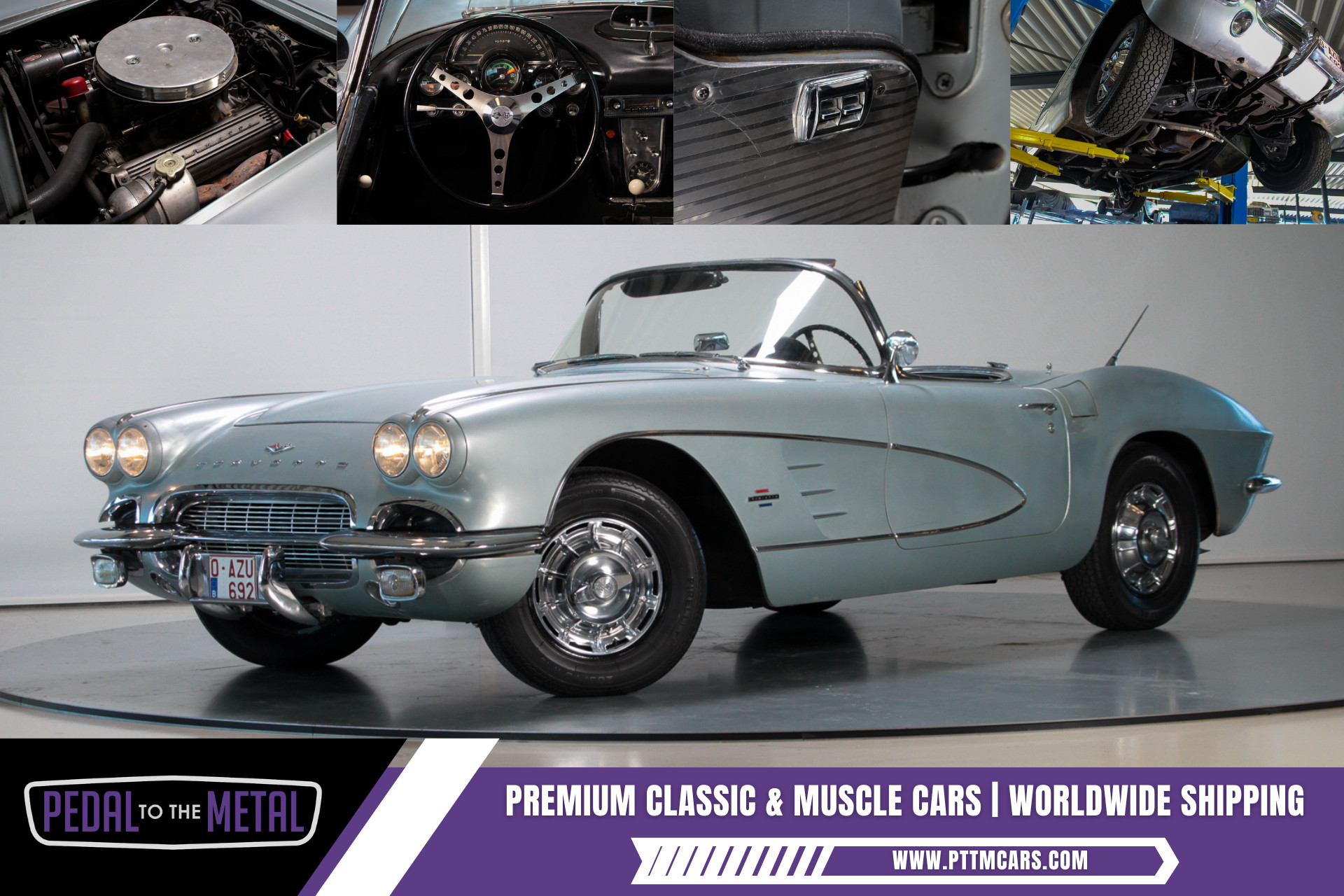
1961 Chevrolet Corvette C1 Convertible with Hardtop
€139.750,-
View car
1973 De Tomaso Pantera Exterior
1973
Manual
70.213km
1973 De Tomaso Pantera Onbekend
€149.750,-
View car
51607371-0.jpg
2006
Manual
40.699km
2006 Aston Martin V8 Vantage 4.3 V8
€57.500,-
View car
50190188-0.jpg
1967
Manual
617km
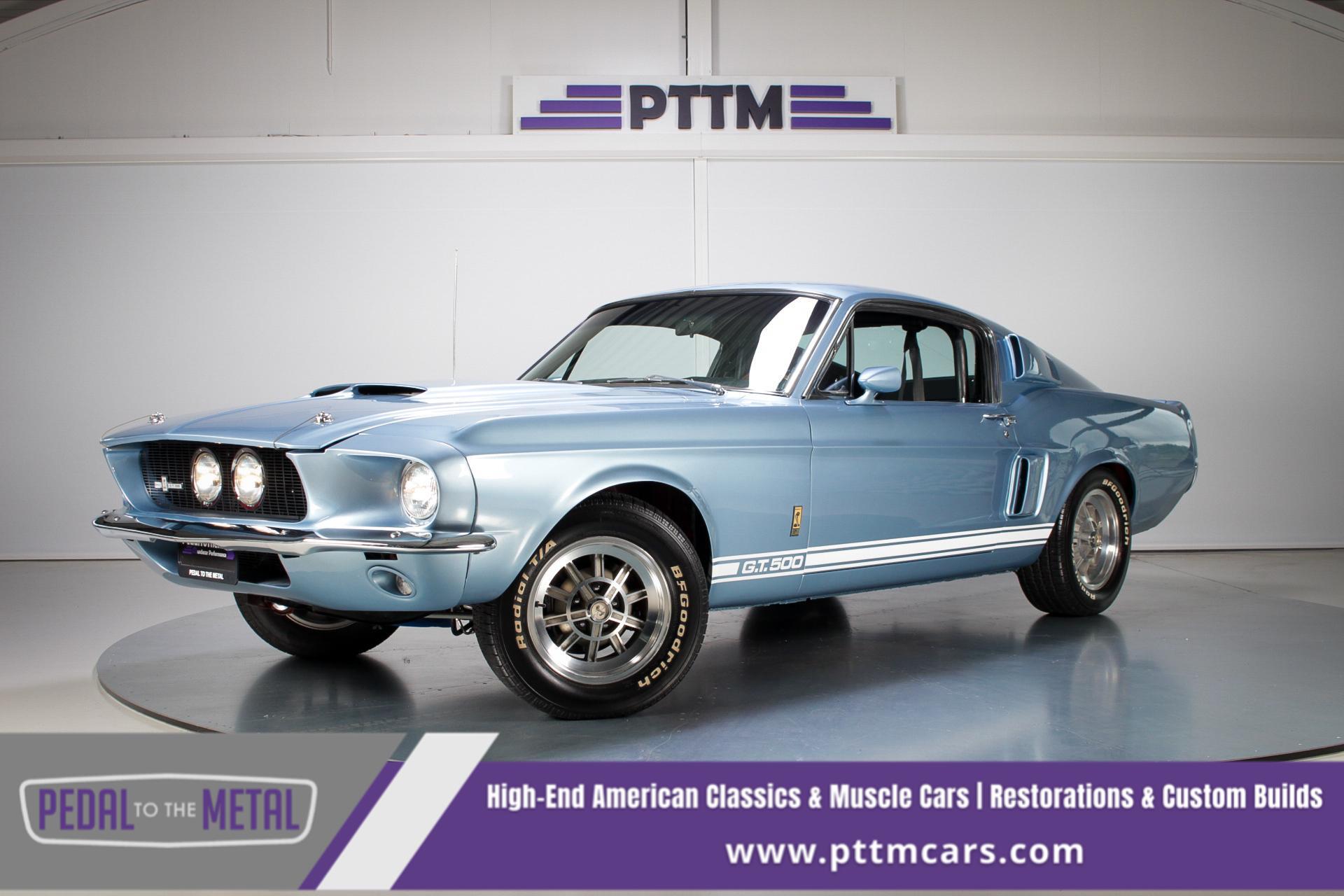
1967 Shelby Gt500 GT500
€289.750,-
View car
44755288-0.jpg
1970
Automatic
46.528km
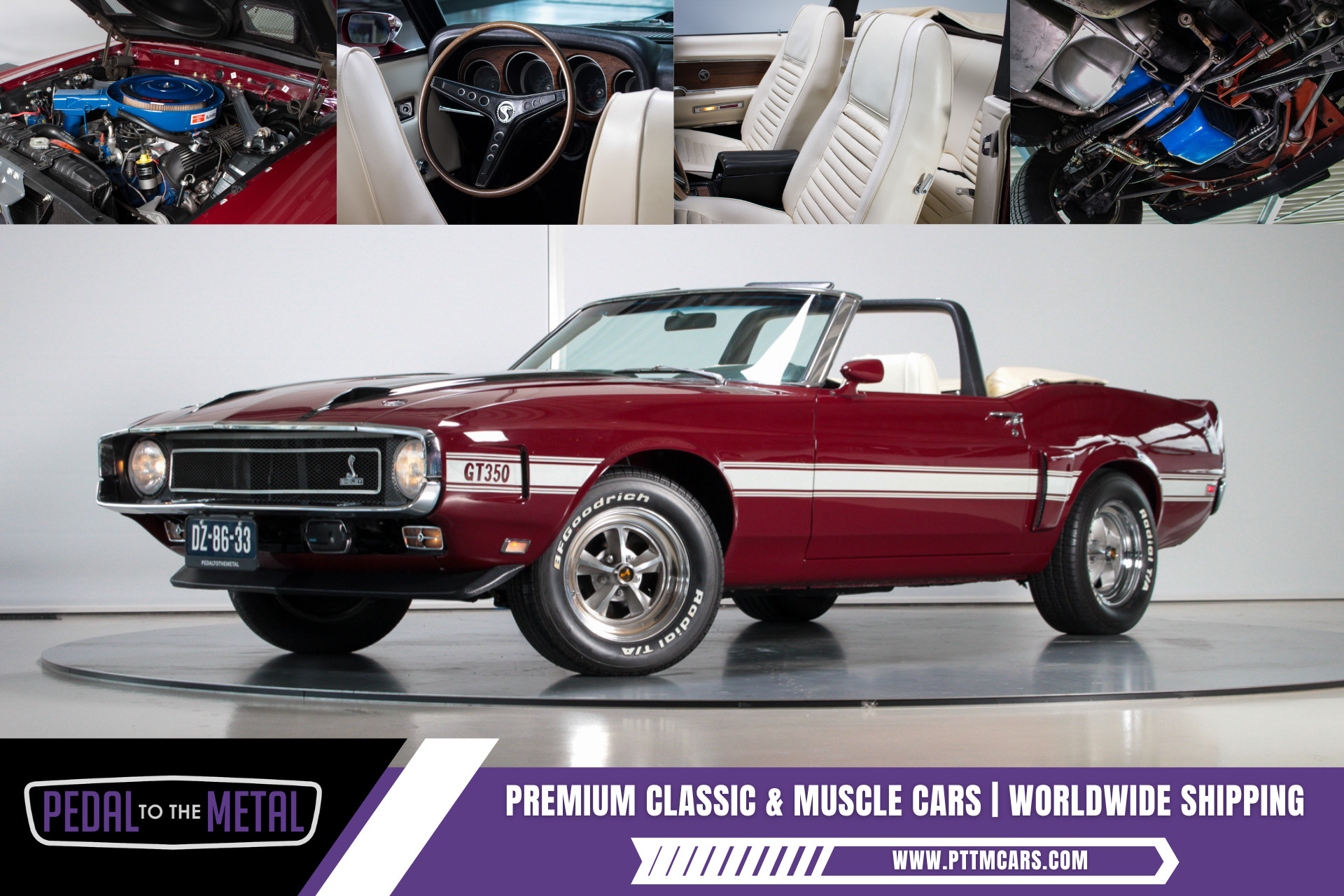
1970 Shelby Gt500 Convertible
€229.750,-
View car
39778531-0.jpg
1967
Automatic
728km
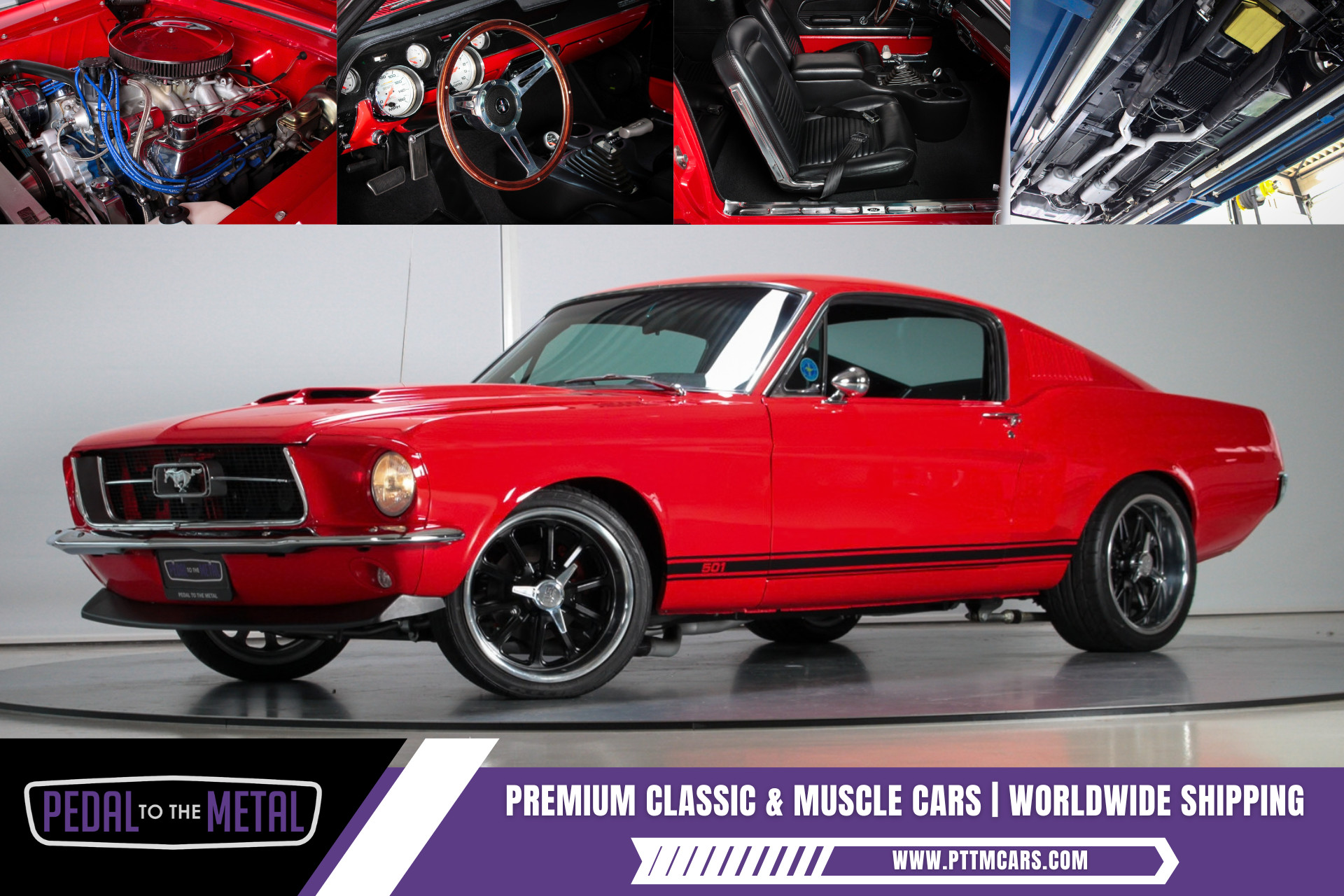
1967 Ford Mustang Fastback 501 Pro-Touring
€149.750,-
View car
40452311-0.jpg
1951
Automatic
75.000km
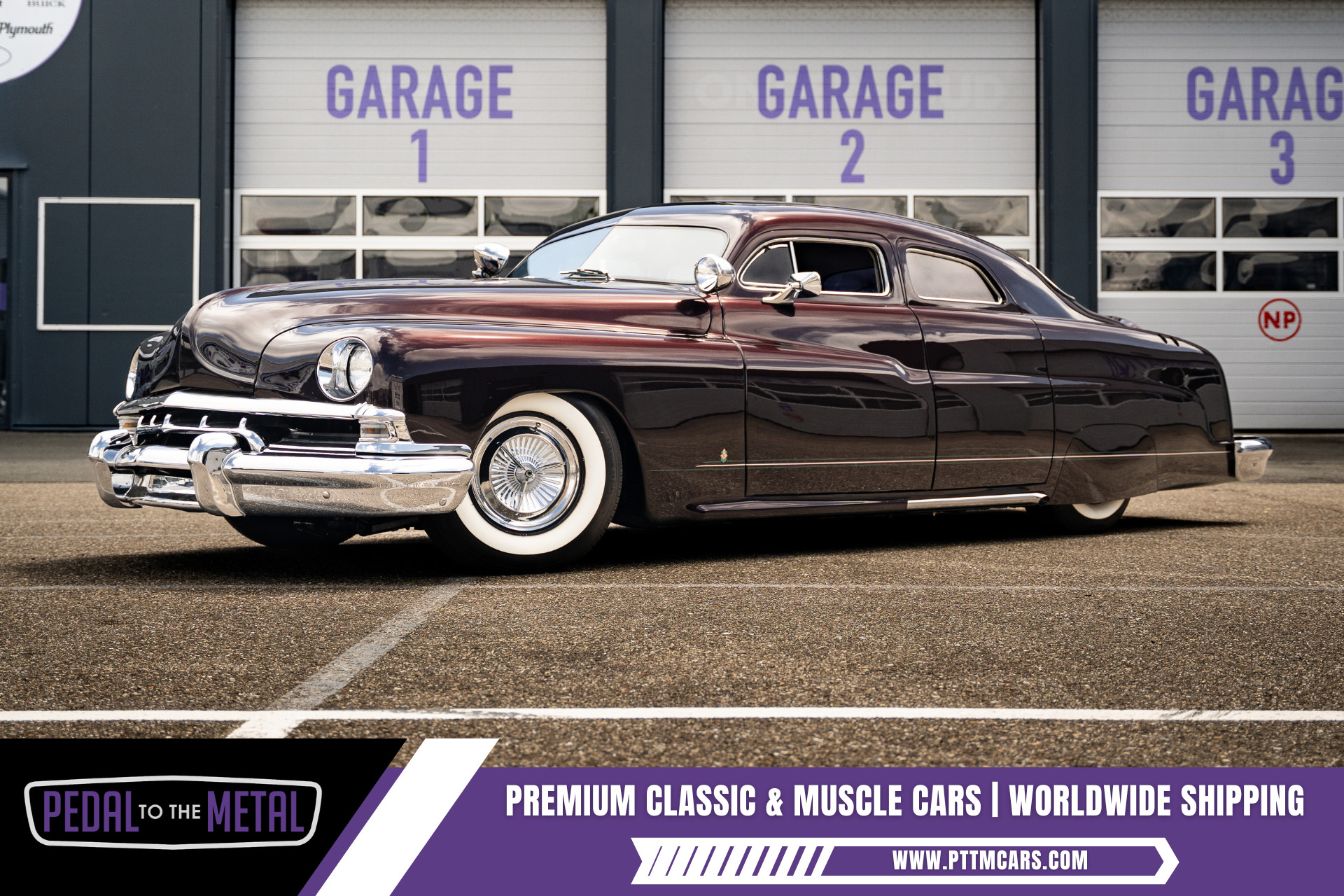
1951 Lincoln Cosmopolitan “Linczilla”
€79.750,-
View car
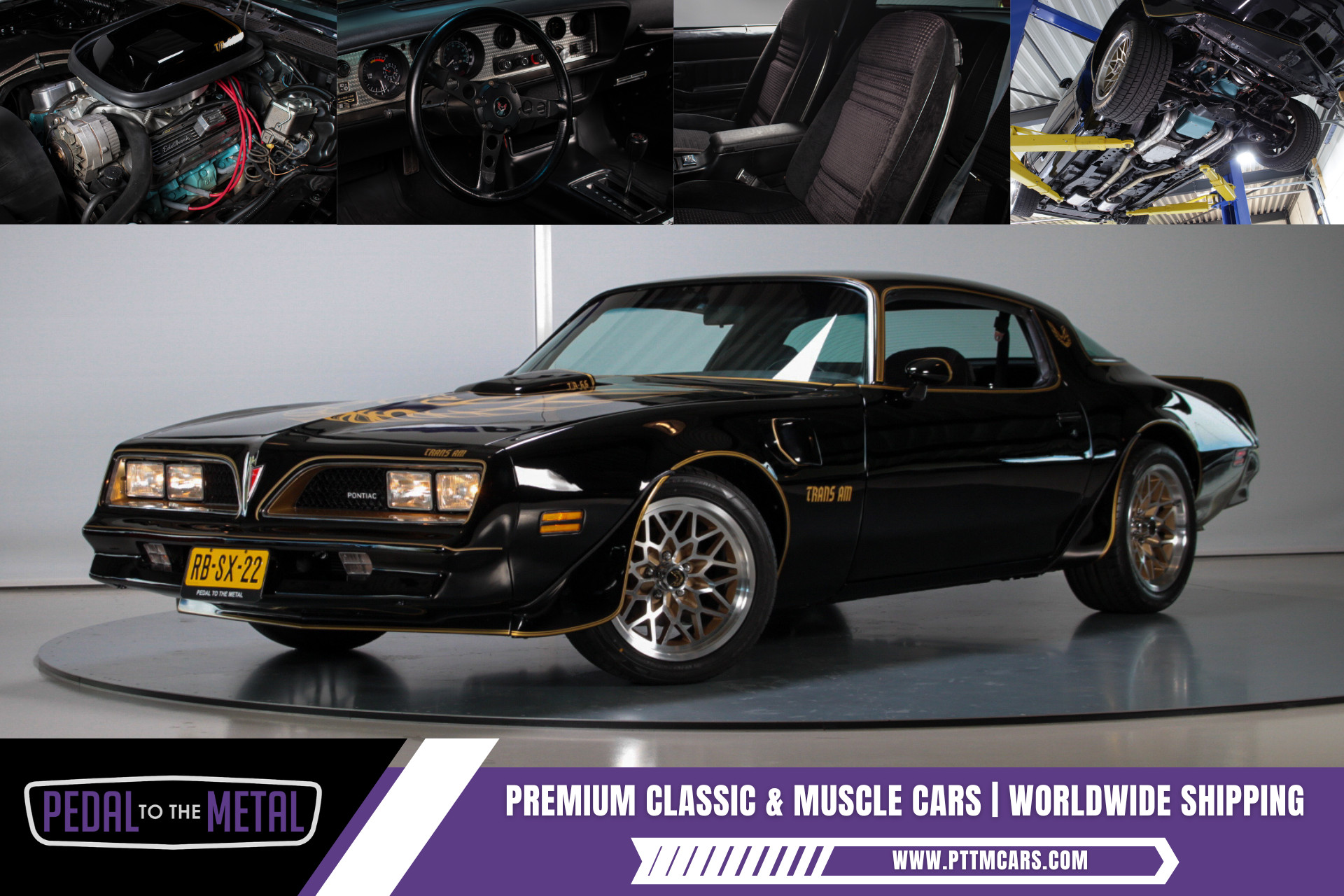
Full driver's side profile of the restored black 1978 Pontiac Trans Am WS6 showing the Bandit gold side striping, new 17-inch honeycomb wheels, and Flowmaster exhaust tips
1978
Automatic
91.462km
1978 Pontiac Trans AM “Bandit”
€69.750,-
View car
Front three-quarter view of a Midnight Bronze 1972 Chevrolet Camaro Z27 RS/SS 396 with 27,000 original miles, for sale at Pedal to the Metal Muscle Cars in Sneek, Netherlands
1972
Automatic
28.005km
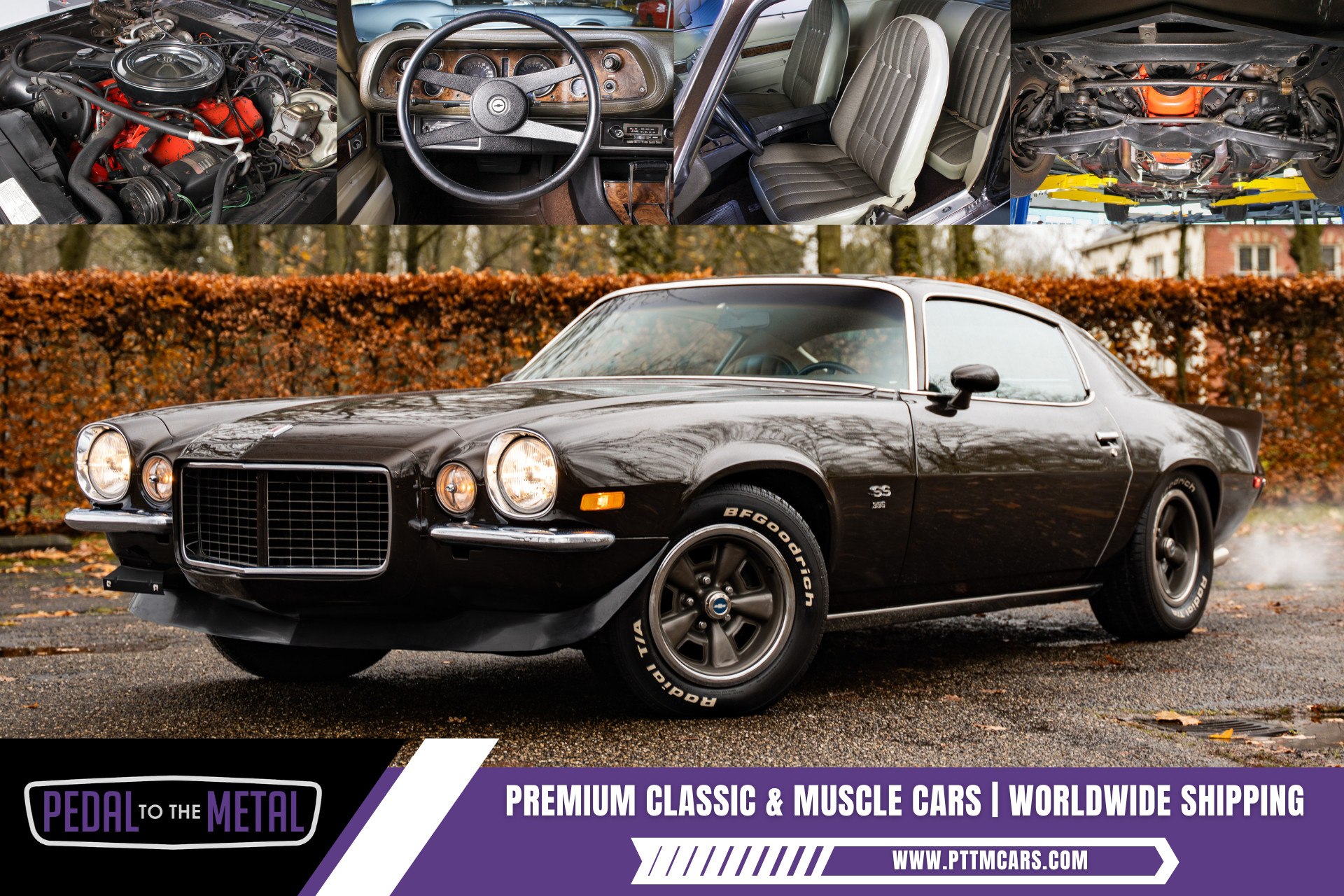
1972 Chevrolet Camaro RS/SS 396
€75.000,-
View car
40753743-0.jpg
1975
Automatic
67.474km
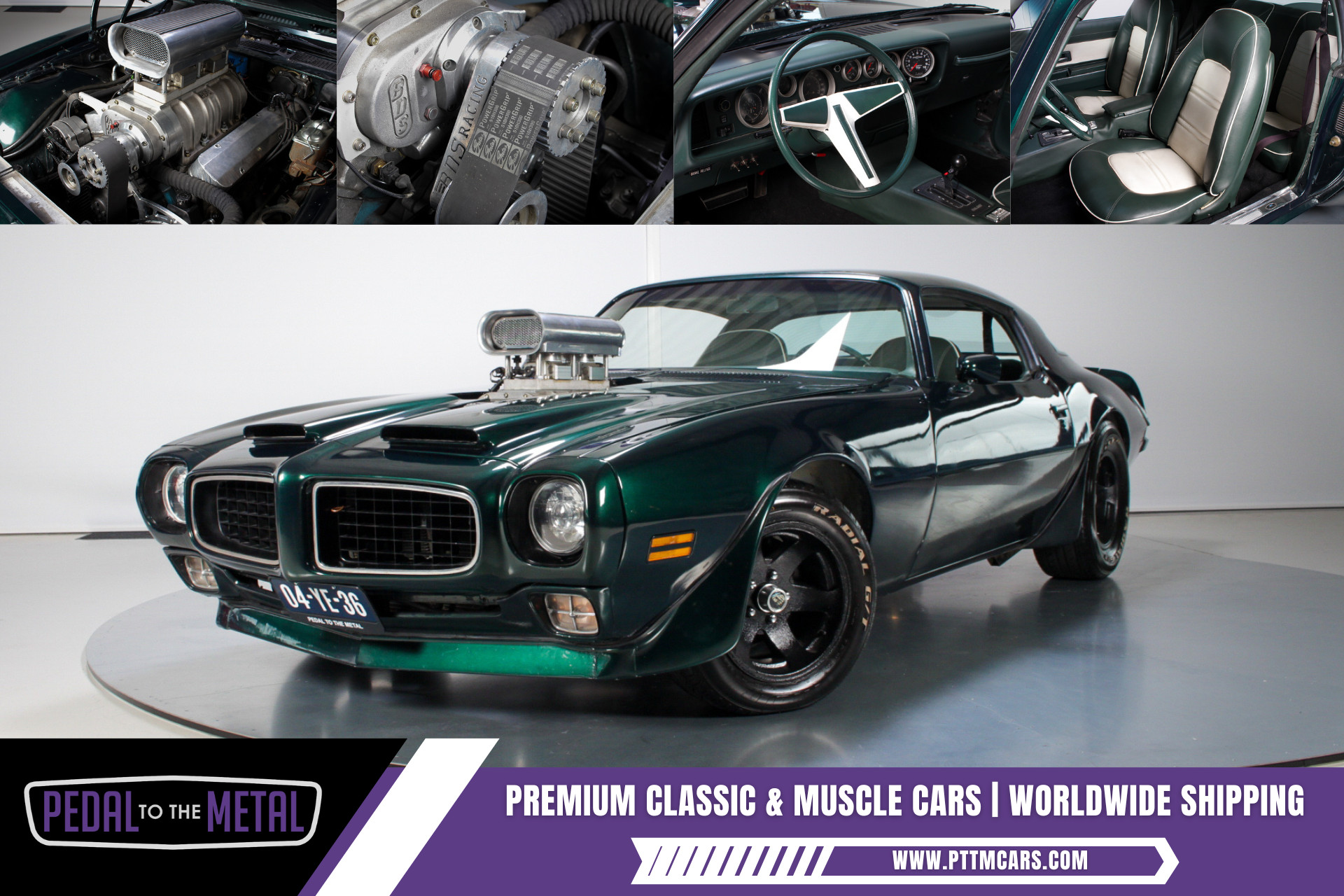
1975 Pontiac Firebird Formula Blower 800 HP
€67.500,-
View car
40766020-0.jpg
1974
Automatic
56.308km
1974 Chevrolet Camaro Z28
€39.750,-
View car
41744401-0.jpg
1967
Manual
77.958km
1967 Chevrolet Corvette 427/435 4 Speed Numbers Matching
€189.750,-
View car
45378802-0.jpg
1969
Manual
50.416km
1969 AMC Hurst SC/Rambler Hurst
€69.750,-
View car
45439101-0.jpg
1965
Manual
67.188km
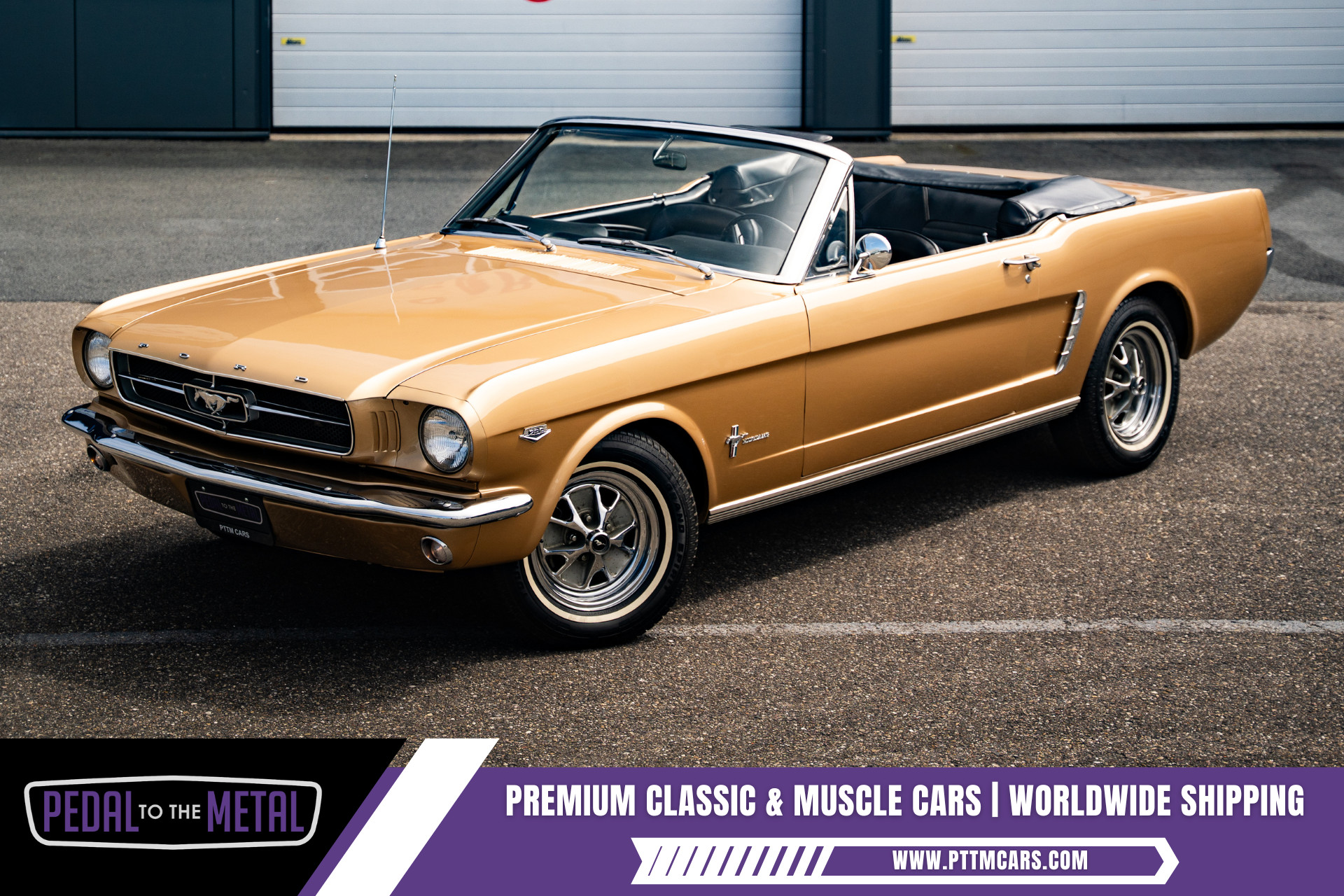
1965 Ford Mustang K-Code Convertible
€92.750,-
View car
46710291-0.jpg
1967
Manual
130km
1967 Ford Mustang “Eleanor” GT500E Pro Touring
€349.750,-
View car
46768683-0.jpg
2014
Manual
13.132km
2014 Ford Mustang GT500
€75.000,-
View car
50375936-0.jpg
1967
15.318km
1967 Ford Mustang “Eleanor” GT500E
€229.750,-
View car
50739515-0.jpg
1973
Manual
36.308km
1973 Chevrolet Camaro Z28 Unrestored Survivor
€69.750,-
View car
51278326-0.jpg
1965
Manual
1.979km
1965 Shelby Cobra CSX 4000 Series
€329.750,-
View car
1998 Ferrari 550 Maranello Argento Nurburgring Pedal To The Metal
1998
Manual
69.720km
1998 Ferrari 550 Maranello
€139.500,-
View car
40437162-0.jpg
1978
Automatic
45.626km
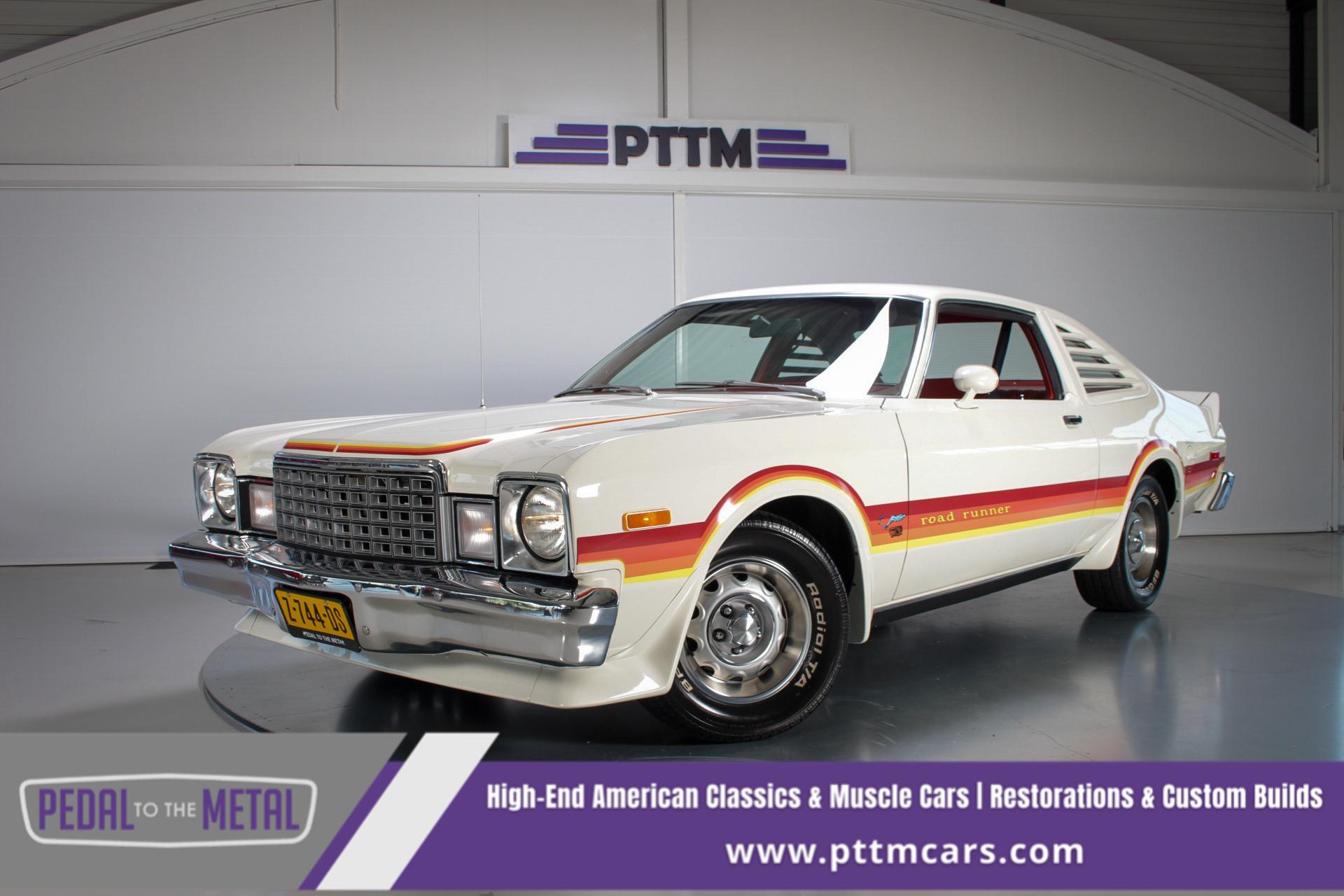
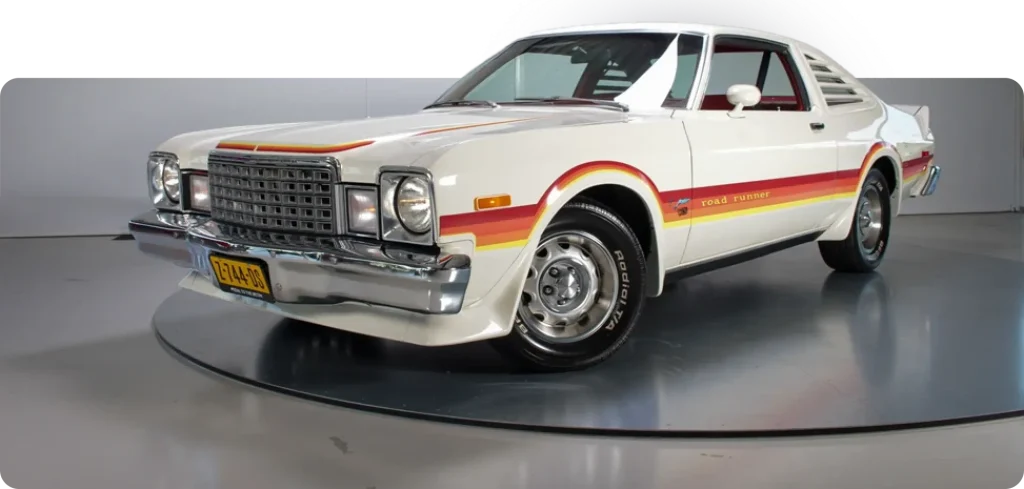
1978 Plymouth ROAD RUNNER
€35.000,-
View car
44343444-0.jpg
1967
Manual
60.263km
1967 Shelby Gt500 In Restoration + Upgrades
€399.750,-
View car

Buyer’s Guides:

The Ford Mustang is the most iconic American muscle car ever built. Introduced in April 1964, it created an entirely new category of car, sold over a million units in its first two years, and has never stopped captivating collectors worldwide. Whether you are looking at your first classic Mustang or adding to an established collection, this guide covers everything that matters – from the key model years and body styles to condition grades, values, and what to watch out for when buying.

At Pedal to the Metal, we have been sourcing, restoring, and selling classic Mustangs for over 20 years from our facility in the Netherlands, with clients across Europe, the United States, and the Middle East. The questions below are the ones we hear most often.

What years are considered classic Ford Mustangs?

Classic Mustangs generally refer to the first generation, produced from 1964 to 1973. This era covers the original pony car in its purest form – before the car grew heavier and lost its sporting edge in the mid-1970s. Within this window, collector interest concentrates heavily on 1964 to 1970, with the 1968 to 1970 fastbacks commanding the strongest premiums. The 1971 to 1973 models are larger and less sought-after by most collectors, though high-performance variants like the Boss 351 remain desirable.

What are the different Ford Mustang body styles?

Three body styles defined the first generation. The fastback is the most desirable and the most valuable today – its sloping roofline and aggressive profile have aged better than almost any other American design of the era. The convertible follows closely in collector value, particularly in high-specification trim. The hardtop coupe, also called the notchback, is the most common and typically the most affordable entry point into Mustang collecting, though rare options packages and engine codes push certain examples well above that baseline.

What is the most collectible classic Ford Mustang?

The 1966 and 1967 Shelby GT350 fastbacks are the most desirable Shelbys of the classic era, representing the peak of what Carroll Shelby’s team built before Ford took greater control of the program. The 1968 and 1969 GT500 sit just behind them in terms of collector demand, along with the 1969 and 1970 Boss 429. Among non-Shelby examples, the 1969 Boss 302 and any early K-code high-performance fastback with a four-speed manual are consistently among the strongest performers at auction. Originality matters enormously at this level – a documented, numbers-matching example commands a significant premium over an equivalent car with an engine swap or repainted body.

What does numbers matching mean on a Ford Mustang?

Numbers matching means the major components – primarily the engine block and transmission – carry stamped codes that match the car’s original build documentation. Ford stamped a partial VIN on the engine block at the factory, and a genuine numbers-matching Mustang will have those codes align with the car’s door tag and title. For serious collectors and investors, this is a non-negotiable condition. A Mustang with a replaced engine, even a correct-specification replacement, will sell for considerably less than an identical car with its original drivetrain intact.

What is the difference between a Shelby Mustang and a regular Mustang?

Carroll Shelby’s company took standard Ford Mustang fastbacks and transformed them into purpose-built performance cars with upgraded suspension, larger engines, wider wheels, and distinct bodywork. The Shelby GT350 used a high-revving 289 cubic inch V8 tuned for handling and driver engagement. The GT500 was built around raw power, ultimately housing Ford’s 428 Cobra Jet in its most potent form. Beyond the mechanical differences, Shelby Mustangs received their own VIN sequence and are documented through Shelby American Automobile Club records, which makes verification straightforward for serious buyers.

What should I look for when buying a classic Ford Mustang?

Rust is the primary concern. Mustangs of this era are notorious for corrosion in specific areas: the floor pans, the torque boxes at the front of the floor, the rear frame rails, the trunk floor, and the lower quarters. A surface respray can hide serious structural rust underneath, so a thorough inspection underneath the car is essential before any purchase. Beyond the body, check that the VIN plates are present and consistent across the dashboard, door jamb, and engine bay. On high-value examples, commissioning a pre-purchase inspection from a specialist is money well spent.

How much does a classic Ford Mustang cost?

Prices range enormously depending on model year, body style, engine, condition, and documentation. A solid driver-quality hardtop from the mid-1960s can be found in the $30,000 to $50,000 range. A properly restored fastback in a desirable configuration typically starts around $60,000 to $90,000. Pro-touring builds with modern chassis and drivetrain upgrades command $100,000 to $180,000 for quality examples. Documented Shelby models and Boss variants occupy a different tier entirely, with the best examples trading well above $200,000 at major auctions. At Pedal to the Metal, our Mustang inventory typically ranges from €60,000 to €180,000 depending on specification.

What is a pro-touring Mustang?

A pro-touring Mustang keeps the iconic first-generation body and aesthetic while replacing the original mechanical package with modern underpinnings. This typically means a late-model Coyote or LS V8, upgraded brakes and suspension, wider wheels and tires, and a modern interior. The result is a car that looks authentically period-correct but drives, stops, and handles like a modern sports car. Pro-touring builds are particularly popular with buyers who want to use their Mustang regularly rather than treat it as a show piece. Pedal to the Metal builds custom pro-touring Mustangs from our restoration facility in the Netherlands.

Can I buy a classic Ford Mustang in Europe and import it to the United States?

Yes. Many American buyers purchase classic Mustangs through Pedal to the Metal and have them shipped back to the United States. Cars over 25 years old are exempt from US federal safety and emissions regulations, which makes the import process significantly simpler than for newer vehicles. We handle the complete logistics for American buyers, from export documentation through to door-to-door delivery at your US address. The process typically takes six to eight weeks from purchase to delivery.

What classic Ford Mustangs does Pedal to the Metal currently have for sale?

Our Mustang inventory changes regularly and includes everything from restored fastbacks and convertibles to custom pro-touring builds and Eleanor-tribute GT500s. We source from across the United States and Europe, and every car is inspected and prepared at our facility in Sneek, Netherlands before delivery. You can view current availability at pttmcars.com or contact us directly at [email protected] or [email protected] for a full rundown of what we have in stock, including cars that may not yet be listed online.

Does Pedal to the Metal build custom Ford Mustangs?

Yes. Our restoration facility handles everything from ground-up numbers-matching restorations to fully bespoke pro-touring builds. If you have a specific configuration in mind – a particular year, body style, engine combination, or color – we can source the right base car and build it to your specification. Build timelines vary depending on the scope of the project, but we keep clients closely involved throughout the process. Contact us at [email protected] or [email protected]  to discuss what you have in mind.

Carroll Shelby took a car that Ford had built for the masses and turned it into something else entirely. The Shelby Mustang is not simply a well-optioned Mustang. It is a purpose-built performance machine with its own VIN sequence, its own documentation system, and its own place in the hierarchy of American collector cars – a place that has only grown more significant as the years pass and the cars become rarer. Understanding the difference between a genuine Shelby and a tribute car, between the GT350 and the GT500, and between the key model years is essential before putting serious money into this market.

At Pedal to the Metal, we source, sell, and restore Shelby Mustangs from our facility in the Netherlands. These are the questions serious buyers ask most often.

What is the difference between a Shelby GT350 and a Shelby GT500?

The GT350 was Carroll Shelby’s driver’s car. Built around the high-revving 289 cubic inch small block V8, it was tuned for handling, balance, and driver engagement rather than raw straight-line power. The original 1965 GT350 produced 306 horsepower – a significant increase over the standard K-code Mustang – and was fitted with suspension upgrades, stickier brakes, and competition-oriented components that made it genuinely capable on a circuit. The GT500 arrived in 1967 and was built around a different philosophy: maximum power. It housed Ford’s 428 cubic inch big block V8, producing imposing torque and straight-line performance. Where the GT350 rewarded a skilled driver, the GT500 rewarded anyone who wanted to feel acceleration at its most visceral. Both carry the Shelby name and the separate VIN documentation, but they are fundamentally different driving experiences and occupy different positions in the collector market.

What years of Shelby Mustang are the most collectible?

The early years carry the strongest collector premiums. The 1965 GT350 is the most historically significant Shelby Mustang ever built – it was the first, it was built in the smallest numbers, and all 526 examples were finished in Wimbledon White with Guardsman Blue stripes, making them immediately identifiable. Hagerty values a 1965 GT350 in good condition at around $381,000, with concours examples reaching $562,000. The 1966 GT350 followed with more options and higher production, and the 1966 and 1967 models are considered the peak of the GT350 in terms of collector desirability. The 1967 GT500 was the first year of the big block Shelby and is deeply significant – only 2,048 were built, and pristine examples have reached well above $200,000. The 1968 and 1969 models are more common and more accessible, but strong examples still command serious money.

How do I verify that a Shelby Mustang is genuine?

Every Shelby Mustang built by Shelby American carries its own unique Shelby VIN sequence, separate from the standard Ford VIN. This is the starting point for authentication. Beyond the VIN, the Shelby American Automobile Club maintains production records for all genuine Shelby Mustangs and can confirm whether a specific car’s VIN matches the production records for the year and specification it is claimed to be. A SAAC registry report is the equivalent of a Pontiac Historical Services report for a GTO – it is the document that separates a genuine car from a tribute. For cars from 1967 onward, Marti Auto Works also provides production data from Ford’s manufacturing records, which cross-references the Shelby VIN against Ford’s build data. For any Shelby purchase at significant value, both documents together provide the most complete authentication picture available.

What is a Shelby GT350R?

The GT350R was the full competition version of the GT350, built for SCCA B/Production racing rather than street use. It was stripped of all non-essential equipment – no rear seat, no radio, no heater – and fitted with competition-specification suspension, a larger fuel tank, and racing safety equipment. Only 36 were built in 1965, making the GT350R one of the rarest and most historically significant American performance cars of the era. A documented 1965 GT350R in concours condition sold for $3.85 million, making it the most expensive Mustang ever sold. Even partial or heavily modified examples carry enormous value due to their racing history and extreme rarity.

What happened to the Shelby program after 1969?

The original Shelby American program ended after the 1969 model year. Approximately 789 unsold 1969 examples were given 1970 VINs with minor cosmetic changes – a chin spoiler and black hood stripes – and sold as 1970 models. These are genuine Shelby-documented cars despite the VIN year discrepancy, and collectors understand their status. After 1970, there was no authentic Shelby Mustang program for nearly four decades. Ford revived the GT500 name in 2007 as an in-house project, and later reintroduced the GT350 for the 2015 to 2020 model years built around the remarkable flat-plane crank Voodoo V8. These modern Shelbys are increasingly collectible in their own right but are a separate chapter from the classic-era cars.

What should I look for when buying a classic Shelby Mustang?

Authentication is the first and most important consideration. The Shelby market has a well-documented history of tribute cars – standard Mustangs fitted with Shelby body components and presented as genuine examples. The SAAC registry check is non-negotiable before any serious purchase. Beyond authentication, inspect the car as you would any first-generation Mustang, with particular attention to the floor pans, torque boxes, rear frame rails, and lower quarters for rust. On GT350 cars, verify that the engine is the correct 289 K-code block with matching stamps. On GT500 cars, confirm the correct 428 engine identification. Shelby-specific components including the fiberglass hood, instrument cluster, and suspension pieces should be verified for correctness. The Shelby market rewards completeness and originality more directly than almost any other American muscle car segment.

Does Pedal to the Metal sell and restore Shelby Mustangs?

Yes. We source and sell genuine Shelby Mustangs when strong documented examples become available, and we restore Shelby Mustangs to correct factory specification at our facility in Sneek. Shelby restoration requires specific marque knowledge – correct casting numbers, correct date-coded components, correct Shelby-specific assembly details – that goes beyond a standard Mustang restoration. If you are looking for a specific Shelby model or want to discuss a restoration project on a car you already own, contact us at [email protected] or call +31 6 25 19 61 76.

The Chevrolet Camaro arrived in 1967 as General Motors’ answer to the Ford Mustang, and it immediately ignited one of the great rivalries in American automotive history. Over fifty years later, the first-generation Camaro sits at the top of the muscle car collector market, with the rarest examples selling for well over a million dollars at major auctions. Whether you are buying your first classic Camaro or adding a specific variant to an existing collection, this guide covers what matters most – from model year differences and performance packages to condition grading, authentication, and what to watch out for before you sign anything.

At Pedal to the Metal, we have been sourcing and selling classic Camaros for over 20 years from our facility in the Netherlands, with clients across Europe, the United States, and the Middle East.

What years are considered classic Chevrolet Camaros?

The first generation, covering 1967 to 1969, is where the serious collector market concentrates. These three years represent the Camaro in its original form, before the body changed and the horsepower numbers softened through the 1970s. The second generation, running from 1970 to 1981, contains several highly desirable variants, particularly the 1970 split-bumper models. First-generation cars are the most studied, the most counterfeited, and the most emotionally charged vehicles in the collector market. Each of the three years is meaningfully different from the others in ways that directly affect value and authenticity assessment.

What is the difference between the 1967, 1968, and 1969 Camaro?

Each year brought significant changes that every serious buyer needs to understand. The 1967 was the first-year car, with vent windows and a relatively simple cowl tag that documents the original build specification. The 1968 introduced Astro Ventilation in place of the vent windows, added federally mandated side marker lights, and solved the first year’s wheel hop problem with staggered rear shocks. Buyers should know the 1968 cowl tag carries minimal build information, making it the model year most frequently misrepresented by sellers. The 1969 received all-new sheetmetal outside of the hood, trunk, and roof, giving the car a lower, wider, more aggressive stance. It was the final year of the body style, offered the widest range of engine options of any first-generation year, and included the legendary ZL1. The 1969 generates the most buyer interest and the most counterfeits in the market.

What are the RS, SS, and Z/28 packages?

Three option packages defined the first-generation Camaro’s performance and appearance hierarchy. The RS was purely an appearance package featuring hidden headlights behind body-colored doors, additional bright trim, and RS badging. It could be ordered on any trim level and did not include performance upgrades. The SS was the performance package, adding a 350 or 396 cubic inch V8, upgraded suspension, and SS badging. The Z/28 was the most focused driver’s car, built around a high-revving 302 cubic inch small block developed specifically for Trans-Am racing, available only with a four-speed manual gearbox. These packages could be combined, so RS/SS cars are common. A genuine Z/28 is a different machine altogether from an SS and commands significantly higher values.

What is a COPO Camaro and why is it so valuable?

COPO stands for Central Office Production Order, a purchasing channel Chevrolet maintained primarily for fleet and commercial buyers. In 1969, a small number of dealers used this system to order Camaros fitted with engines that were never available through the standard options list – specifically the 425 horsepower L72 427 cubic inch V8 and the legendary ZL1. The ZL1 used an all-aluminum block and heads originally developed for racing, was underrated at 430 horsepower, and covered the quarter mile in the low 13-second range in stock form. Only 69 ZL1 Camaros were built, making them among the rarest and most valuable production muscle cars ever sold. A documented, authentic ZL1 represents the absolute ceiling of first-generation Camaro values.

What is a Yenko Camaro?

Don Yenko was a Chevrolet dealer in Canonsburg, Pennsylvania, who used the COPO system to order high-displacement engines for Camaros and then sold the finished cars through his dealership. Yenko Camaros typically received the 427 L72 engine along with distinctive Yenko badging and striping. They occupy a special place in the collector market as authenticated dealer-modified cars with documented provenance, sitting above a standard COPO car in collector desirability due to their additional rarity and the Yenko brand recognition. A genuine Yenko can be verified through production documentation and the Super Yenko data plate, and values for well-documented examples are exceptional.

What should I look for when buying a classic Chevrolet Camaro?

Rust is the primary concern. Key areas to inspect carefully are the wheel arches, rocker panels, floor pans, front and rear windscreen surrounds, lower quarters, and trunk floor. Beyond corrosion, the 1969 model in particular has a well-documented history of counterfeiting, where base or SS cars are converted to appear as Z/28 or COPO examples by adding the correct exterior trim and badging. Authentication requires examining the cowl tag, engine stamp codes, partial VIN stamps, and trim tag data. For any high-value example, a pre-purchase inspection by a Camaro specialist and a report from the National Camaro Restorers Club or a recognized documentation service is essential. Do not rely on visual inspection alone.

How much does a classic Chevrolet Camaro cost?

Values span an enormous range. A driver-quality first-generation hardtop in standard V8 trim typically trades between $30,000 and $55,000. A well-restored SS in a desirable color and transmission combination sits in the $60,000 to $100,000 range. Documented Z/28 examples in strong condition start around $80,000 and climb well above $150,000 for exceptional cars. COPO 427 cars with clean documentation trade above $200,000. The ZL1 and documented Yenko Camaros occupy a separate tier entirely, with significant auction results in the six and seven-figure range. The 1969 Yenko Prototype sold for $1,815,000 in January 2026. At Pedal to the Metal, our Camaro inventory covers the full range from restored drivers to collector-grade documented examples.

What is a pro-touring Camaro?

A pro-touring Camaro retains the original first or second-generation body while replacing the mechanical package with modern components – typically a late-model LS or LT V8, upgraded brakes, coilover suspension, wider wheels and tires, and a modernized interior. The result drives, stops, and handles like a contemporary sports car while looking period-correct from every angle. Pro-touring builds have become increasingly popular among buyers who want to use their Camaro as a driver rather than a trailer queen. Pedal to the Metal builds custom pro-touring Camaros at our restoration facility in the Netherlands, and we can build to your specification from the ground up.

What is the most collectible second-generation Camaro?

The 1970 model is the standout, introduced mid-year after production delays which is why it is sometimes referred to as the 1970.5. Its European-influenced fastback design was a significant departure from the first generation and still looks exceptional today. The rarest and most desirable 1970 variant is the L78 396, which actually displaced 402 cubic inches, of which approximately 600 were produced. The 1970 Z/28 with the LT1 350 producing 360 horsepower is also highly regarded. Among later second-generation cars, the late 1970s Z/28 models are gaining collector traction as Gen X buyers pursue the cars of their youth.

Can I buy a classic Camaro in Europe and import it to the United States?

Yes. Many American buyers purchase classic Camaros through Pedal to the Metal and ship them back to the US. Cars over 25 years old are exempt from US federal safety and emissions regulations, keeping the import process clean and straightforward. We handle the complete logistics from export documentation at our Netherlands facility through to door-to-door delivery at your US address. Typical delivery time is six to eight weeks from purchase to arrival.

Does Pedal to the Metal build custom Camaros?

Yes. Our restoration facility handles everything from numbers-matching ground-up restorations to fully bespoke pro-touring builds on first and second-generation bodies. If you have a specific configuration in mind – a particular year, engine, color, or level of modification – contact us at [email protected] or [email protected]  to discuss what is possible. We also carry current Camaro inventory that can be viewed at pttmcars.com, including cars that may not yet be listed online.

The Chevrolet Chevelle is the purest expression of the American muscle car formula. Big engine, mid-size body, rear-wheel drive, and enough straight-line performance to embarrass almost anything else on the road. Introduced in 1964 as a practical family car, the Chevelle grew through the decade into one of the most powerful production vehicles Detroit ever built. By 1970, with the LS6 454 producing 450 horsepower from the factory, it had reached a peak that no production car of that era could touch. The muscle car era ended shortly after, partly because it had nowhere left to go.

At Pedal to the Metal, we source and sell classic Chevelles from our facility in the Netherlands, with clients across Europe, the United States, and the Middle East. These are the questions we hear most often.

What years are considered classic Chevrolet Chevelles?

The collector market focuses almost entirely on the second-generation Chevelle, produced from 1968 to 1972. This is the era that produced the SS 396, the SS 454, and the legendary LS6. The 1970 model year sits at the absolute peak of collector demand, representing the final moment when GM allowed its engineers to build without significant restriction on displacement or output. The 1968 and 1969 models are also highly sought after for their strong engine options and cleaner styling. The 1971 and 1972 cars saw compression ratios drop in response to new emissions and insurance regulations, which reduced output noticeably, though documented SS examples from these years remain desirable.

What is the Chevelle SS and what does it mean?

SS stands for Super Sport, an option package that transformed a standard Chevelle into a performance machine. Ordering the SS in the 1968 to 1972 period required selecting the Malibu trim level, then adding the SS package on top of it. The package brought upgraded suspension, larger brakes, distinctive hood and body striping, SS badging, and access to the highest-output engine options that were not available on standard Chevelles. It is important to understand that the SS was an option package, not a separate model. This distinction matters because it means many Chevelles have been converted to SS appearance after the fact, and a genuine, documented SS car commands a meaningful premium over a look-alike.

What is the difference between the LS5 and LS6 Chevelle?

Both engines displaced 454 cubic inches and were introduced in the 1970 model year when GM lifted its internal ban on putting large displacement engines in mid-size cars. The LS5 was the standard 454, producing 360 horsepower with hydraulic lifters and a more streetable tune. The LS6 was an entirely different proposition. It used solid lifters, an 800 cfm Holley four-barrel carburetor, 11.25:1 compression, four-bolt main caps, forged steel internals, and an aluminum intake manifold. Factory rated at 450 horsepower and 500 lb-ft of torque, it carried the highest factory power rating of any production car in the muscle car era. Ordering the LS6 also required either the Muncie M22 Rock Crusher four-speed manual or the heavy-duty Turbo 400 automatic, along with additional mandatory cooling and battery upgrades.

How many LS6 Chevelles were built?

Approximately 4,475 LS6 Chevelles were produced across the 1970 to 1972 model years, with the vast majority being 1970 hardtops. The rarest and most valuable variant is the 1970 LS6 convertible, of which fewer than 20 are believed to exist with documented provenance. When a verified LS6 convertible surfaces, it trades well into six figures regardless of condition, because the combination of the highest-output engine and the open body style was almost never ordered together. Documented LS6 hardtops are significantly more common but still represent a distinct tier of the Chevelle market, with the best examples consistently achieving strong results at major auctions.

What does numbers matching mean on a Chevelle?

Numbers matching on a Chevelle means the engine block carries a stamped code that corresponds to the car’s original build documentation, confirming the engine is the one the car left the factory with. Chevrolet stamped a partial VIN derivative on the engine pad, and a genuine numbers-matching car will have those codes align with the trim tag and cowl tag. For LS6 cars this verification is particularly critical, because the value premium over a non-matching example is substantial enough to incentivize fraudulent misrepresentation. Third-party authentication from a recognized Chevelle registry or specialist is worth the cost on any high-value purchase.

What should I look for when buying a classic Chevelle?

Rust is the primary concern, particularly in the floor pans, rocker panels, lower rear quarters, trunk floor, and the area where the front fenders meet the firewall. These are structural areas and serious corrosion here means significant expense to repair properly. Beyond the body, the most important thing to verify on any SS purchase is that the car is a genuine documented SS example rather than a base Malibu fitted with SS trim after the fact. Check the cowl tag for the correct SS option codes, verify the engine stamps, and on high-value cars such as LS6 examples, cross-reference against the relevant registry before purchasing. A clean, well-documented Chevelle with clear provenance is worth paying a premium for over a cheaper car with questions attached.

How much does a classic Chevelle cost?

A driver-quality standard V8 Chevelle from the 1968 to 1972 period typically trades in the $30,000 to $55,000 range. Documented SS 396 examples in solid condition start around $50,000 and climb to $90,000 or more depending on specification, color, and transmission. LS5 SS 454 hardtops in strong condition trade from $80,000 to $130,000. Documented matching-numbers LS6 hardtops start well above $100,000, with exceptional examples reaching significantly higher. The LS6 convertible, when one surfaces publicly, occupies its own price category entirely. At Pedal to the Metal, our Chevelle inventory is priced according to documentation, authenticity, and condition.

What is a pro-touring Chevelle?

A pro-touring Chevelle keeps the original second-generation body and exterior styling while replacing the mechanical package with modern components. Typically this means a late-model LS or LT V8, upgraded brakes and coilover suspension, wider wheels and tires, and a modernized interior. The Chevelle’s long hood and wide body make it one of the most visually dramatic canvases for a pro-touring build, and the result is a car that looks as aggressive as the original but drives with the composure and reliability of a contemporary machine. Pedal to the Metal builds custom pro-touring Chevelles at our restoration facility in the Netherlands and can build to your exact specification.

Is a classic Chevelle a good investment?

The 1968 to 1972 SS Chevelle has appreciated steadily over the past two decades, and documented high-performance examples have outperformed the broader classic car market. The LS6 in particular has established itself as one of the blue-chip muscle car investments, with consistent demand from serious collectors globally. As with any collector car, condition, documentation, and authenticity are the primary value drivers. A well-documented numbers-matching example will always hold and build value more reliably than an undocumented car of equivalent appearance. For buyers approaching this as an investment as much as a passion purchase, provenance should be treated as non-negotiable.

Can I buy a classic Chevelle in Europe and import it to the United States?

Yes. Many American buyers purchase classic Chevelles through Pedal to the Metal and ship them back to the US. Cars over 25 years old are exempt from US federal safety and emissions regulations, keeping the import process clean and straightforward. We handle the complete logistics from our Netherlands facility through to door-to-door delivery at your US address, typically within six to eight weeks of purchase. Contact us at [email protected] or [email protected] or view current inventory at pttmcars.com.

The Chevrolet Corvette is America’s sports car – the one vehicle that has represented the country’s performance ambitions without interruption since 1953. Unlike the muscle cars that defined the same era, the Corvette was never about carrying four passengers to the drag strip. It was always about the driver, the road, and what an American factory could do when it decided to compete with Europe on pure sporting terms. The result, across three generations of collector-grade Corvettes, is a lineup that ranges from attainable driver-quality cars to some of the most valuable American vehicles ever built.

At Pedal to the Metal, we source and sell classic Corvettes alongside our American muscle car inventory, with clients across Europe, the United States, and the Middle East. These are the questions we hear most often.

What are the different generations of classic Corvette?

Collectors focus primarily on three generations. The C1, produced from 1953 to 1962, introduced the concept of an American sports car built on a fiberglass body with genuine performance intent. The C2, known as the Sting Ray, ran from 1963 to 1967 and represents the design and performance peak of the classic era for most serious collectors. The C3, produced from 1968 to 1982, carried the Corvette through the muscle car era, the emissions crackdown of the 1970s, and into the 1980s, resulting in a wide range of performance and value within a single generation. Each generation is meaningfully different, and the right choice depends on what you are looking for in terms of driving experience, investment potential, and budget.

What is the most collectible classic Corvette?

The C2 generation as a whole sits at the top of the collector market, and within it the 1967 model is the most refined and most desirable year of the five-year run. The 1967 introduced the L88 engine option, a competition-specification 427 cubic inch V8 with aluminum heads, solid lifters, and a 12.5:1 compression ratio that required 103 octane fuel. Only 20 were built in 1967, making it the rarest L88 of all. The last 1967 L88 to sell publicly brought $2,695,000 at Mecum’s Glendale auction. Even without the L88, a 1963 split-window coupe – the only year the C2 was built with the distinctive divided rear window – is among the most immediately recognizable and consistently valued Corvettes in existence, with strong documented examples regularly achieving six figures.

What is the 1963 Corvette split-window and why is it significant?

The 1963 was the first year of the C2 generation and introduced independent rear suspension and the coupe body style to the Corvette lineup for the first time. Its most distinctive feature is the spine that divides the rear window into two sections, a styling element that Chevrolet removed in 1964 due to criticism about rear visibility. That one-year-only design makes the 1963 coupe uniquely identifiable and consistently sought after by collectors. It was also the year the Z06 package was first offered, a high-performance option of which only 199 were built, making documented Z06 examples among the rarest and most valuable of the entire C2 generation.

What is the C3 Corvette and which years are worth buying?

The C3 ran from 1968 to 1982 and is the most varied generation in terms of both performance and collector value. The early C3 cars from 1968 to 1972 retain genuine muscle car era power and are the most desirable within the generation. The 1969 model in particular offered the L88 and the near-mythical ZL1, an all-aluminum 427 originally developed for Can-Am racing, of which only two were ever sold to the public – making them effectively priceless if one were to surface. The 1970 is considered by many C3 collectors the performance peak of the generation, with the LT-1 small block producing 370 horsepower in a year where a GM labor strike kept production numbers low, adding collectability. From 1973 onward, emissions regulations steadily reduced output, and while driver-quality C3s from the mid and late 1970s represent genuinely affordable entry points into Corvette collecting, they sit in a different investment tier from the early cars.

How much does a classic Corvette cost?

C1 values range enormously by year and condition, from around €45,000 ($50,000) for a solid driver-quality late C1 to well above €180,000 ($200,000) for a pristine early example in exceptional specification. C2 cars start around €70,000 ($77,000) for a solid driver-quality 327-powered coupe and climb sharply for big-block cars and documented high-performance variants. A numbers-matching 427 C2 in strong condition typically trades above €135,000 ($150,000). L88 and Z06 examples are priced individually based on documentation and condition, with values well into six and seven figures for the rarest configurations. Early C3 big-block cars trade from €55,000 to €110,000 ($60,000 to $120,000) depending on specification and condition.

What should I look for when buying a classic Corvette?

The fiberglass body does not rust in the conventional sense, but it does crack, warp, and hide repairs poorly when improperly done. Check all body panel gaps carefully and look for evidence of collision repair or poorly matched color. The frame and suspension components are steel and do corrode, so an inspection underneath the car is essential. On C2 and early C3 cars, verify the engine stamp codes against the trim tag data, as these cars have been counterfeited in the same way as other high-value muscle cars. Air-cooled side pipes on C3 cars were prone to cracking and are expensive to replace correctly. On any numbers-matching purchase, a National Corvette Restorers Society inspection or equivalent specialist verification adds significant confidence.

Is the Corvette a good investment?

The C2 generation, particularly the 1963 to 1967 big-block cars, has a strong long-term appreciation track record and continues to attract serious collector interest globally. The L88 and Z06 variants sit firmly in the blue-chip classic car investment category alongside the rarest Mopars and COPO Camaros. Early C3 cars with documented high-performance specifications have also appreciated steadily. As with all collector cars, documentation, originality, and condition are the primary value drivers. A well-documented numbers-matching C2 in a desirable color and engine combination has consistently outperformed the broader classic car market over the past two decades.

Can I buy a classic Corvette in Europe and import it to the United States?

Yes. Many American buyers purchase classic Corvettes through Pedal to the Metal and ship them back to the US. Cars over 25 years old are exempt from US federal safety and emissions regulations, keeping the import process clean and straightforward. We handle complete logistics from our Netherlands facility through to door-to-door delivery at your US address, typically within six to eight weeks of purchase. Contact us at [email protected] or view current inventory at pttmcars.com.

When collectors talk about the ultimate American muscle cars, the conversation always comes back to Mopar. While Ford and GM built their muscle cars in the hundreds of thousands, Chrysler’s performance divisions at Dodge and Plymouth produced far smaller numbers of far wilder machines. The 426 Hemi V8, the winged Daytona and Superbird, the Hemi Cuda convertible – these are the cars that reach seven figures at auction and define what the golden age of American muscle was capable of. No other manufacturer came close to the combination of rarity, engineering aggression, and visual theatre that Mopar delivered between 1968 and 1971.

At Pedal to the Metal, we source and sell classic Mopars from our facility in the Netherlands, with clients across Europe, the United States, and the Middle East. These are the questions we hear most often.

What does Mopar mean?

Mopar is shorthand for Motor Parts, a division of Chrysler Corporation that supplied parts and accessories for Dodge and Plymouth vehicles. Over time the term became shorthand for the entire performance culture surrounding Dodge and Plymouth muscle cars from the 1960s and early 1970s. When collectors refer to a classic Mopar, they mean a performance-oriented Dodge or Plymouth from the golden age of muscle, typically powered by the 383, 440, or 426 Hemi V8.

What is the 426 Hemi and why is it so important?

The 426 cubic inch Hemi V8 is the engine that defined Mopar’s performance reputation. It takes its name from the hemispherical combustion chambers in its cylinder heads, a design that allows larger valves and more efficient airflow than conventional engines. Introduced for racing in 1964 and released for street use in 1966, the 426 Hemi was factory rated at 425 horsepower, a figure widely understood to be conservative. It dominated drag strips and NASCAR tracks alike, and its presence in any classic Mopar transforms the car into a different tier of collectible. The Hemi was discontinued after 1971, making that final year particularly significant for collectors.

What is the difference between a Cuda and a Barracuda?

The Plymouth Barracuda ran from 1964 through 1974 across three generations. The first two generations were relatively modest pony cars. The third generation, built from 1970 to 1974 on the wider E-body platform shared with the Dodge Challenger, was an entirely different machine – aggressive, wide-bodied, and capable of housing Chrysler’s largest engines. The Cuda was the high-performance variant of this third-generation Barracuda, available with the 383, 440, and 426 Hemi V8. It is the third-generation Hemi Cuda that collectors chase. A numbers-matching 1970 or 1971 Hemi Cuda hardtop averages around $214,000 according to Hagerty, while the convertible, of which only seven four-speed examples were built, commands seven figures at auction.

What makes the Hemi Cuda convertible so valuable?

Three factors combine to produce values that exceed almost any other American muscle car. First, the 426 Hemi was the most powerful and most expensive engine option available, ordered by relatively few buyers. Second, the convertible body style was always the rarest configuration. Third, the first-generation Challenger and third-generation Cuda had very short production runs before the Malaise Era strangled output, so total surviving numbers are small. In 1970, exactly 666 Hemi Cudas were built in total. Of those, only 14 were convertibles, and only seven had the four-speed manual. A 1971 Plymouth Hemi Cuda convertible sold for $3.5 million at Mecum in 2014, and another sold for $3.3 million at Mecum Kissimmee in 2026.

What is the Dodge Charger and which years are most collectible?

The Dodge Charger is one of the most iconic American cars ever built, made famous on the street, on the NASCAR superspeedways, and later as the General Lee in The Dukes of Hazzard and as Dominic Toretto’s car in the Fast and Furious films. The second generation, produced from 1968 to 1970, is the most desirable, particularly the 1968 and 1969 models with their distinctive tunneled rear windows and broad fastback rooflines. The R/T trim with the 440 or 426 Hemi is what serious collectors pursue. Only 343,307 second-generation Chargers were built across all years and trims, a fraction of contemporary Camaro or Mustang production, which is a core reason values have climbed so strongly.

What is the Dodge Charger Daytona and why is it so rare?

The Charger Daytona was built in 1969 for one specific purpose: to win on the NASCAR superspeedways. Dodge fitted the standard Charger body with an 18-inch aerodynamic nose cone and a 58-inch rear wing that stood tall enough to allow the trunk to open. Officially, 503 were built to meet NASCAR homologation requirements, but experts estimate the actual number at around 126. Of those, only around 92 are known to still exist, and just 70 were equipped with the 426 Hemi. The Daytona achieved what it was built for, reaching over 200 mph at Talladega. NASCAR banned the winged cars at the end of 1970. A documented Hemi Daytona sold for $3.3 million at auction, and examples regularly breach the million dollar mark when they surface publicly.

What is the Plymouth Superbird?

The Plymouth Superbird was the 1970 answer to the 1969 Dodge Daytona, built on the Road Runner body rather than the Charger. Plymouth needed to lure Richard Petty back to the brand, and the Superbird was the result. It received the same nose cone and towering rear wing treatment as the Daytona, and was available with the 440 Super Commando, the 440 Six Pack, or the 426 Hemi. Approximately 1,935 Superbirds were built, making it significantly less rare than the Daytona but still one of the most visually dramatic muscle cars ever produced. Of those, only around 135 were Hemi-powered. A Tor Red Superbird sold for $1.65 million at auction in 2022, and Hemi examples regularly exceed that figure.

What is the Plymouth Road Runner?

Plymouth launched the Road Runner in 1968 as a deliberately stripped-down, affordable muscle car – a no-frills machine with a powerful engine and a low price tag. The standard engine was a 383 cubic inch V8. The Hemi was available as an option. The Road Runner nameplate came with a cartoon bird logo and, famously, a horn that made the sound. It was an immediate success. By 1970 it was also available as a convertible, though fewer than 850 convertibles were built that year. Today Road Runners with the 440 Six Pack or 426 Hemi are serious collector cars. A 1970 Hemi Road Runner sold for $341,000 at Mecum Kissimmee, and a Hemi Superbird version crossed the block at $1.65 million.

What is the Dodge Challenger and which years are most valuable?

The first-generation Challenger was built from 1970 to 1974 on the E-body platform it shared with the Plymouth Cuda. Dodge positioned it as a wider, slightly more luxurious alternative to the Cuda, and it was available with the full range of Chrysler performance engines. The 1970 model is the most collectible year by a significant margin, as it was the first and, in most high-performance configurations, the most lavishly specified. The R/T trim with the 440 or 426 Hemi is the benchmark. The rarest first-generation Challenger is the 1970 Hemi R/T convertible, of which only nine were built. One sold at Mecum Phoenix in 2019 for $1.45 million. A standard 1970 Challenger R/T with the 426 Hemi in good condition is valued at around $127,000 according to Hagerty.

What are High Impact colors and why do they matter?

Chrysler offered a range of vivid, attention-demanding exterior colors throughout the 1969 to 1971 model years under names including Plum Crazy, Go Mango, Sublime, Citron Yella, and Tor Red. These colors were factory options, not aftermarket additions, and a Mopar in its correct original High Impact color with documented provenance commands a meaningful premium over the same car repainted. Many of these colors were discontinued after 1971, which adds to their rarity. For buyers evaluating any classic Mopar, verifying that the paint color matches the fender tag is a basic but critical authentication step.

What should I look for when buying a classic Mopar?

Rust is the primary structural concern, particularly in the floor pans, rocker panels, lower rear quarters, and around the trunk floor. Beyond the body, the most important authentication step is verifying the fender tag, which on Chrysler products documents the original factory specification including engine, transmission, exterior color, and trim codes. Engine stamp codes must match the fender tag data. On Hemi cars specifically, the premium over a non-Hemi example of the same model is so large that misrepresentation is a well-documented problem in the market. Third-party authentication and registry verification are essential for any Hemi purchase.

How much does a classic Mopar cost?

Entry-level classic Mopars with the 383 V8 in good driver condition start around $40,000 to $60,000. Documented 440-powered R/T and performance trim cars in strong condition range from $80,000 to $150,000 depending on model, year, and body style. Hemi-powered B-body cars such as Chargers, Road Runners, and Coronets start well above $100,000 for authentic examples. E-body Hemi cars – the Cuda and Challenger – start considerably higher, with average Hemi Cuda values around $214,000 and the rarest convertible examples reaching into the millions. At Pedal to the Metal, our Mopar inventory spans the full range, priced according to documentation, engine specification, and originality.

Can I buy a classic Mopar in Europe and import it to the United States?

Yes. Many American buyers purchase classic Mopars through Pedal to the Metal and have them shipped back to the US. Cars over 25 years old are exempt from US federal safety and emissions regulations, keeping the import process straightforward. We handle complete logistics from our Netherlands facility through to door-to-door delivery at your US address, typically within six to eight weeks of purchase. Contact us at [email protected] or [email protected] or view current inventory at pttmcars.com.

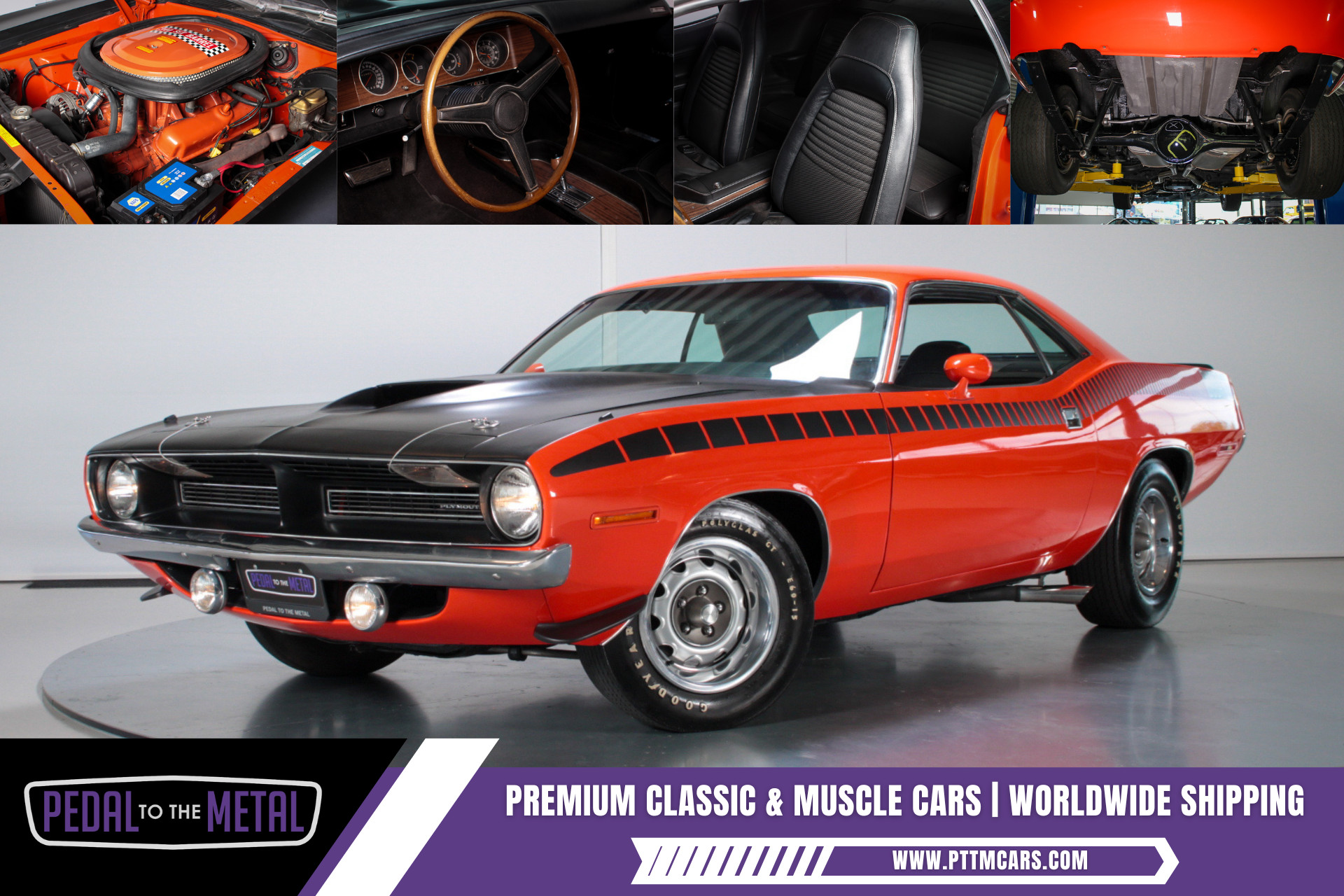
The 1970 Plymouth AAR Cuda is one of the most distinctive and purposeful muscle cars ever built for the street. Created specifically to homologate Plymouth’s Trans-Am racing program under Dan Gurney’s All American Racers team, it is a one-year-only car that combines racing pedigree with an unmistakable visual identity. Fewer than 2,800 were built. If you want one today, you are competing with a global collector market that understands exactly what it has.

At Pedal to the Metal, we have sold AAR Cudas to clients across Europe and internationally, including the Plymouth AAR Cuda 340 Six Barrel currently in our inventory. These are the questions serious buyers ask most often.

What is an AAR Cuda?

AAR stands for All American Racers, the racing operation run by Dan Gurney that campaigned Plymouth Barracudas in the 1970 SCCA Trans-Am series. To compete under Trans-Am rules, Plymouth was required to produce a street-legal version of the race car for public sale, with the same engine configuration used on track. The result was the 1970 Plymouth AAR Cuda – a third-generation Barracuda fitted with a unique 340 cubic inch V8 topped by three two-barrel Holley carburetors, a setup Plymouth called the Six Barrel. The car was sold through Plymouth dealers from March through April of 1970 only, making it a true one-model-year machine. It is the street-going equivalent of what went racing, and that lineage is central to everything that makes it collectible.

What engine does the AAR Cuda have?

The AAR Cuda used a specially prepared 340 cubic inch LA-series V8 fitted with an Edelbrock aluminum intake manifold carrying three two-barrel Holley carburetors – the Six Barrel setup. Factory rated at 290 horsepower and 345 lb-ft of torque, the 340 Six Barrel was a high-revving, free-breathing engine that rewarded drivers who used the full rev range. Unlike the 426 Hemi or 440 big-blocks available in the standard Cuda, the AAR’s 340 was designed for balance and handling response rather than straight-line torque – a deliberate choice reflecting its Trans-Am racing heritage where cornering speed and mid-corner power delivery mattered as much as peak output. The AAR could cover the quarter mile in around 14.8 seconds, which bettered the Mustang Boss 302 and ran close to the Camaro Z/28 of the same year.

What makes the AAR Cuda visually distinctive?

Several details set it apart immediately and are critical for authentication. The fiberglass hood is functional, with a large scoop feeding the Six Barrel induction. Front and rear spoilers in fiberglass were fitted as standard, not optional. The strobe stripe graphics – running in flat black across the body in a lightning-bolt pattern – are unique to the AAR and are one of the most immediately recognizable graphics packages on any American car of the era. Factory side-exit exhaust was standard, with the pipes emerging ahead of the rear wheels. Staggered tire sizing front to rear – E60x15 fronts and G60x15 rears – gave the car a planted, aggressive stance. No factory air conditioning was available on the AAR, a deliberate weight-saving decision. Any AAR presented with factory air should be approached with caution.

How many AAR Cudas were built?

Plymouth built 2,724 AAR Cudas during a concentrated production window between March 11 and April 17, 1970. That is the total production for all colors and configurations – there were no subsequent model years. By comparison, Plymouth built over 19,000 standard Cudas in 1970. The AAR’s short production window and single-year availability make it inherently rarer than almost any other E-body Mopar, and surviving examples are a finite resource that cannot be replenished.

What is the AAR worth and what affects its value?

Documented numbers-matching AAR Cudas with correct specifications trade in the range of €90,000 to €190,000 ($100,000 to $210,000) depending on condition, color, and documentation quality. High Impact color cars – Sublime, Go Mango, Plum Crazy, and similar – command meaningful premiums over more common colors. Correct specification details matter significantly for value: the right block casting, correct Six Barrel components, correct fiberglass hood and spoilers, and the correct staggered tire sizing all affect what a serious buyer will pay. Non-matching or partially incorrect cars sell considerably lower. The AAR market rewards authenticity more harshly than almost any other Mopar outside the Hemi cars.

How do I authenticate an AAR Cuda?

Authentication centers on the fender tag, which on Chrysler products documents the original factory build specification in detail. The AAR has its own specific order codes that will be present on a genuine car. The engine block should carry a specific casting number for the AAR application – the 3577130-TA-340 block – along with the correct engine ID stamp. The carburetor setup, intake manifold, fiberglass hood, and spoilers should all match the factory specification. Because the AAR was a relatively low-volume car, counterfeiting through converting standard Cudas is possible, and a careful verification of all identifying codes is essential before purchasing at any significant price point.

What should I look for when inspecting an AAR Cuda?

Beyond the authentication checks, inspect the floor pans, rocker panels, and lower quarters for rust, which is the primary structural concern on any E-body car. The fiberglass hood and spoilers should be checked for cracks, repairs, and correct fit. The side-exit exhaust system is specific to the AAR and correct original components are increasingly difficult to find, so their presence and condition affects both authenticity and value. The interior should be inspected for condition and correct specification. On any car being represented as numbers-matching, the engine stamp codes require verification against the fender tag before purchase.

Can I buy an AAR Cuda through Pedal to the Metal?

Yes. We have experience sourcing, selling, and shipping AAR Cudas to clients internationally. If we have an example currently in inventory it will be listed on pttmcars.com. If you are looking for a specific color or configuration not currently available, contact us at [email protected] and we can discuss sourcing one on your behalf. We also handle complete shipping and import logistics for buyers in the United States, with door-to-door delivery typically within six to eight weeks of purchase.

The Pontiac Firebird Trans Am is one of the most recognizable American cars ever made. Its fame owes everything to a single movie: Smokey and the Bandit, released in 1977, in which Burt Reynolds piloted a black-and-gold Trans Am across the American South while outrunning half the police in Georgia. The film became the second-highest grossing movie of that year, and Trans Am sales went through the roof. Nearly five decades later, the car remains one of the most coveted pieces of American automotive and cinema history.

At Pedal to the Metal, we source and sell classic Pontiacs from our facility in the Netherlands, with clients across Europe, the United States, and the Middle East. These are the questions we hear most often about the Trans Am.

What car was used in Smokey and the Bandit?

The car in Smokey and the Bandit was a 1977 Pontiac Firebird Trans Am in the Special Edition Y82 package, finished in Starlight Black with gold decals, gold snowflake wheels, and the famous “Screaming Chicken” hood bird. Pontiac supplied four Trans Ams for the production. Three were destroyed during filming, and the fourth promotional car was later sold at auction for $550,000. The film cars were technically built on 1976 bodies fitted with 1977 front ends and decals, though for all practical purposes they represent the 1977 model year.

What engine did the Bandit Trans Am have?

The Special Edition Trans Am used in the film was fitted with the W72 performance version of Pontiac’s 400 cubic inch V8, producing around 200 horsepower and 325 lb-ft of torque. Those figures sound modest today, but this was 1977 – the era of strict emissions regulations that had strangled the output of every American performance car. The W72 package delivered 20 more horsepower than the standard 400 V8 and was paired with either a four-speed manual or Hydra-Matic automatic transmission. The engine note, the torque delivery, and the sheer presence of the car more than compensated for what the power figures suggest on paper.

What made the Bandit Trans Am’s look so distinctive?

Three elements defined the look. The Screaming Chicken, a large firebird decal spread across the hood, was the most visually arresting detail on any American car of the decade. The black-and-gold color scheme, with gold pinstriping and gold Pontiac snowflake wheels, gave the car a sense of drama that nothing else on the road could match. The quad headlights and louvered rear window completed the package. Together these elements created a design that was simultaneously aggressive and theatrical, which is exactly why it photographed so well on screen and why it still turns heads on the street today.

What years of Pontiac Trans Am are considered the most collectible?

The 1977 and 1978 Special Edition Y82 models carry the strongest cultural cachet because of the Smokey and the Bandit connection. Among earlier Trans Ams, the 1969 and 1970 first-year models are highly prized for their rarity and original performance credentials. The 1973 Super Duty 455, fitted with one of the last genuinely powerful V8s Pontiac produced before emissions regulations hit, is one of the most desirable Trans Ams ever built. The 1979 and 1980 models with the 6.6 litre engine offer good value as entry points into the Trans Am market.

What is the difference between a Pontiac Firebird and a Trans Am?

The Firebird was the full model line, introduced in 1967 as Pontiac’s version of the Chevrolet Camaro. The Trans Am was the top performance variant within that lineup, introduced in 1969 as a road-going homologation special. It received the most powerful available engines, upgraded suspension and brakes, distinctive bodywork including the rear spoiler and front air dam, and its own unique badging. Think of the Firebird as the family and the Trans Am as the fastest member of it. For collectors, a genuine Trans Am always commands a premium over a standard Firebird of the same year.

How do I know if a Trans Am is a genuine Special Edition Bandit car?

Genuine Y82 Special Edition Trans Ams are documented through Pontiac Historical Services, which maintains production records and can verify a car’s original factory configuration. Look for the Y82 option code on the trim tag inside the door jamb, the correct W72 engine stamp, matching VIN across the dash, door, and engine bay, and the original black-and-gold exterior. Many Bandit tribute cars exist that were converted from standard Firebirds or base Trans Ams after the fact. These can be beautifully done, but they are not factory Special Edition cars and should be priced accordingly.

What should I look for when buying a classic Pontiac Trans Am?

Rust is the primary concern, particularly in the floor pans, rocker panels, rear quarters, and the areas around the T-top openings on cars fitted with the optional removable roof panels. T-top cars require careful inspection around the roof seals, as water intrusion over decades causes damage that is expensive to repair properly. Check that the VIN plates are present and consistent, and verify the engine stamp codes match the trim tag. On Special Edition cars, confirm that the hood decal, badging, and wheel specification are correct for the claimed production option. A Pontiac Historical Services report is the definitive verification tool for any serious purchase.

How much does a classic Pontiac Trans Am cost?

A clean driver-quality 1977 or 1978 Trans Am in standard trim typically trades in the $25,000 to $45,000 range. Documented Y82 Special Edition examples in strong condition command $50,000 to $80,000. Pristine, fully restored Special Edition cars with correct documentation push above $100,000. The rare 1973 Super Duty 455 occupies its own tier, with the best examples selling well above $150,000 at major auctions. Tribute builds and resto-mods vary widely depending on quality and specification. At Pedal to the Metal, our Trans Am inventory is priced according to authenticity, condition, and documented history.

Can I build a Bandit-tribute Trans Am through Pedal to the Metal?

Yes. Our restoration facility in the Netherlands builds custom Trans Am tributes on original second-generation Firebird bodies, executed to whatever specification the client wants. This can range from a faithful period-correct recreation of the Special Edition look to a full pro-touring build with modern mechanicals under the classic exterior. If you want the visual drama of the Bandit car with the driving experience of a modern sports car, that combination is absolutely achievable. Contact us at [email protected] or [email protected] to discuss what you have in mind.

Does Pedal to the Metal ship Trans Ams to the United States?

Yes. We work with American buyers regularly and handle the complete shipping and import process from our facility in the Netherlands to your door in the US. Classic cars over 25 years old are exempt from US federal safety and emissions regulations, which keeps the import process clean and straightforward. Typical delivery time from purchase to arrival at your US address is six to eight weeks. Contact us at [email protected] or [email protected] or call us at +31 6 25 19 61 76 for current inventory and availability.

The Pontiac GTO is where the American muscle car story begins. In 1964, a group of Pontiac engineers led by John DeLorean found a way around General Motors’ internal policy restricting large engines in mid-size cars. They stuffed a 389 cubic inch V8 into the Pontiac Tempest, called it an option package to sidestep the corporate rule, and sold over 32,000 of them in the first year alone. Every muscle car that followed – the Chevelle SS, the Mustang GT, the Road Runner – owes its existence to that decision. Collectors have never forgotten it.

At Pedal to the Metal, we source and sell classic Pontiacs from our facility in the Netherlands, with clients across Europe, the United States, and the Middle East. These are the questions we hear most often about the GTO.

Why is the Pontiac GTO called the first muscle car?

The GTO established the formula that every subsequent muscle car followed: take a mid-size body, install the largest available V8 engine, keep the price accessible, and market it to young buyers who wanted performance without paying sports car money. Before the GTO, American manufacturers kept their largest engines in full-size cars. DeLorean’s team broke that convention deliberately, and the category it created dominated American automotive culture for the next decade. The name GTO itself was borrowed from Ferrari’s Gran Turismo Omologato, which DeLorean felt captured the car’s performance intent – and which Ferrari took exception to, though without legal consequence.

What years of Pontiac GTO are the most collectible?

The first generation, running from 1964 to 1967, is where collector interest is strongest for originality and historical significance. The 1964 is the most historically important as the car that started the muscle car era, and documented tri-power examples – fitted with three two-barrel carburetors – are particularly prized. The 1966 and 1967 models with their distinctive stacked headlights represent the styling peak of the first generation and have a strong collector following. The second generation runs from 1968 to 1972, and within it the 1969 and 1970 GTO Judge package cars are the most sought-after, with Ram Air IV equipped examples commanding the strongest prices. A 1970 GTO Judge Ram Air IV convertible sold for $1.1 million at Mecum in 2023.

What is the GTO Judge?

Pontiac introduced the Judge option package in 1969 as a high-performance and visually distinctive variant of the GTO, originally conceived as a response to the Plymouth Road Runner’s success with budget-oriented muscle buyers. The Judge came standard with the Ram Air III 400 cubic inch V8 rated at 366 horsepower, with the Ram Air IV as the high-performance option at 370 horsepower – a figure widely understood to be conservative. Visually it stood out with bold graphics, a rear spoiler, Rally II wheels, and vibrant color options including the iconic Carousel Red offered exclusively at launch. The Judge was produced for three years, from 1969 to 1971, with approximately 11,000 built in total. Ram Air IV convertibles are the rarest and most valuable configuration, with documented examples reaching seven figures at auction.

What is the difference between Ram Air III and Ram Air IV?

Both engines displaced 400 cubic inches and used functional hood scoops to feed cool outside air into the carburetor. The Ram Air III was the standard Judge engine, producing 366 horsepower with a relatively streetable tune that made it a strong performer while remaining drivable daily. The Ram Air IV was the high-output option, featuring larger round-port cylinder heads, a more aggressive camshaft, and higher compression, producing 370 horsepower by conservative factory rating. In practice the Ram Air IV was a significantly more aggressive engine, tuned closer to racing specification, and it is the configuration that commands the largest premium in the collector market today. Pontiac reportedly lost money on every Ram Air IV it built, which partly explains why so few were ordered.

How do I authenticate a first-generation GTO?

Authentication is particularly important for 1964 and 1965 models because the GTO in those years was an option package for the Pontiac Tempest and LeMans rather than a separate model, meaning there is no identifier in the VIN to distinguish a true GTO from a clone built from a base car. For these years, a Pontiac Historical Services documentation report is the only reliable authentication tool. PHS will provide a copy of the factory invoice or billing history for any Pontiac, confirming the car’s original configuration. From 1966 onward the GTO became its own model with a distinct VIN identifier, making authentication more straightforward, though PHS documentation remains the gold standard regardless of year.

What should I look for when buying a classic GTO?

Rust is the primary concern, particularly in the floor pans, rocker panels, lower quarters, and trunk floor. The GTO shares its A-body platform with the Chevelle and several other GM mid-size cars of the era, and the rust patterns are similar. Beyond corrosion, check that the VIN plate is present and consistent across the dashboard, door jamb, and engine bay. Verify the engine stamps against the trim tag data. On any Ram Air car, confirm the correct hood and intake components are present – these are the most commonly swapped items on cars presented as Ram Air examples that were not originally so equipped. For Judge cars specifically, the PHS report will confirm whether the Judge package was factory-ordered.

How much does a classic Pontiac GTO cost?

A driver-quality first-generation GTO hardtop with a standard 389 or 400 V8 typically trades from €45,000 to €75,000 ($50,000 to $83,000) depending on year and condition. Well-documented tri-power cars and convertibles command meaningful premiums above that baseline. Second-generation GTOs in standard trim start similarly. Judge hardtops in strong condition with Ram Air III typically trade from €70,000 to €110,000 ($77,000 to $121,000). Ram Air IV Judge examples command significantly more, with the rarest convertible configurations reaching into the hundreds of thousands. A 1970 Judge Ram Air IV convertible – one of only 37 built – sold for $1.1 million at Mecum in 2023.

Can I buy a classic GTO in Europe and import it to the United States?

Yes. We handle complete shipping and import logistics for American buyers from our Netherlands facility. Cars over 25 years old are exempt from US federal safety and emissions regulations, keeping the process straightforward. Typical delivery time from purchase to arrival at your US address is six to eight weeks. Contact us at [email protected] for current inventory and availability.

Pedal to the Metal is a specialist classic American muscle car dealership based in Sneek, Netherlands, with over 20 years of experience. We sell globally and handle complete shipping and import logistics for buyers in the United States, Europe, and beyond. Visit pttmcars.com or email [email protected]/[email protected] .

What We Do

Our Services

Get in Touch

We’re happy to discuss your plans and advise on the right next steps. Whether you’re considering a purchase, planning a restoration or build, or exploring options for selling or registration.
CTA06_cta-pttm2x