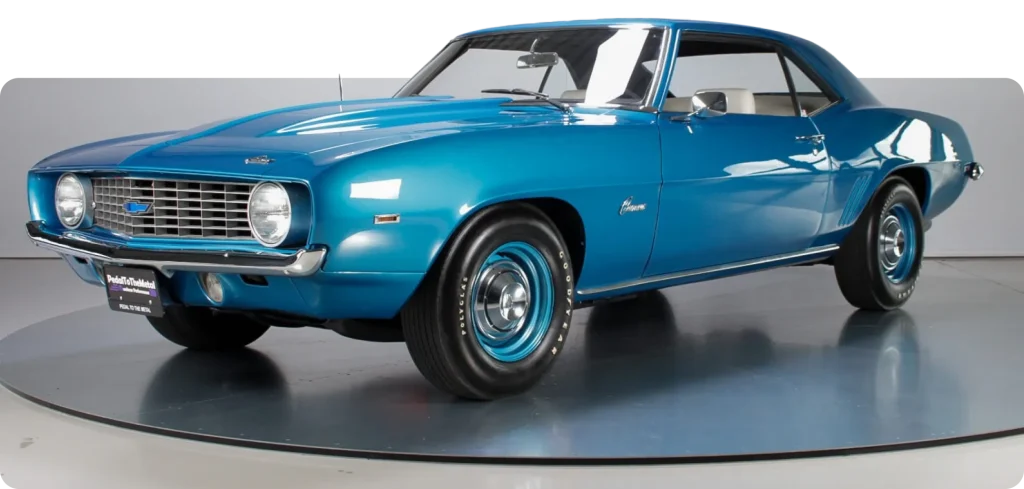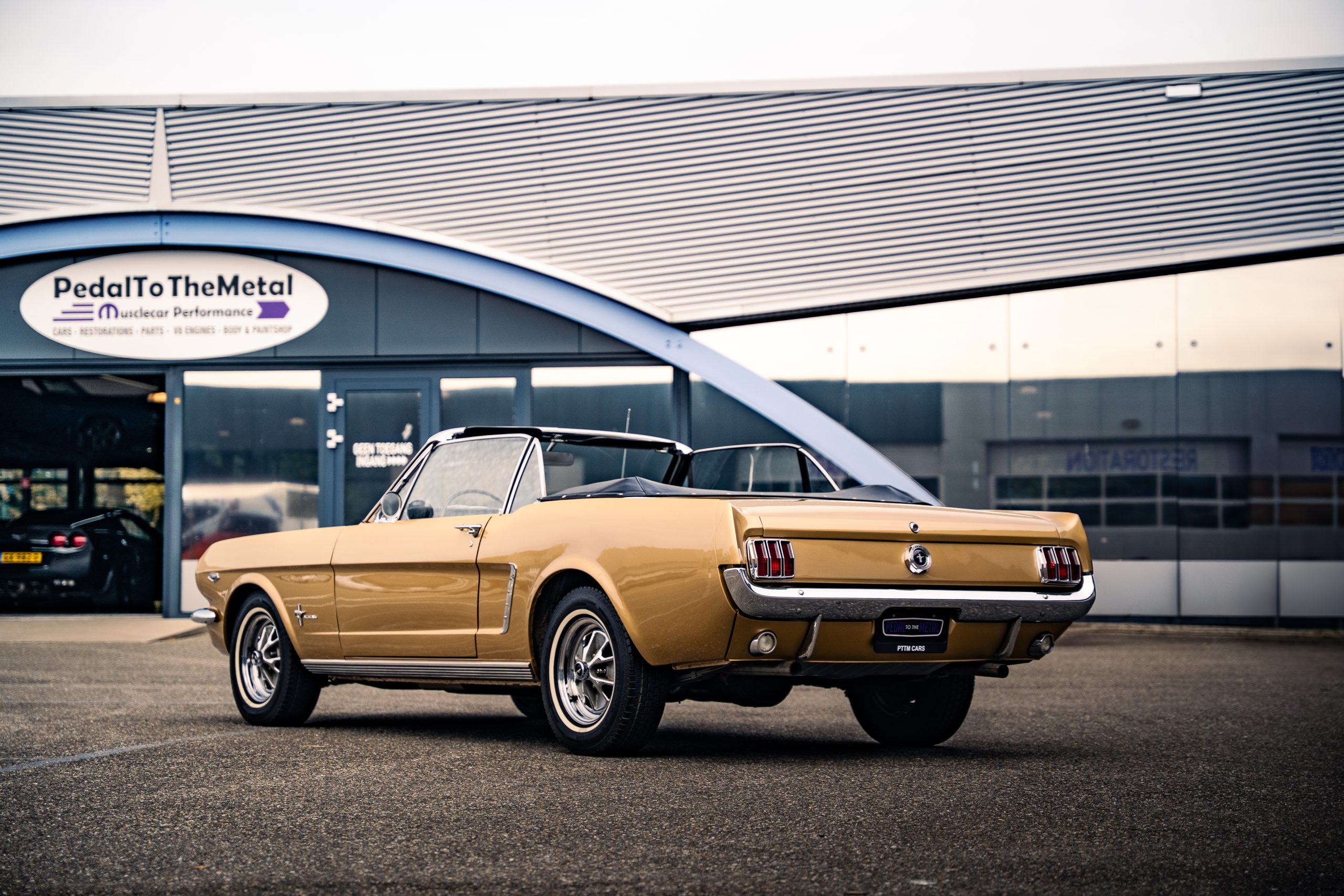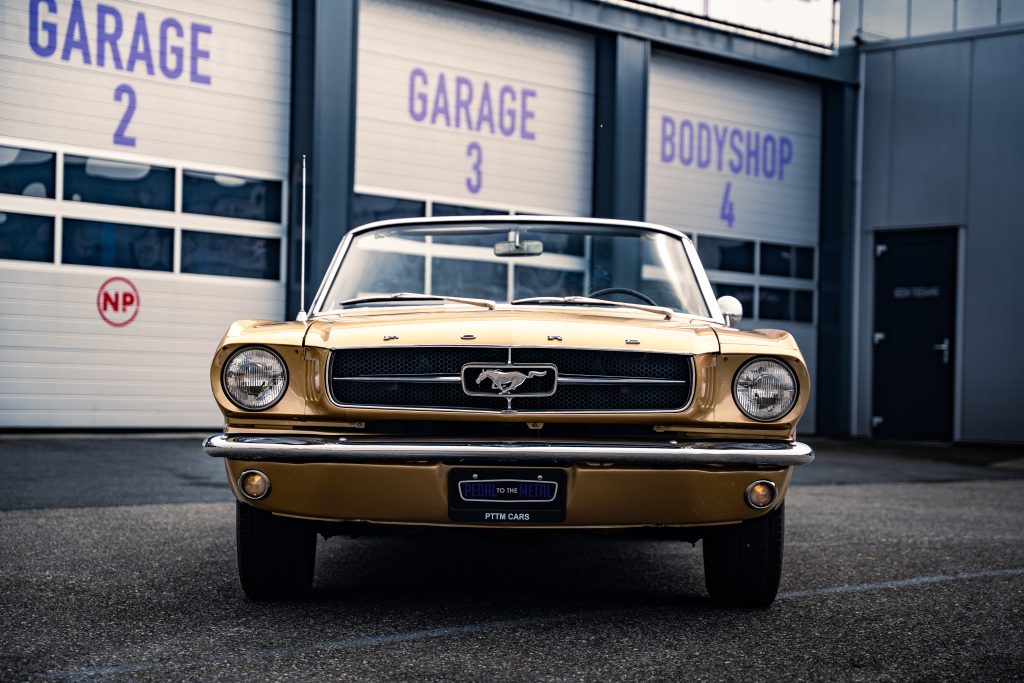

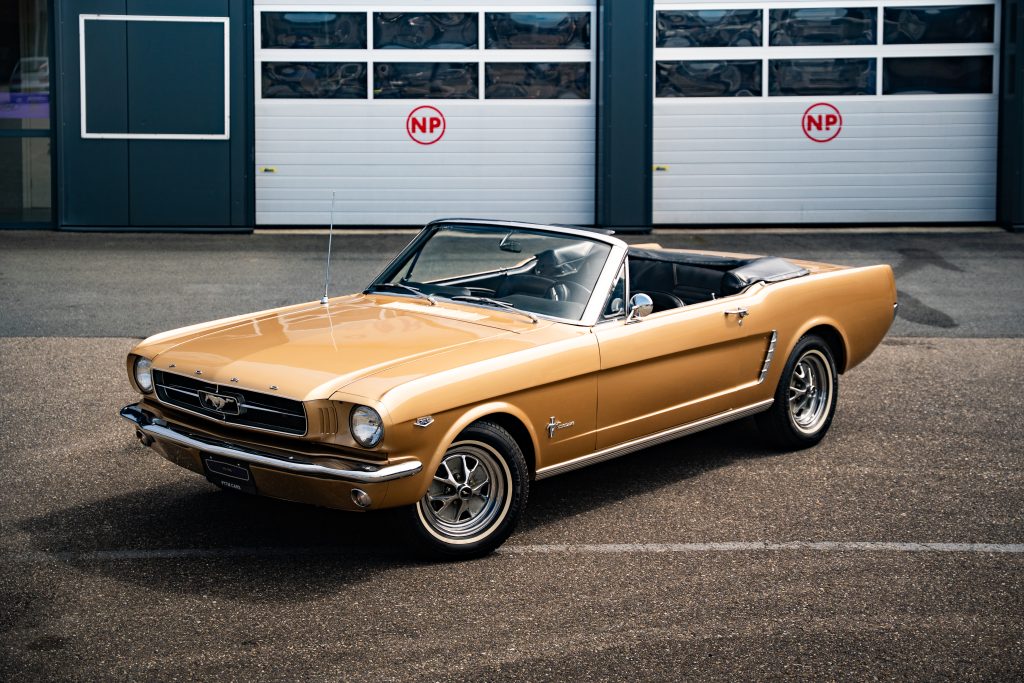
Our inventory of classic American muscle cars is carefully sourced, assessed and selected for its condition, documented history and potential.
Each car is prepared to meet our standards, whether preserved, restored or ready for its next chapter.
Our inventory of classic American muscle cars is carefully sourced, assessed and selected for its condition, documented history and potential.
Each car is prepared to meet our standards, whether preserved, restored or ready for its next chapter.
Classic American muscle cars have evolved from enthusiast purchases into a recognized alternative asset class, sitting alongside fine art, rare whisky, and vintage watches as tangible assets that affluent collectors hold for both pleasure and financial return. The global classic car market was valued at approximately $43 billion in 2024 and is projected to grow significantly through the next decade. But like any investment, the returns are not automatic. They depend entirely on what you buy, what condition it is in, how well it is documented, and how long you hold it. This guide gives you an honest picture of the investment case for classic American muscle – the upside, the risks, and what separates a sound purchase from an expensive mistake.
At Pedal to the Metal, we work with buyers across Europe, the United States, and the Middle East who are approaching the classic muscle car market as investors as much as enthusiasts. These are the questions that come up most often.
Are classic muscle cars a good investment?
The honest answer is: the right classic muscle cars, bought correctly, have been an excellent investment. The wrong ones have not. The classic car index showed appreciation of roughly 500 percent since 2000 for the strongest performing segments, outpacing stocks and bonds over that period. A 1969 Dodge Charger Daytona sold for $1.23 million in 2022 and was sold again for $3 million in 2024 – a $1.77 million return in two years. The 1969 Camaro ZL1, one of 69 produced, sold for $1.1 million at Barrett-Jackson in 2024. At the same time, it is equally true that the broader muscle car market experienced a correction in 2024 and into 2025, with Hagerty’s muscle car index declining around 10 percent year-on-year in Q1 2025 compared to the pandemic-era peak. The cars that held and grew value through that correction are the ones with genuine rarity, documented numbers-matching provenance, and irreplaceable historical significance. The cars that softened are the unspecial ones – high-volume restorations without documentation, and restomod builds on mediocre base cars.
Which classic muscle cars have the strongest investment track record?
The clearest pattern across two decades of auction data is this: rarity plus documentation plus irreplaceability. The cars that consistently outperform are those that cannot be recreated. A 1970 Plymouth Hemi Cuda convertible, one of 14 ever built, is a finite object. Its value reflects that. The same logic applies to documented COPO Camaros, Hemi-powered Charger Daytonas, numbers-matching LS6 Chevelle hardtops, and Shelby GT350 and GT500 fastbacks with clean Shelby American documentation. At the upper end of the market – cars worth €180,000 ($200,000) and above – these categories have shown the most consistent long-term appreciation and the strongest resilience during market corrections. Mid-market muscle cars in the €55,000 to €110,000 ($60,000 to $120,000) range have also appreciated, but more modestly and with more volatility.
What makes one classic muscle car more valuable than another?
Five factors determine value, and they apply in roughly this order of importance.
Originality and numbers-matching status is the single biggest driver. A car with its original engine carrying matching factory stamps is fundamentally more valuable than an identical-looking car with a replacement engine, regardless of how good the replacement is.
Rarity matters enormously. Production numbers within any model range from thousands to single digits depending on engine and option combinations. A 1970 Chevelle with the LS6 is dramatically rarer than one with the base 350.
Documentation quality separates a car that can be sold with confidence from one that cannot. Build sheets, broadcast sheets, window stickers, dealer invoices, and a clean, consistent ownership history all add verifiable value.
Condition, assessed honestly rather than optimistically, affects price significantly. The gap between a No. 1 concours car and a No. 3 driver in the collector grading system can be 40 to 60 percent in value on the same model.
Color and option combination matters. High Impact color Mopars, four-speed cars, convertibles, and matching color interior and exterior combinations consistently command premiums over base specifications.
How does investing in a classic muscle car compare to stocks or real estate?
Classic cars offer several characteristics that distinguish them from conventional investments. They are a tangible asset that cannot be devalued by monetary policy or replicated digitally. The supply of genuine first-generation Camaros, Mopars, and Mustangs is permanently fixed and declining as attrition takes cars out of the pool each year. They offer the additional return of personal enjoyment that no stock certificate provides. They can be stored, displayed, and driven.
The downsides are equally real. Classic cars are illiquid – selling one takes time, and the spread between buying and selling at retail prices is significant. Storage, insurance, and maintenance are ongoing costs. The market is not transparent in the way stock markets are, which makes pricing and valuation harder to assess independently. And unlike real estate, they do not generate income while you hold them.
The strongest investment case for classic muscle cars is as a component of a broader alternative asset portfolio, not as a primary investment vehicle. For buyers who were going to spend the money on something memorable regardless, the investment upside is genuinely attractive bonus. For buyers approaching this purely as a financial exercise, the liquidity constraints and holding costs require realistic modelling.
What is the minimum budget for a classic muscle car that holds its value?
Below €45,000 ($50,000), the market is primarily populated by high-volume, low-documentation cars that are difficult to sell at a meaningful profit and subject to value fluctuations based on condition alone. Serious collector value generally begins in the €55,000 to €90,000 ($60,000 to $100,000) range for well-documented performance variants of desirable models. The most reliable long-term value retention sits above €90,000 ($100,000) in documented high-performance configurations with clean provenance. At the €180,000 ($200,000) and above tier, you are in the company of cars that have consistently outperformed broader asset classes and attracted institutional-grade collector interest globally.
Should I buy a restored original or a pro-touring build as an investment?
For investment purposes, a documented numbers-matching restored original is almost always the stronger choice. The market for blue-chip muscle cars is driven by originality and provenance, and that is unlikely to change. A professionally built pro-touring car on a quality base can hold and grow value, particularly if built by a known specialist with full documentation of the build, but it is a different type of asset – more liquid at the enthusiast level, less likely to reach the auction heights that attract institutional collectors. If your primary goal is investment return and you have the budget for it, buy the most documented, most original car you can find in the most desirable specification. If your primary goal is enjoyment with investment upside as a secondary benefit, a high-quality pro-touring build is a genuinely compelling option.
How should I store a classic muscle car to protect its investment value?
A climate-controlled indoor environment is the baseline requirement. Temperature fluctuations accelerate rubber deterioration and promote condensation inside the body panels, which leads to rust from the inside out – the hardest type to detect and the most damaging to value. The car should be stored on a clean, dry surface, ideally raised slightly to avoid flat-spotting the tyres over long periods. A proper cover prevents dust and minor contact damage. Battery maintenance, fuel stabilizer in the tank if it will sit for months, and periodic running of the engine protect the drivetrain. Insurance through a specialist classic car insurer, with an agreed value policy rather than market value, ensures you are covered for the replacement cost if the worst happens.
What insurance do I need for a classic muscle car?
Standard automotive insurance policies are inappropriate for classic muscle cars and should be avoided. A specialist agreed value policy establishes the insured value of the car upfront – if the car is written off, you receive that agreed amount without depreciation argument. Specialist classic car insurers including Hagerty, Grundy, and various European providers offer policies that also cover track days, car shows, and transit by enclosed transport. The annual premium on a car valued at €90,000 ($100,000) is typically a fraction of what standard insurance would charge, and the coverage is significantly better matched to the asset.
Can Pedal to the Metal help me find a specific car as an investment?
Yes. We offer a personalized car search service for clients who have a specific model, specification, or budget in mind. Over 20 years of sourcing from the United States, Europe, and beyond, we have built the contacts and the expertise to find cars that are not publicly listed, verify their documentation, and negotiate on your behalf. If you are approaching the classic muscle car market as an investor and want guidance on which models offer the best combination of current value and long-term appreciation potential, contact us at sales@pttmcars.com or matei@pttmcars.com or call +31 6 25 19 61 76. We are happy to have that conversation before you commit to anything.
Buying a high-end classic muscle car is not like buying a modern car from a franchised dealer. The cars are rarer, the decisions are more personal, the money is more significant, and the process requires genuine expertise on both sides of the transaction. At Pedal to the Metal, we have been guiding buyers through this process for over 20 years from our facility in Sneek, Netherlands. We sell to clients across Europe, the United States, and the Middle East, and we handle everything from the first conversation to the moment the car arrives at your door. This guide explains exactly how the process works.
What does the buying process at Pedal to the Metal look like?
The process runs in seven stages, and it is designed to be as straightforward and transparent as possible regardless of where in the world you are based.
You start by finding a car you love in our inventory at pttmcars.com. We carry a broad selection of classic American muscle cars at any given time, covering Ford, GM, Mopar, AMC, and specialty builds. Once you have identified something that interests you, you contact us to schedule either an in-person appointment at our showroom in Sneek or a video call if you cannot visit. Our sales team will walk you through the car in detail, answer every question you have, and make sure it is the right fit. If you want to inspect the car in person, we provide a full personalized tour including starting the engine, reviewing all documentation, and going through the car’s history. Once you are ready to proceed, we agree on the deal together, including any modifications, services, registration, or delivery arrangements you need. All costs are finalized and confirmed before you sign anything. We then prepare the car, which includes completing all agreed services and pre-delivery checks. Finally, we arrange pick-up at our showroom or door-to-door delivery to your address anywhere in the world.
Do I need to visit the showroom in person to buy a car?
No. Many of our clients, particularly those based in the United States and the Middle East, complete the entire purchase remotely. We are fully equipped to guide you through the process via video call, providing detailed walkaround videos, engine startup footage, underneath inspection footage, and high-resolution photographs of every relevant detail. We can answer questions in real time and connect you directly with our team of specialists. If you cannot visit in person, contact us at sales@pttmcars.com or matei@pttmcars.com to arrange a video call at a time that suits your timezone.
Can you customize a car before delivery?
Yes. If the car’s current setup does not fully match what you are looking for, we can customize it before it leaves our facility. This includes modifications to the engine, transmission, wheels, suspension, interior, sound system, and paint. We can also handle Dutch, German, or Belgian registration if you need the car registered in Europe, and we manage full export documentation for international buyers. All modification costs are agreed and confirmed before you sign anything. There are no surprises.
How long does it take from purchase to delivery?
It depends on what services and modifications are required. A car that needs only pre-delivery checks and transport can typically be delivered within a few weeks of purchase. A car requiring modifications, paintwork, or mechanical work will take longer depending on the scope. For international shipping to the United States or the Middle East, allow six to eight weeks from the point of purchase to arrival at your door. We will always give you a realistic timeline upfront and keep you updated throughout.
What happens if I find a car I want but it is not currently in your inventory?
We offer a personalized car search service. If you have a specific model, year, color, engine, or specification in mind and you do not see it in our current inventory, contact us and we will source it for you. Over 20 years of buying from the United States, Europe, and beyond, we have built the contacts and the expertise to find cars that are not publicly listed, verify their condition and documentation, and negotiate on your behalf. Contact us at sales@pttmcars.com or matei@pttmcars.com to start that conversation.
Do you offer trade-ins?
Yes. If you currently own a classic car and want to put it toward the purchase of something from our inventory, we can discuss a trade-in as part of the deal. Contact us with details and photos of your car and we will assess it and come back to you with a proposal.
Where is Pedal to the Metal located and when can I visit?
Our main showroom and restoration facility is in Sneek, Netherlands. We are open Monday to Thursday by appointment, Friday from 08:00 to 17:00, and Saturday from 09:00 to 14:00. We also have a storage facility in Pelt, Belgium, which is open by appointment. The closest major airport to Sneek is Amsterdam Schiphol, approximately 1 hour 15 minutes by car. We recommend the Van der Valk hotel in Sneek for overnight stays. To book an appointment, contact us at sales@pttmcars.com or matei@pttmcars.com or call +31 6 25 19 61 76.
What makes buying from Pedal to the Metal different from buying at auction?
Buying at auction is fast and competitive, but it comes with significant risk. You typically have limited inspection time, no comeback if something is wrong, and no assistance with transport, registration, or import. At Pedal to the Metal, every car in our inventory has been inspected and prepared by our own team. You have full access to documentation and history before you commit. We handle all logistics and paperwork. And if you have questions six months after delivery, you can pick up the phone and call us. We are a specialist dealership with over 20 years of reputation in this market, not an auction house with no stake in what happens after the gavel falls.
If you are based in the United States and you have been searching for a specific classic muscle car – the right Mustang fastback, the right Camaro, the right Mopar – you already know how hard it is to find a genuinely excellent example at home. The best cars get snapped up privately, misrepresented at auction, or priced by sellers who know they have something rare. Meanwhile, one of the world’s strongest concentrations of quality-restored classic American muscle sits in Europe – sourced from the US decades ago, maintained by specialists, and available to American buyers with a straightforward import process that most people do not know is this easy.
Pedal to the Metal is a specialist classic American muscle car dealership in Sneek, Netherlands. We have been selling to American buyers for over 20 years. This guide answers every question an American buyer has before they ask it.
Why are there so many classic American muscle cars in Europe?
European collectors began importing American muscle cars in significant numbers from the 1970s onward, attracted by prices that were lower than the US market and by the sheer drama of these cars against European roads and culture. Many of those cars were meticulously maintained and restored in Europe over the following decades by specialist operations. The result is a strong inventory of quality-restored classic American muscle on the European market, with provenance that is often more thoroughly documented than equivalent cars in the US private market. At Pedal to the Metal, we source from both the United States and Europe, selecting only the strongest examples for our inventory.
Is it legal to import a classic car from Europe into the United States?
Yes, and it is simpler than most American buyers expect. Any vehicle that is 25 years old or older is exempt from US federal safety and emissions standards under both the Environmental Protection Agency and the National Highway Traffic Safety Administration. You do not need to modify the car to meet current US regulations. The classic American muscle cars we sell – Mustangs, Camaros, Chevelles, Mopars, Trans Ams – are well beyond that threshold. The import paperwork is manageable, and we guide every American buyer through it.
What does the import process actually involve?
We handle the export side completely from our end, including the export certificate, bill of lading, and all commercial documentation. On the US side, you file entry with US Customs and Border Protection and complete two straightforward forms – EPA Form 3520-1 and DOT Form HS-7 – confirming the vehicle’s age exemption. Most of our American buyers use a licensed customs broker to handle the US paperwork, which simplifies the process further and typically costs a few hundred dollars. We can recommend brokers we have worked with repeatedly and trust. The car enters the US, clears customs, and is transported by enclosed carrier to your front door.
How much does it cost to ship a car from the Netherlands to the United States?
Enclosed container shipping from the Netherlands to the US East Coast typically runs €1,500 to €3,000 ($1,650 to $3,300). West Coast delivery adds to that figure. We always use enclosed containers rather than open roll-on roll-off freight for high-value classic cars. These costs are confirmed before purchase so you have a complete picture of the total landed cost with no surprises. Import duty on a classic car over 25 years old is 2.5 percent of declared value – predictable and modest relative to the car’s price.
How long does the whole process take?
From the point of purchase to the car arriving at your door, allow six to eight weeks. That covers preparation and pre-delivery work at our facility, export documentation, ocean freight transit, US customs clearance, and inland transport to your address. We will give you a more specific timeline at the point of purchase based on current freight schedules and your delivery location, and we keep you updated throughout.
Can I inspect the car remotely before buying?
Yes. We are fully set up for remote buyers. We provide detailed walkaround videos, engine startup and rev footage, underneath inspection footage, high-resolution photographs of every relevant detail including documentation, engine stamps, and bodywork, and a live video call with our team to answer every question you have in real time. Many of our American buyers have purchased this way and been completely satisfied. If you want to visit in person, our showroom in Sneek is approximately one hour and fifteen minutes from Amsterdam Schiphol Airport.
Will the car be road legal when it arrives in the United States?
Classic cars over 25 years old do not need to meet current US safety or emissions standards, so there are no mandatory modifications required for road use. Registration varies by state – most states have simplified title and registration procedures for vehicles of this age that do not require emissions testing. We provide all the import documentation you need to title and register the car in your state. If you have questions about your specific state’s requirements, we are happy to help point you in the right direction based on our experience with previous American buyers.
What guarantee do I have that the car is as described?
Every car in our inventory has been inspected and prepared by our own team at our facility in Sneek. We do not list cars we have not physically examined. We provide full documentation of the car’s history and specification, and we are honest about condition – including any areas that are less than perfect – because our business depends on the long-term trust of our clients. Unlike an auction house that has no stake in what happens after the gavel falls, we are a specialist dealer with over 20 years of reputation in this market. If something is not right, you can pick up the phone and call us. Our number is +31 6 25 19 61 76, and someone will answer.
What makes buying from Pedal to the Metal different from finding a car at auction or through a US private seller?
Three things. First, the quality of our cars. We source selectively and prepare every car at our own facility before it goes to a buyer. Second, the process. We manage everything from the initial conversation through to delivery at your door, including all export and import logistics. There is no complexity you have to navigate alone. Third, the relationship. We are not a marketplace or an auction platform. We are a specialist dealership that works with clients who buy more than one car over time and who refer other collectors to us. That relationship dynamic means we have a direct interest in making sure every transaction goes right.
How do I get started?
Browse our current inventory at pttmcars.com. If you see something that interests you, email us at sales@pttmcars.com or matei@pttmcars.com or call +31 6 25 19 61 76. Tell us what you are looking for and we will tell you what we have – including cars that may not yet be listed online. If you have a specific model or specification in mind that is not currently in our inventory, ask us about our personalized car search service. We find cars for clients who know exactly what they want and cannot find it themselves.
There is a category of classic muscle car restoration that sits apart from everything else. Not a restomod. Not a pro-touring build. Not a freshened-up driver. A true original restoration – one where every detail, every finish, every component is returned to exactly how it left the factory. The correct paint code mixed to the original formula. The correct engine rebuilt to factory specification with matching stamp codes intact. The correct date codes on the battery, the hoses, the carburetor. The kind of restoration that withstands scrutiny from the most knowledgeable judges and the most demanding collectors in the world.
This is the work Pedal to the Metal does for clients who own – or want to own – a classic American muscle car at the highest level of authenticity. It is painstaking, time-consuming, and requires a depth of marque knowledge that most restoration shops simply do not have. It is also the category of work that produces the most significant and lasting increase in a car’s value.
What is an original restoration?
An original restoration returns a classic muscle car to its factory-correct specification in every detail. The goal is not to make the car look new – it is to make the car look exactly as it did the day it left the factory, with the correct finishes, the correct components, and the correct documentation to verify that every detail is authentic. This includes the correct paint code and sheen level for the model year, correct engine paint and markings, correct hose clamps and wiring harness routing, correct date-coded components throughout, and correct interior materials and trim. A properly executed original restoration should be indistinguishable from a factory-fresh car of the same year and specification.
What is the difference between an original restoration and a show restoration?
The terms are often used interchangeably but they are not the same thing. A show restoration optimizes the car for visual impact under bright lights and close inspection. It may involve finishes that are cleaner, brighter, or more uniform than what actually came from the factory – engine bays detailed to a level no production line ever achieved, chrome polished beyond original specification, paint laid down with modern materials to a smoothness that 1960s spray equipment could not produce. An original restoration, by contrast, prioritizes historical accuracy over visual perfection. Factory overspray is preserved where it belongs. Engine components carry the correct casting marks and casting flash. Welds look like production welds, not custom fabrication. For concours judging at the highest levels, historical accuracy beats visual perfection every time – and our restoration team understands that distinction completely.
Why does original restoration matter for value?
A numbers-matching car that has been restored to provably correct factory specification occupies a fundamentally different position in the collector market from one that has simply been made to look good. Serious collectors and investors at the top of the market buy documentation as much as they buy cars. A car with a complete PHS or Marti report, a verified broadcast sheet, matching engine stamps, and a restoration that can be shown to be correct in every documented detail is a different asset class from an identical-looking car without that foundation. The value gap between a thoroughly documented correct original restoration and an undocumented or incorrectly restored car of the same model can be 40 to 100 percent or more, depending on the platform. At the rarest end of the market – Hemi Mopars, COPO Camaros, Shelby Mustangs, Boss variants – that gap can be the difference between a six-figure car and a seven-figure car.
What cars does Pedal to the Metal restore to original specification?
We work across the full range of classic American muscle, covering all major platforms including Ford and Shelby Mustangs, Chevrolet Camaros, Chevelles and Corvettes, Pontiac GTOs and Trans Ams, and Chrysler Mopar muscle including Chargers, Cudas, Challengers, Road Runners, and Superbirds. Our team has the marque knowledge to work correctly on all of these platforms, including the specific casting numbers, date code requirements, finish specifications, and factory assembly details that separate a correct restoration from one that merely looks right at a distance.
What does the original restoration process look like?
It follows the same nine-stage structure as all our restoration work, but with a level of research and verification at each stage that goes beyond a standard restoration project.
Before the car is disassembled, we document every visible detail – photographing all original components, markings, finishes, and assembly characteristics that need to be preserved or correctly reproduced. During disassembly, we identify which original components can be properly restored and which need to be sourced as correct-specification replacements. Every replacement part must meet the correct date code and casting number requirements for the car’s build date. Body and chassis work is performed to correct factory standards, including the preservation or correct reproduction of factory seam sealer application, undercoating patterns, and factory overspray. Paint is mixed to the correct formula for the model year and applied to the correct sheen level. Engine rebuilding is performed with the original block and internals where possible, preserving the matching stamp codes that are central to the car’s documented identity. Final assembly follows factory assembly sequence references where available, ensuring that details like wiring harness routing, hose clamp orientation, and component positioning are correct. Every stage is documented with photographs and progress reports that become part of the car’s ongoing provenance record.
How do you source correct date-coded components?
This is one of the most demanding aspects of a correct original restoration and one of the areas where experience matters most. Date-coded components – carburetors, alternators, distributors, hoses, clamps, and dozens of other parts – must carry production stamps that predate the car’s assembly date by the correct interval. Sourcing these correctly requires deep knowledge of what the correct codes look like for a given car and a network of suppliers and specialists who deal in authenticated period-correct components. At Pedal to the Metal, we have built those supplier relationships over more than 20 years of specialist work. For rare cars in high-performance specifications, sourcing correct components is often the longest lead-time element of the entire restoration project.
Can you restore a car I already own?
Yes. If you own a classic American muscle car that you want restored to original factory specification, contact us with photographs and whatever documentation you have. We will assess the car’s current condition and specification, advise on what is achievable, and discuss the scope of work required. Many of our restoration clients come to us with cars they have owned for years and want to bring to the level they deserve. Others acquire a significant car at auction or through a private sale and commission us to complete or correct a previous restoration. Both are projects we handle regularly.
Can you restore a car and then sell it through your dealership?
Yes. Some clients commission a restoration with the intention of selling the finished car through our dealership once the work is complete. This is a logical approach for a seller who wants to realize the full market value of a significant car – a correct original restoration by a reputable specialist, with full documentation of the work, allows the car to be presented and sold at the level it deserves. Contact us to discuss this arrangement if it applies to your situation.
How much does an original restoration cost?
Every project is different and pricing is discussed directly after we have assessed your car and agreed on the scope of work. The cost depends on the platform, the car’s starting condition, the rarity of correct components required, and the level of correctness targeted. All budgets are presented as honest estimates. Projects are billed monthly with full transparency, and we will never proceed with additional work without discussing it with you first. Contact us at sales@pttmcars.com to start the conversation.
How do I get started?
Contact us at sales@pttmcars.com with photographs and any documentation you have for your car, along with a description of what you want to achieve. We will review your submission and come back to you to arrange a consultation with our restoration manager and CEO. You can also call us at +31 6 25 19 61 76 or visit our showroom and restoration facility in Sneek, Netherlands – Friday from 08:00 to 17:00 and Saturday from 09:00 to 14:00, or by appointment Monday through Thursday.
Visiting a specialist classic muscle car dealership is a different experience from walking into a mainstream car showroom. There is no high-pressure sales floor, no generic inventory, and no one trying to move you toward whatever needs clearing that month. A visit to Pedal to the Metal is a conversation between people who care about the same things – the cars, the history, the detail, and finding the right match between a buyer and a machine. This guide tells you exactly what to expect when you come to see us in Sneek, Netherlands.
Where is Pedal to the Metal located?
Our main showroom and restoration facility is in Sneek, in the province of Friesland in the northern Netherlands. Sneek is approximately one hour and fifteen minutes by car from Amsterdam Schiphol Airport, making it straightforward to visit as part of a trip to the Netherlands. The closest international airports are Schiphol, approximately 135 kilometres away, and Groningen Airport Eelde, which is smaller but closer. We recommend the Van der Valk hotel in Sneek for overnight stays – it is comfortable, well-located, and our clients have used it repeatedly.
We also have a storage facility in Pelt, Belgium, which holds part of our inventory and is open by appointment. If there is a specific car stored in Pelt that you want to see, let us know when you book your visit and we can arrange for it to be at the Sneek facility.
When can I visit?
Our showroom and restoration facility in Sneek is open Monday to Thursday by appointment, Friday from 08:00 to 17:00, and Saturday from 09:00 to 14:00. We recommend booking an appointment in advance regardless of when you plan to visit – an appointment ensures that the right members of our team are available to spend time with you, that the car or cars you want to see are prepared and accessible, and that you get the full experience rather than a quick walk around between other commitments. Contact us at sales@pttmcars.com or call +31 6 25 19 61 76 to book.
What will I see when I arrive?
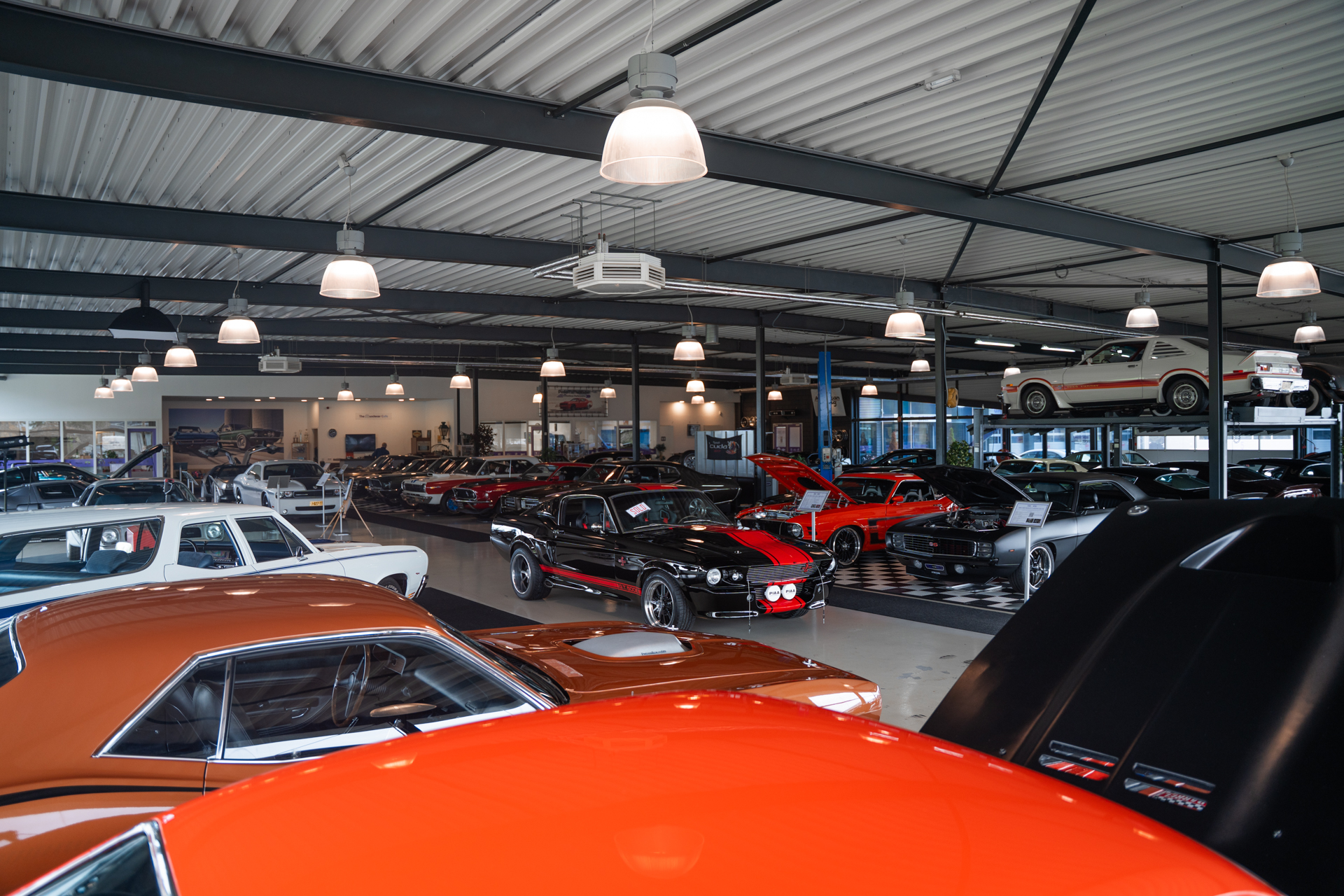
You will find a genuine working specialist operation. Our showroom holds the cars currently available for sale, displayed in a way that lets you see them properly – not packed in tight rows but positioned so you can walk around them, crouch down to look underneath, open the bonnet and engine bay, and sit inside. Our restoration facility sits alongside the showroom, and depending on what is currently being worked on you will see cars at various stages of the restoration or build process. This is intentional. We want our clients to see what the work actually looks like – the quality of the bodywork, the detail in the engine bay preparation, the standard of the interior work – because seeing it in progress is more convincing than any photograph of a finished car.
Who will I meet?
Depending on the purpose of your visit, you will typically be welcomed by Max, our CEO and head of sales, or Matei, our showroom manager and media manager. For clients interested in a restoration or custom build project, Sido, our chief mechanic, is also closely involved – he knows the mechanical condition and history of every car in our facility better than anyone. We are a small, specialist team where everyone has deep knowledge of the cars and no one is a generalist front-of-house person who passes you along to someone else. The conversation you have with us is the same conversation you would have if you were dealing with the people who actually know the cars.
Can I drive the car before buying?
For serious buyers, we can often arrange for a car to be driven during a visit. We discuss this on a case-by-case basis depending on the car’s condition, specification, and value. A test drive of a fully restored or pro-touring build is significantly more straightforward to arrange than a drive in a high-value numbers-matching concours car. Let us know before your visit if a test drive is something you want to explore and we will discuss what is possible.
What should I bring to the visit?
If you have documentation on a car you are bringing to us – for a restoration quote, a consignment discussion, or a trade-in – bring everything you have: service records, title history, previous restoration documentation, any broadcast or build sheet that survived with the car. The more information we have access to, the more useful the conversation will be. If you are coming to look at cars with a view to buying, bring any specific questions you have written down – there is a lot to take in and a list ensures you cover everything. And bring your appetite for conversation. We enjoy talking about these cars and the clients who get the most from a visit are the ones who engage with the detail.
Do I need to be a serious buyer to visit?
You do not need to be ready to buy on the day to visit us. We understand that buying a significant classic car takes time – research, consideration, comparison. We welcome visits from buyers who are early in that process and want to see what we do, understand our inventory, and get a feel for how we operate. What we ask is that visits are booked in advance so we can make proper time available, and that you are genuine in your interest rather than simply curious. Our time, like yours, has value.
What if I cannot visit in person?
Many of our clients, particularly those based in the United States and the Middle East, have purchased cars from us entirely remotely. We are fully set up for this. We provide detailed walkaround videos, engine startup footage, underneath inspection footage, high-resolution photographs of every detail including documentation and stamp codes, and live video calls with our team at a time that suits your timezone. The remote buying experience is thorough, transparent, and has worked successfully for clients on multiple continents. Contact us at sales@pttmcars.com or call +31 6 25 19 61 76 to start the conversation wherever you are in the world.
There are three ways to buy a classic American muscle car: through a specialist dealer, through a private seller, or at auction. Each has genuine advantages and genuine risks. The right choice depends on your experience level, your budget, the car you are looking for, and how much risk you are comfortable taking on. This guide gives you an honest comparison of all three so you can make an informed decision.
What are the advantages of buying from a specialist dealer?
A specialist dealer brings expertise, preparation, and accountability to every transaction. At a specialist operation like Pedal to the Metal, every car in inventory has been physically inspected by a team that knows what to look for – rust, authentication issues, mechanical problems, documentation gaps – before it is offered for sale. The car is prepared to a standard that reflects the dealership’s reputation. You have time to ask questions, receive detailed information, and make a considered decision without competitive pressure. If something is wrong after delivery, you know exactly who to call.
For international buyers, a specialist dealer also handles the complexity that a private purchase requires you to manage alone – export documentation, shipping logistics, customs clearance, and import administration. For a buyer in the United States purchasing from Europe, this logistical support is often as valuable as the car expertise itself.
The trade-off is price. A specialist dealer prices cars to reflect the inspection, preparation, expertise, and ongoing accountability they provide. You will not find the same car at the same price from a specialist dealer as from a private seller who inherited it and wants it gone. But you are also not taking on the same risk.
What are the risks of buying from a private seller?
Private sales offer the possibility of lower prices and occasionally the chance to acquire a car before it reaches the broader market. However, they come with risks that inexperienced buyers frequently underestimate.
The seller’s knowledge of the car may be limited or self-serving. A private seller who has owned a car for thirty years and believes it to be numbers-matching may genuinely not know that the engine was replaced at some point and the stamps were subsequently altered. Or they may know perfectly well and hope you do not find out. In either case, you have no recourse after the sale in most private transaction frameworks.
The inspection burden falls entirely on you. Unless you bring a qualified specialist to examine the car before purchase – which adds cost and logistics – you are relying on your own knowledge, which may not be sufficient for a high-value, high-complexity purchase. Private sellers do not prepare cars the way specialist dealers do, which means hidden problems are more common.
Documentation is frequently incomplete or absent in private sales. A car without full documentation is harder to resell at full value later, regardless of its actual condition.
What are the risks of buying at auction?
Auction houses offer access to a wide range of cars, transparent pricing through competitive bidding, and occasionally genuine bargains when a car does not attract the right bidders on the day. However, the risks are significant and well-documented.
Inspection time is limited. Most major auction houses provide a preview period of one to two days before the sale. You can walk around the car, look underneath, and review whatever documentation the seller has provided, but you cannot typically start it, drive it, or subject it to a specialist inspection. You are buying based on a surface impression and the auction house’s description, which is based on the seller’s representation.
There is no recourse after the gavel falls. If you discover a problem after you have bought the car, it is your problem. Auction houses make this explicit in their terms and conditions. This is not dishonesty on their part – it is simply the nature of the transaction format.
Bidding pressure can drive prices above rational levels. The competitive dynamic of an auction room or online platform creates emotional pressure that pushes buyers to bid more than they had planned. Cars sell for above their genuine market value regularly at auction, and the buyer has no opportunity to reconsider after the moment passes.
That said, auctions are not without merit. For experienced buyers who know exactly what they are looking for, can conduct a competent inspection quickly, and have the discipline to walk away at their ceiling price, auctions can be excellent sources of specific cars.
How does Pedal to the Metal compare to buying at auction?
We source cars from auctions and private sellers on behalf of our buyers and our own inventory. We have the expertise to evaluate a car quickly and accurately, verify its documentation, negotiate its purchase, and then prepare it correctly before it reaches a client. When you buy from us, you are buying the result of that process – not an uninspected car with unknown history in a competitive bidding environment.
Every car we sell has been through our facility. Our clients have full access to the documentation we have gathered and can ask every question they have before committing. After delivery, if something is not right, we are available. Our business depends on long-term client relationships, not one-time transactions, and that changes every aspect of how we operate.
When does it make sense to use an auction?
If you are an experienced collector with deep marque knowledge, the ability to assess a car quickly and accurately, and the discipline to stick to a maximum price, auctions are a legitimate source of cars. If you are specifically looking for a car that rarely comes through dealer channels – an extremely rare survivor, a documented race car, a celebrity-provenance piece – auctions are often the only place they surface publicly. And if you are selling rather than buying, a top-tier auction house with a strong international audience can achieve prices that reflect genuine market-wide competition for a truly significant car.
Is Pedal to the Metal right for every buyer?
We are the right choice for buyers who value expertise, preparation, authenticity, and a full-service experience from initial conversation through to delivery. We are particularly well suited to first-time buyers entering the classic muscle car market who want guidance rather than just a transaction, and to experienced collectors who want a reliable source for quality-inspected cars without having to navigate private markets or auction logistics themselves. Contact us at sales@pttmcars.com or call +31 6 25 19 61 76 to discuss what you are looking for.
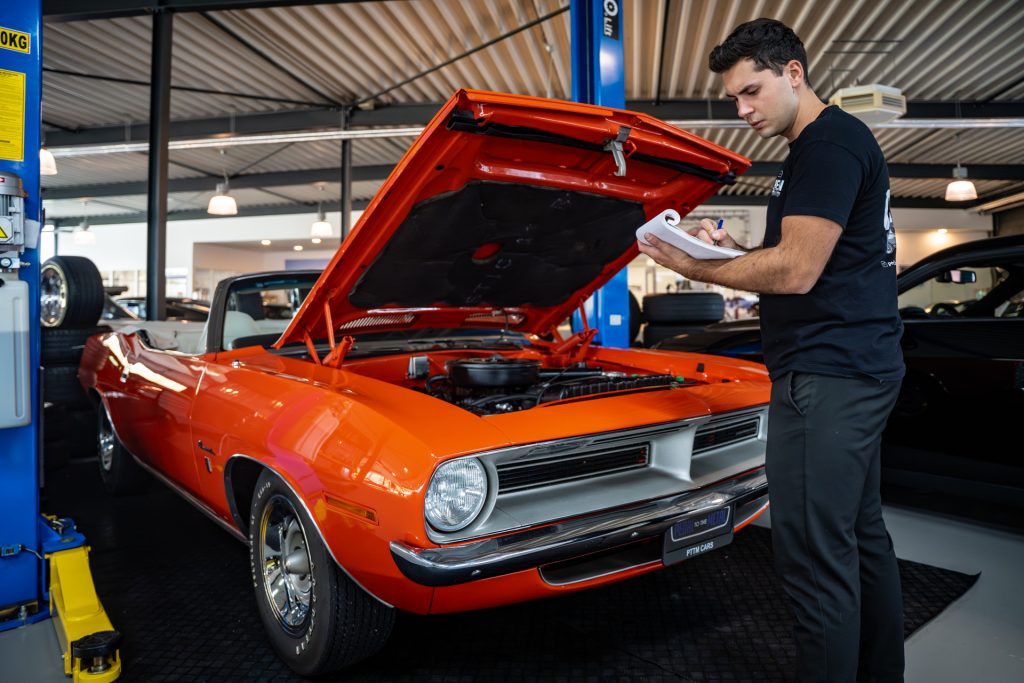
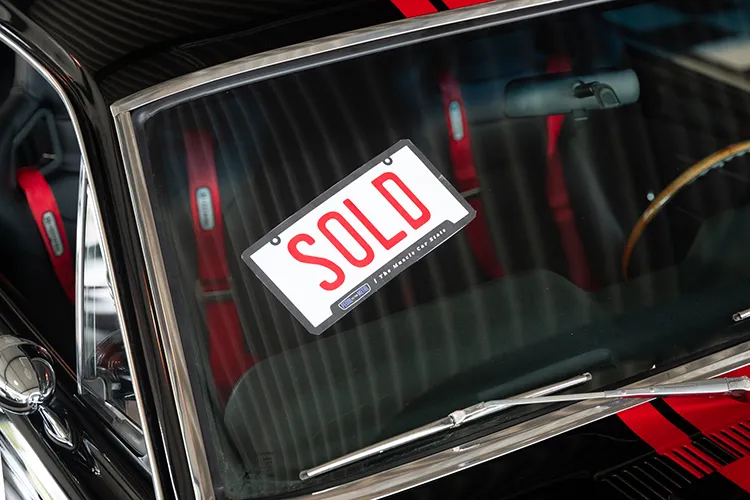
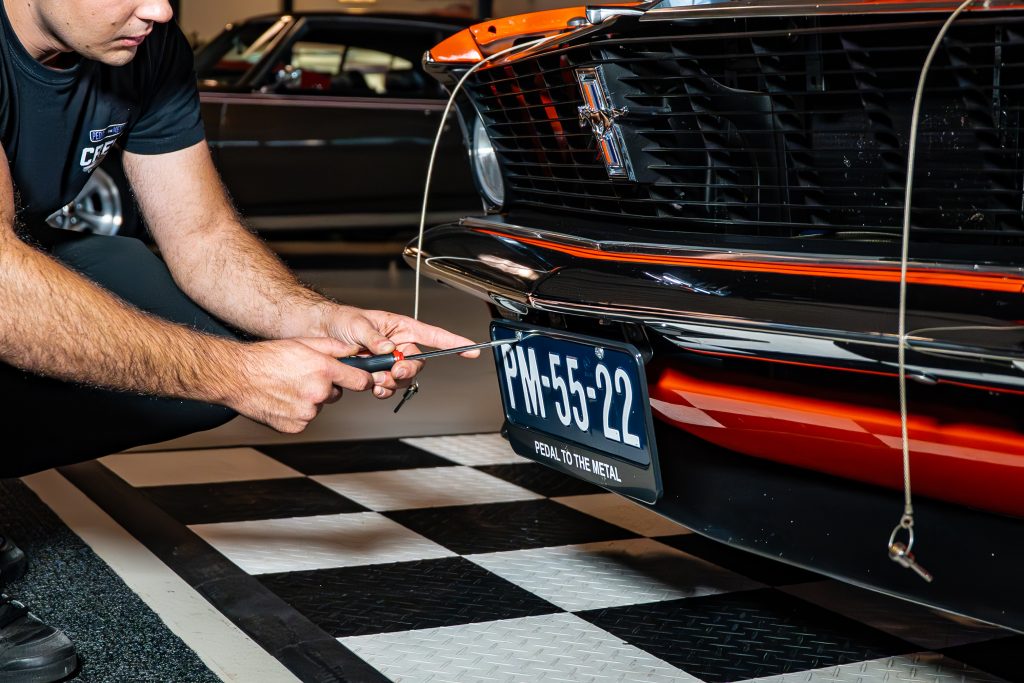
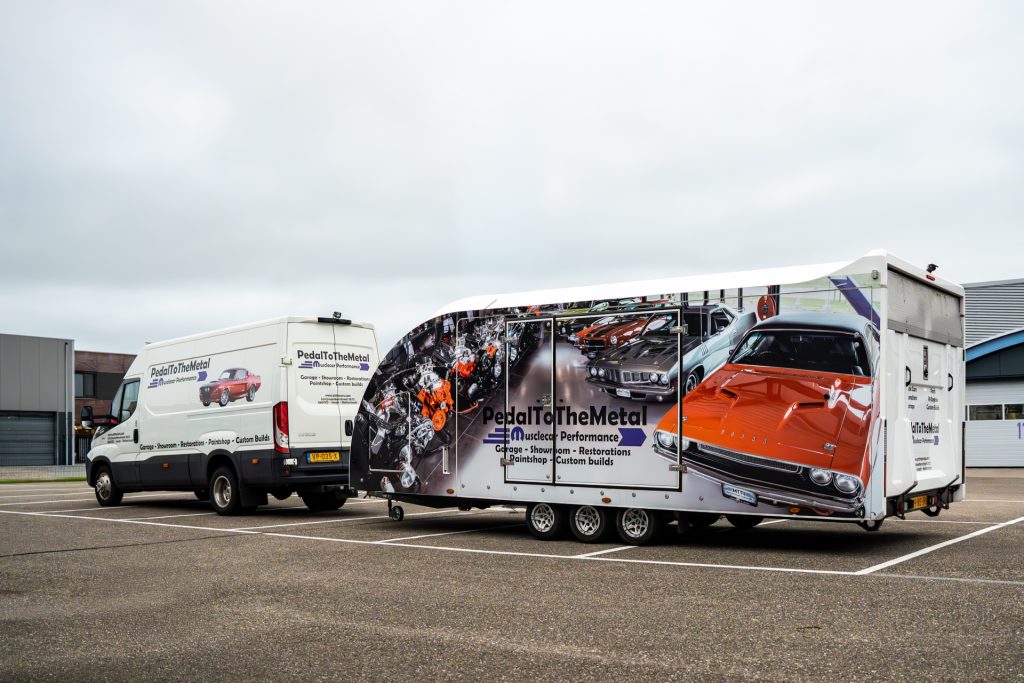
From factory-correct restorations to carefully considered custom builds. Each project is defined by clear communication, respect for the car’s heritage and precise execution.
We’re happy to discuss your plans and advise on the right next steps. Whether you’re considering a purchase, planning a restoration or build, or exploring options for selling or registration.