
Mechanical Repairs
A classic American muscle car is only as good as the parts that connect it to the road. Brakes, suspension, steering and electrical systems decide how safe, controlled and reliable the car feels, and on cars of this age they are exactly where wear, ageing and previous repairs show up.
At PTTM, mechanical repairs are carried out with the same care as any larger project. We find the real cause of a problem, repair it properly and make sure the car drives the way it was meant to.
What We Repair
- Brakes: drum and disc brakes, master cylinders, boosters, calipers, wheel cylinders, hard lines and flexible hoses, parking brakes, and conversions from drum to disc where appropriate
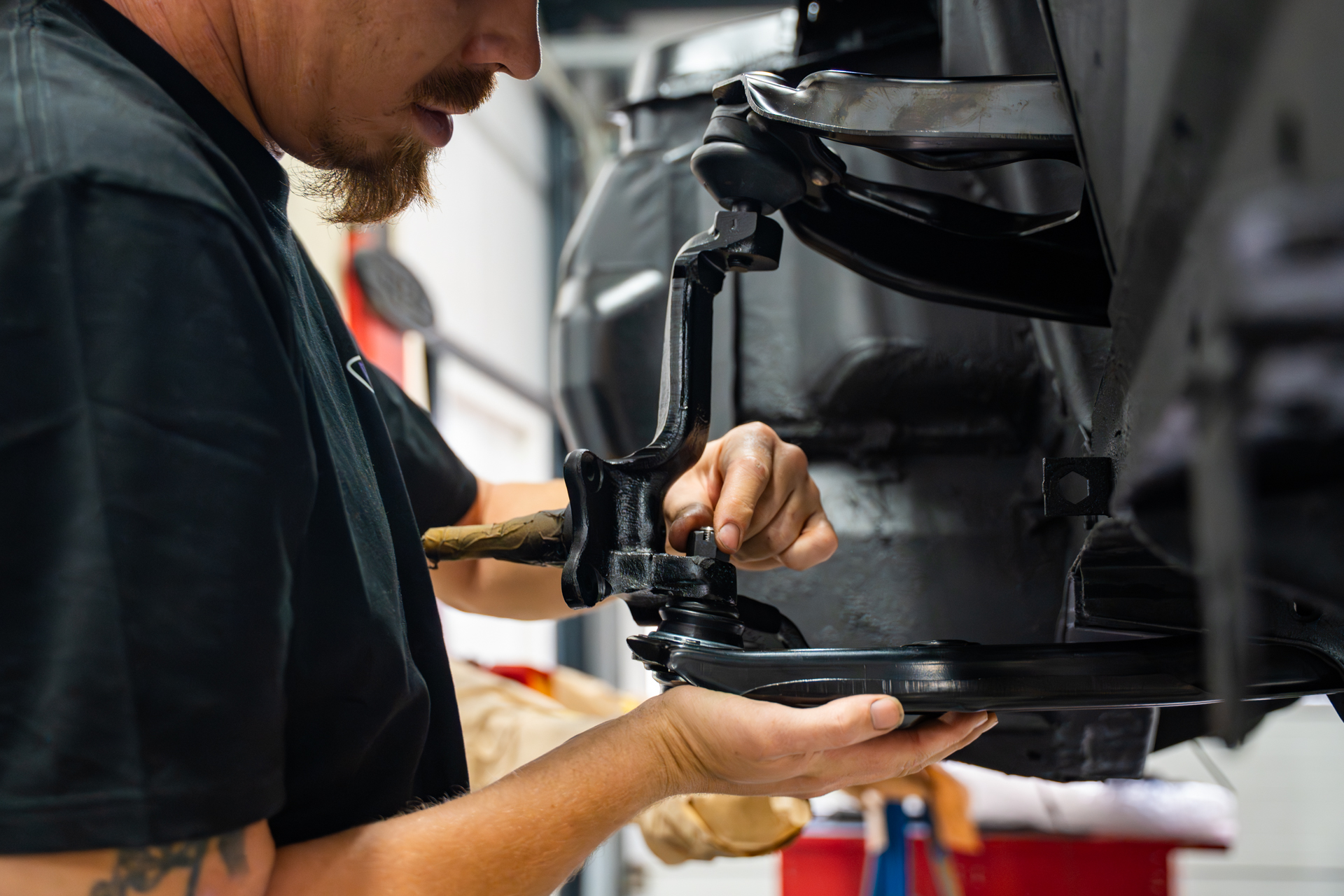
- Suspension: control arms, ball joints, bushings, springs, shocks, leaf springs, sway bars and mounts
- Steering: steering boxes, power steering pumps and hoses, linkage, tie rod ends, idler and pitman arms, steering columns and alignment
- Clutches: clutch replacement, hydraulic and mechanical linkage, pedal assemblies, flywheels and pilot bearings
- Electrical: wiring repairs, full harness replacement, charging and starting systems, alternators, regulators, switches, relays, gauges, lighting and fuse boxes
- Cooling: radiators, water pumps, hoses, thermostats and fans
- Fuel system: tanks, lines, pumps, senders and filters
- Exhaust: repairs, replacement and custom fabrication
- Heating, ventilation and A/C: blower motors, heater cores, controls and air conditioning systems
- Wheels, tires and hubs: bearings, seals, balancing and alignment
- Interior and convenience components: window regulators, door and trunk mechanisms, locks, wipers and power accessories
Safety First
Brakes, steering and suspension are safety-critical. On a car that is decades old, rubber, seals and metal fatigue with age even when the car has covered few miles. We inspect these systems thoroughly, repair what needs repair and tell you plainly what we find.
Electrical Work Done Properly
Electrical problems are among the most frustrating faults on a classic car, and often the most misdiagnosed. Aged wiring, corroded connections and poor previous repairs cause intermittent faults that are hard to trace. We diagnose methodically, using testing rather than guesswork, and repair or replace wiring so the system is reliable and safe. A tidy, correct electrical system also reduces fire risk.
Original or Improved
Where originality matters, we repair and restore components to factory specification, using correct parts where available. Where improved safety, drivability or reliability makes sense, we can recommend sensible upgrades, such as front disc brakes, better suspension components or improved wiring, and explain how they affect the character and value of the car.
Parts and Quality
We use quality parts and fit them correctly. Where original parts are no longer available or of poor quality, we source alternatives, rework existing components or fabricate what is needed.
A Clear Answer, Not a Guess
After diagnosis, you receive a plain explanation of what we found, what needs doing now, what can wait and what we recommend. You decide how to proceed, and we help you prioritize so the work stays sensible and proportionate.
Client Priority and Availability
Clients who have purchased a vehicle through PTTM are given priority for mechanical repairs. We also consider cars from outside clients, depending on workshop capacity. Our focus is on quality and proper execution rather than volume.
Discuss a Mechanical Repair
If your car has a fault, a worn component or something that does not feel right, please get in touch using the form below. Describe the car, the symptoms and when they appear, and we will advise on the appropriate next steps.
Frequently Asked Questions (FAQ):
Classic American V8 engines were built to different tolerances and require different fluids, different service intervals, and different diagnostic approaches than modern vehicles. Most flat-tappet camshaft engines used in these cars require engine oil with adequate ZDDP content – a zinc and phosphorus additive package that modern low-viscosity oils formulated for roller-cam engines do not provide in sufficient quantities. Using the wrong oil accelerates camshaft wear significantly. Carburetor-fed fuel systems, points-based or early electronic ignition systems, and manual drum brake setups all require hands-on knowledge that a general workshop without specific experience in these cars will not have. Our team works on these vehicles every day.
As a general baseline, engine oil and filter should be changed every 3,000 to 5,000 kilometres regardless of how much the car has been driven, because oil sitting in a non-running engine accumulates moisture and degrades over time. A full mechanical inspection covering the cooling system, brakes, fuel system, ignition, belts, and hoses should be carried out at least once a year even on cars used sparingly. Classic cars that are stored over winter should be correctly prepared before storage and inspected before being returned to road use in spring.
Cooling system work is the most frequent – radiator repairs or replacements, thermostat replacements, water pump rebuilds, and hose replacements. Carburetor rebuilds and fuel system work follow closely. Brake system repairs including drum adjustments, caliper rebuilds, and brake line replacements are regular workshop work. Ignition system faults, from distributor wear to coil failures, are also common on cars that have not been regularly maintained. We also carry out electrical system diagnosis, which on cars with 50-year-old wiring requires patience and specific knowledge of period-correct electrical systems.
Yes. Drivability issues on classic cars – rough idle, hesitation under acceleration, overheating, fuel delivery problems – often require someone with specific knowledge of the platform and the era to diagnose correctly. Modern diagnostic equipment is largely irrelevant on these cars. Experience with how these systems behave and fail is what matters. Bring us the car and describe exactly what it is doing – the more detail you can give us about when the problem occurs and under what conditions, the more efficiently we can find it.
Yes. We work on both original-specification cars and cars that have been fitted with modern LS, LT, or Coyote V8 engines, upgraded fuel injection systems, or other modern mechanical components. Our workshop handles the full range from period-correct original drivetrains through to fully modernized pro-touring builds.
Yes. Please contact us before bringing your car in so we can assess the scope of work, allocate the right workshop time, and ensure the correct parts and equipment are available. Walk-in work is not something we accommodate. Contact us at sales@pttmcars.com or call +31 6 25 19 61 76 to book.
Depending on your location and the nature of the work required, we can discuss transport arrangements. Contact us with your location and a description of the car’s condition and we will advise on the most practical approach.
Pedal to the Metal workshop is based in Sneek, Netherlands. Contact us at sales@pttmcars.com or +31 6 25 19 61 76 to discuss your car’s maintenance or repair needs.
Get in Touch
We’re happy to discuss your plans and advise on the right next steps. Whether you’re considering a purchase, planning a restoration or build, or exploring options for selling or registration.