

Structural & Body Repairs
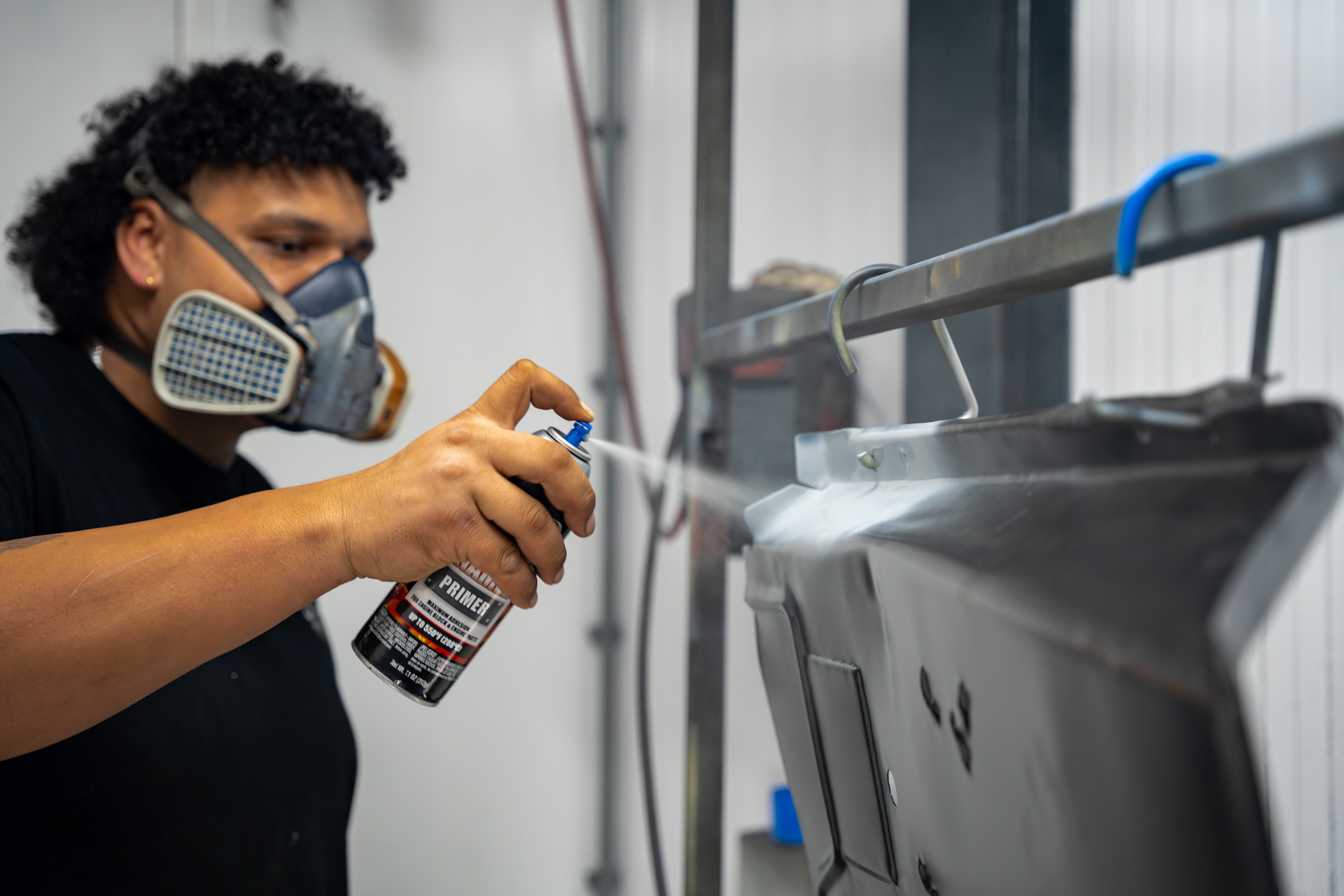
The body and structure of a classic American muscle car are what hold everything else together. Rust, old accident damage and poor previous repairs affect more than appearance. They affect safety, alignment, value and how the car drives. Done properly, structural and body work gives a car a solid foundation for the rest of its life.
At PTTM, this work is carried out by people who know how these cars were built, where they rust and how to repair them in a way that lasts.
What We Do
- Rust repair: removing corrosion at its source and replacing affected metal, rather than covering it up
- Sheet metal work: replacement and repair of floors, trunk floors, quarter panels, fenders, doors, roof sections, rocker panels and inner structures
- Cutting and welding: precise removal of damaged sections and proper welding of new metal
- Chassis and frame repair: straightening, reinforcing and repairing frames, subframes, crossmembers and mounting points
- Fabrication: making panels, brackets, patch sections and parts that are no longer available
- Panel alignment: fitting doors, hoods, trunk lids and fenders for correct, even gaps
- Accident damage repair: assessing and repairing collision damage
- Preparation for paint: body filler only where appropriate, correct metal finishing and surface preparation
- Corrosion protection: treating repaired areas and protecting the car against future rust
Rust: Finding It and Fixing It Properly
Rust is the main enemy of classic cars, and it is often worse than it looks. Hidden areas such as inner panels, cowls, frame rails and floor supports can be badly affected while the outside appears fine. We inspect thoroughly, tell you the real extent of the problem and repair it properly by cutting out the affected metal and welding in new steel. Hiding rust under filler or paint only delays the problem and makes it worse.
Structural Integrity
A car’s structure determines how it handles, how it fits together and how well it protects its occupants. We check structural areas carefully, including frame rails, floor pans, suspension mounting points and body mounts. Repairs are carried out so the structure is sound, straight and strong.
Fabrication and Craftsmanship
Many parts for classic cars are no longer made, or are available only in poor quality. Our workshop can fabricate panels, patch sections, brackets and custom components by hand. This allows us to repair cars that standard replacement parts cannot save, and to do the work to a higher standard.
Modern Solutions to Classic Problems
Some problems come with these cars by design. Water traps, poor drainage and unprotected seams made rust almost inevitable. Where it makes sense, we use modern methods to solve them:
- Modern weld-through primers, seam sealers and epoxy primers for lasting protection
- Cavity wax and corrosion protection in areas that were never treated originally
- Improved drainage and sealing in known problem areas
- Quality reproduction panels, and reinforcement where the original design was weak
- Modern welding techniques that reduce heat distortion and produce strong, clean joints
We apply these methods in a way that respects the car, so that the result remains correct and appropriate for its character and value.
Original or Modified
Some cars need to be preserved as originally built, with correct panels, spot weld patterns and finishes. Others are built or modified for performance, and may benefit from reinforcement or custom work. We will advise on the right approach, and on how the decisions affect the originality and value of your car.
A Clear Assessment
Before any work begins, we assess the car and explain what we found, what needs repair, what can wait and what we recommend. You decide how to proceed, and we help you prioritize so the work remains sensible and proportionate.
Client Priority and Project Intake
Clients who have purchased a vehicle through PTTM are given priority for structural and body work. We also consider external projects, depending on workshop capacity and the nature of the work required. This type of work is time-intensive, and our focus is on quality and proper execution rather than volume.
Discuss a Structural or Body Repair
If your car has rust, damage or structural concerns, or you are planning bodywork as part of a larger project, please get in touch using the form below. Describe the car, the problem areas and what you hope to achieve, and we will advise on the appropriate next steps.
Frequently Asked Questions (FAQ):
Classic American V8 engines were built to different tolerances and require different fluids, different service intervals, and different diagnostic approaches than modern vehicles. Most flat-tappet camshaft engines used in these cars require engine oil with adequate ZDDP content – a zinc and phosphorus additive package that modern low-viscosity oils formulated for roller-cam engines do not provide in sufficient quantities. Using the wrong oil accelerates camshaft wear significantly. Carburetor-fed fuel systems, points-based or early electronic ignition systems, and manual drum brake setups all require hands-on knowledge that a general workshop without specific experience in these cars will not have. Our team works on these vehicles every day.
As a general baseline, engine oil and filter should be changed every 3,000 to 5,000 kilometres regardless of how much the car has been driven, because oil sitting in a non-running engine accumulates moisture and degrades over time. A full mechanical inspection covering the cooling system, brakes, fuel system, ignition, belts, and hoses should be carried out at least once a year even on cars used sparingly. Classic cars that are stored over winter should be correctly prepared before storage and inspected before being returned to road use in spring.
Cooling system work is the most frequent – radiator repairs or replacements, thermostat replacements, water pump rebuilds, and hose replacements. Carburetor rebuilds and fuel system work follow closely. Brake system repairs including drum adjustments, caliper rebuilds, and brake line replacements are regular workshop work. Ignition system faults, from distributor wear to coil failures, are also common on cars that have not been regularly maintained. We also carry out electrical system diagnosis, which on cars with 50-year-old wiring requires patience and specific knowledge of period-correct electrical systems.
Yes. Drivability issues on classic cars – rough idle, hesitation under acceleration, overheating, fuel delivery problems – often require someone with specific knowledge of the platform and the era to diagnose correctly. Modern diagnostic equipment is largely irrelevant on these cars. Experience with how these systems behave and fail is what matters. Bring us the car and describe exactly what it is doing – the more detail you can give us about when the problem occurs and under what conditions, the more efficiently we can find it.
Yes. We work on both original-specification cars and cars that have been fitted with modern LS, LT, or Coyote V8 engines, upgraded fuel injection systems, or other modern mechanical components. Our workshop handles the full range from period-correct original drivetrains through to fully modernized pro-touring builds.
Yes. Please contact us before bringing your car in so we can assess the scope of work, allocate the right workshop time, and ensure the correct parts and equipment are available. Walk-in work is not something we accommodate. Contact us at sales@pttmcars.com or call +31 6 25 19 61 76 to book.
Depending on your location and the nature of the work required, we can discuss transport arrangements. Contact us with your location and a description of the car’s condition and we will advise on the most practical approach.
Pedal to the Metal workshop is based in Sneek, Netherlands. Contact us at sales@pttmcars.com or +31 6 25 19 61 76 to discuss your car’s maintenance or repair needs.
Get in Touch
We’re happy to discuss your plans and advise on the right next steps. Whether you’re considering a purchase, planning a restoration or build, or exploring options for selling or registration.
