
Engine & Transmission Rebuilds
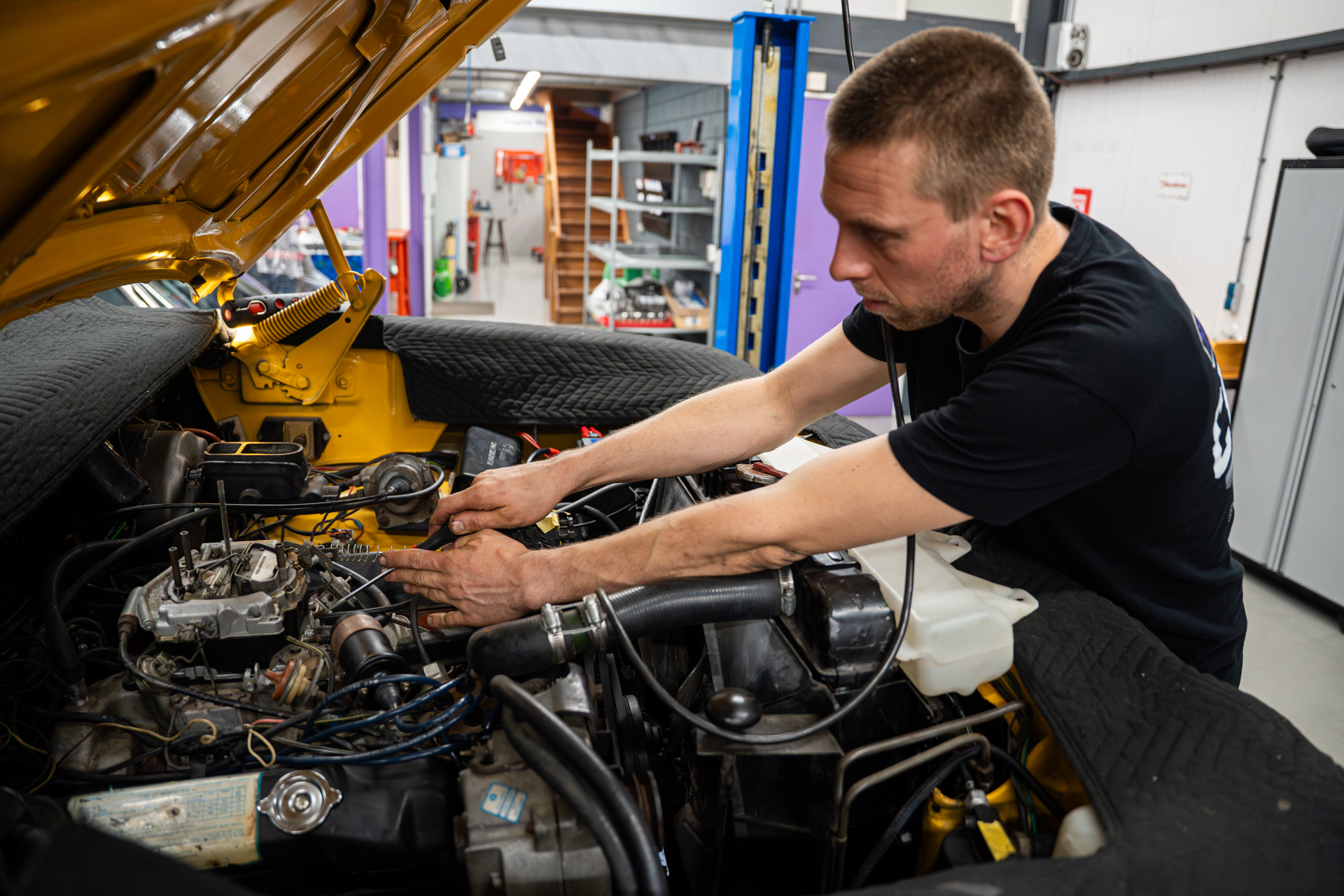
The engine and transmission are the heart of a classic American muscle car. They define how the car sounds, feels and performs, and after decades of use, even a well-kept drivetrain eventually needs more than a tune-up. A proper rebuild restores reliability and strength, and it does so in a way that respects what the car is.
At PTTM, rebuilds are carried out with the same care and attention to detail as any larger project. We approach each drivetrain as a complete system, so that the finished result is not just freshly assembled, but properly built to last.
What We Rebuild
- Big block and small block V8 engines, in original or performance specification
- Manual transmissions, including Muncie 4-speeds
- Automatic transmissions, including Turbo-Hydramatic and Powerglide units
- Rear axles and differentials
- Clutches, driveshafts and related drivetrain components
When a Rebuild Makes Sense
Not every problem calls for a rebuild, and we will tell you when it does not. A rebuild is worth considering when:
- Compression or leak-down testing shows internal wear
- The engine consumes oil, makes bearing or piston noise, or has lost power
- Metal is found in the oil or the transmission fluid
- A transmission slips, grinds, jumps out of gear or shifts poorly
- The car is being prepared for a new life after a long period of storage
- You want more power or better reliability from a drivetrain that has reached the end of its service life
Before recommending a rebuild, we diagnose the problem properly, so you only invest in work that is actually needed.
Our Rebuild Process
- Assessment. We inspect and test the unit to confirm what is wrong and what is not.
- Teardown. The engine or transmission is fully disassembled, cleaned and documented.
- Measuring and inspection. Every critical component is measured against specification, including cylinder bores, crankshaft journals, bearing clearances, gears and housings. Parts are reused only if they are genuinely in good condition.
- Machining and parts. Machine work is carried out to precise tolerances, and quality replacement parts are fitted where needed.
- Assembly. The unit is built carefully, with correct clearances, torque values and assembly procedures.
- Testing. Where possible, the finished engine or transmission is tested before it goes back in the car, so any issue is found on our side rather than yours.
- Installation and break-in. We install the unit, set it up properly and follow the correct break-in procedure.
Original or Upgraded
Some owners want their drivetrain rebuilt exactly to factory specification, particularly with numbers-matching cars where originality matters. Others want better performance, improved drivability or modern reliability. We can build to either direction, and we will advise on what suits the car and the way you use it, including how any changes affect its originality and value.
Numbers Matching and Originality
On a numbers-matching car, the original engine and transmission are a major part of its identity and value. Where the original components can be saved, we will say so, and we handle them with that in mind.
Client Priority and Availability
Clients who have purchased a vehicle through PTTM are given priority for rebuild work. We also consider projects from outside clients, depending on workshop capacity. Rebuilds are time-intensive, and our focus is on quality and proper execution rather than volume.
Discuss a Rebuild
If your engine or transmission needs attention, or you are planning a rebuild as part of a larger project, please get in touch using the form below. Describe the car, the symptoms and what you are hoping to achieve, and we will advise on the appropriate next steps.
Frequently Asked Questions (FAQ):
Classic American V8 engines were built to different tolerances and require different fluids, different service intervals, and different diagnostic approaches than modern vehicles. Most flat-tappet camshaft engines used in these cars require engine oil with adequate ZDDP content – a zinc and phosphorus additive package that modern low-viscosity oils formulated for roller-cam engines do not provide in sufficient quantities. Using the wrong oil accelerates camshaft wear significantly. Carburetor-fed fuel systems, points-based or early electronic ignition systems, and manual drum brake setups all require hands-on knowledge that a general workshop without specific experience in these cars will not have. Our team works on these vehicles every day.
As a general baseline, engine oil and filter should be changed every 3,000 to 5,000 kilometres regardless of how much the car has been driven, because oil sitting in a non-running engine accumulates moisture and degrades over time. A full mechanical inspection covering the cooling system, brakes, fuel system, ignition, belts, and hoses should be carried out at least once a year even on cars used sparingly. Classic cars that are stored over winter should be correctly prepared before storage and inspected before being returned to road use in spring.
Cooling system work is the most frequent – radiator repairs or replacements, thermostat replacements, water pump rebuilds, and hose replacements. Carburetor rebuilds and fuel system work follow closely. Brake system repairs including drum adjustments, caliper rebuilds, and brake line replacements are regular workshop work. Ignition system faults, from distributor wear to coil failures, are also common on cars that have not been regularly maintained. We also carry out electrical system diagnosis, which on cars with 50-year-old wiring requires patience and specific knowledge of period-correct electrical systems.
Yes. Drivability issues on classic cars – rough idle, hesitation under acceleration, overheating, fuel delivery problems – often require someone with specific knowledge of the platform and the era to diagnose correctly. Modern diagnostic equipment is largely irrelevant on these cars. Experience with how these systems behave and fail is what matters. Bring us the car and describe exactly what it is doing – the more detail you can give us about when the problem occurs and under what conditions, the more efficiently we can find it.
Yes. We work on both original-specification cars and cars that have been fitted with modern LS, LT, or Coyote V8 engines, upgraded fuel injection systems, or other modern mechanical components. Our workshop handles the full range from period-correct original drivetrains through to fully modernized pro-touring builds.
Yes. Please contact us before bringing your car in so we can assess the scope of work, allocate the right workshop time, and ensure the correct parts and equipment are available. Walk-in work is not something we accommodate. Contact us at sales@pttmcars.com or call +31 6 25 19 61 76 to book.
Depending on your location and the nature of the work required, we can discuss transport arrangements. Contact us with your location and a description of the car’s condition and we will advise on the most practical approach.
Pedal to the Metal workshop is based in Sneek, Netherlands. Contact us at sales@pttmcars.com or +31 6 25 19 61 76 to discuss your car’s maintenance or repair needs.
Get in Touch
We’re happy to discuss your plans and advise on the right next steps. Whether you’re considering a purchase, planning a restoration or build, or exploring options for selling or registration.