

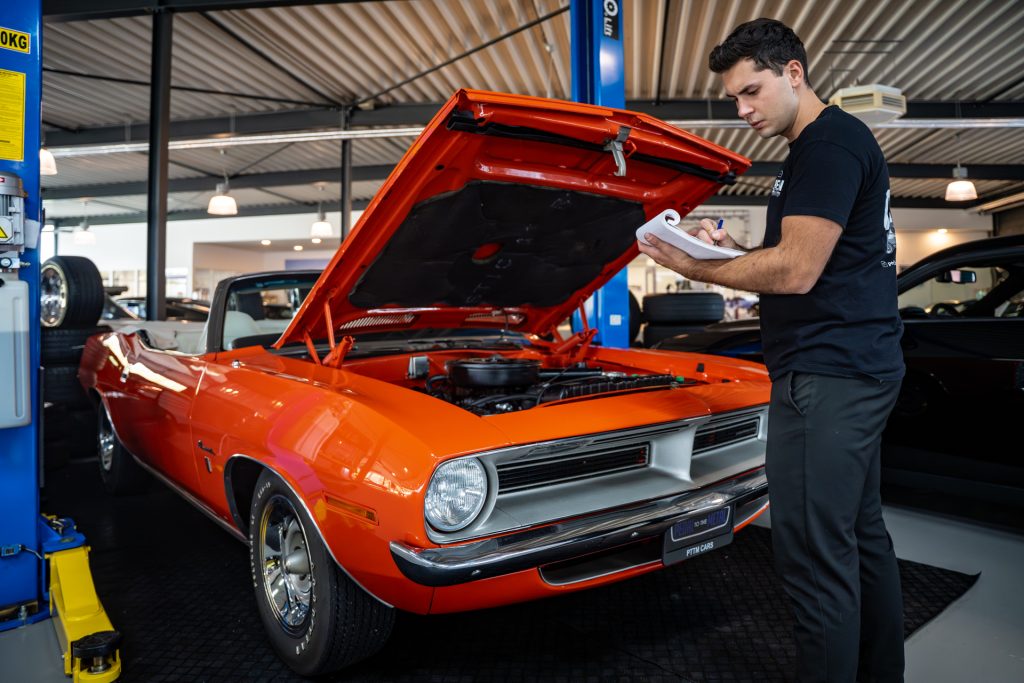
Appraisal Expertise
Trade-in & Valuation
Accurate valuations based on condition, authenticity and current market context. Whether trading in or selling, we provide a considered assessment to support informed decisions.
Explore Dodge Power Wagons for sale at Pedal to the Metal. Derived from Dodge’s WC-series military trucks of the Second World War, the Power Wagon went on sale in March 1946 as a one-ton civilian 4×4, and US sales continued until 1968. Our focus is these flat-fender trucks: pickups with an 8-ft bed, plus cab-and-chassis and cowl-and-chassis versions, on a 126-inch wheelbase. Power came from a 230 flathead six, replaced by a 251 in 1961, through a four-speed manual gearbox and a two-speed transfer case, and a front winch and power take-off were available. We also offer later W-series and modern Ram Power Wagons from time to time.
If your ideal Dodge isn’t in our current inventory, we can help you find it. PTTM sources high-quality classic and collector cars, with worldwide delivery available.
Choose by era, body and intended use. The 1946–1950 first-series trucks, starting with the WDX, are the earliest civilian Power Wagons. Second-series trucks of 1951 to early 1956 brought revised bed sides and dashboard, and the third series from late 1956 was renamed W300, then W300M and WM300, with the 251 six from 1961 and later a synchronised NP420 gearbox.
From 1957, Dodge also used the Power Wagon name on its conventional W100, W200 and W300 4×4 trucks, built until 1980. The modern Ram Power Wagon, revived for 2005, is a heavy-duty off-road pickup with a Hemi V8.
The bed, dashboard and model code give the clearest clues. First-series trucks of 1946–1950 have four rectangular stake pockets per side and a round speedometer, and were coded WDX, then B-1-PW and B-2-PW. The 1951 to early 1956 second series has three slightly curved stake pockets and four silver-faced gauges, with B-3-PW to C-3-PW codes. The third series has square stake pockets, a flat bed top and black-faced gauges, and cab-mounted cowl lights were used until 1964.
Start with identity. Check that the serial number on the frame rail or cab tag falls within the published range for the claimed year and plant, and that the engine number suits the truck’s year. Power Wagons share their origins with Dodge’s military trucks, so confirm which parts are civilian Power Wagon components. Then inspect the frame, cab, bed and wheels, and check that any winch and power take-off are complete and working.
On restomod and pro-touring cars, judge the quality of the components and workmanship. PTTM can share the information available on a car and discuss any further inspection.
Series, body and equipment set the starting point. An early WDX, a documented original truck or one with its factory front winch and power take-off sits in a different market from a later truck with replaced components. Within any specification, value reflects originality and matching drivetrain components, documentation and condition, factory options and colour, and the quality of any period work body.
Unrestored survivors, restored cars and professionally built restomods are each valued on different terms. Compare the whole car and its records alongside the price, and PTTM can help you define a realistic search.
Registration or title documents with a serial number matching the vehicle are the foundation. For a Power Wagon, the owner’s manual and shop manual list serial numbers by year and model, and specialist enthusiast resources publish serial ranges by assembly plant, so the truck’s identity can be checked. Original invoices, service records and details of any work body add weight where they survive. Restoration invoices and photographs show what has been done since. Imported vehicles should carry their import papers, and PTTM’s Registration Service can guide European registration.
Yes, PTTM can assess your current car and discuss a trade-in towards a Dodge purchase. Send us its make, model, year, mileage, photographs and available history, along with details of the car you are interested in. Trade-ins are not automatic: each proposal is considered individually, based on condition, documentation and market demand.
Possible structures include equal-value exchanges and trades with a cash adjustment on either side, agreed transparently in advance.
The Power Wagon brought Second World War 4×4 engineering to civilian buyers and is widely described as the first civilian production 4×4 truck. Its chassis and front sheet metal follow the WC military trucks, while the cab styling comes from the 1939 Dodge civilian truck. It worked on farms, utility fleets and in rural service, and US sales ran for more than two decades, with export versions built into the 1970s. Individual trucks stand out through originality, documentation, rare equipment and condition, and a well-sorted driver can be as rewarding as a concours restoration.
It depends on how you plan to use the truck. With a flathead six, a 5.83:1 standard axle ratio and a low-range transfer case, an original Power Wagon suits unhurried driving, shows and off-road work rather than long motorway journeys. An original or factory-correct restored truck suits buyers who value authenticity. A restomod adds modern brakes, suspension and comfort for regular use. PTTM offers both, from factory-correct restorations to custom restomod and pro-touring builds. Tell your sales advisor how and how often you plan to drive, so we can recommend suitable vehicles or discuss a project.
Yes. Our Personalized Car Search service can look beyond our current inventory. Tell us your preferred series and body, equipment such as a winch, whether original or modified, and colour, condition and budget.
We identify suitable trucks and help assess their condition, history and authenticity. Early WDX trucks, unrestored originals and trucks with their factory winch and power take-off can take longer to find, and we will give you an honest expectation of timing. Search terms are agreed before we begin, and you are never obliged to proceed with a vehicle we present.
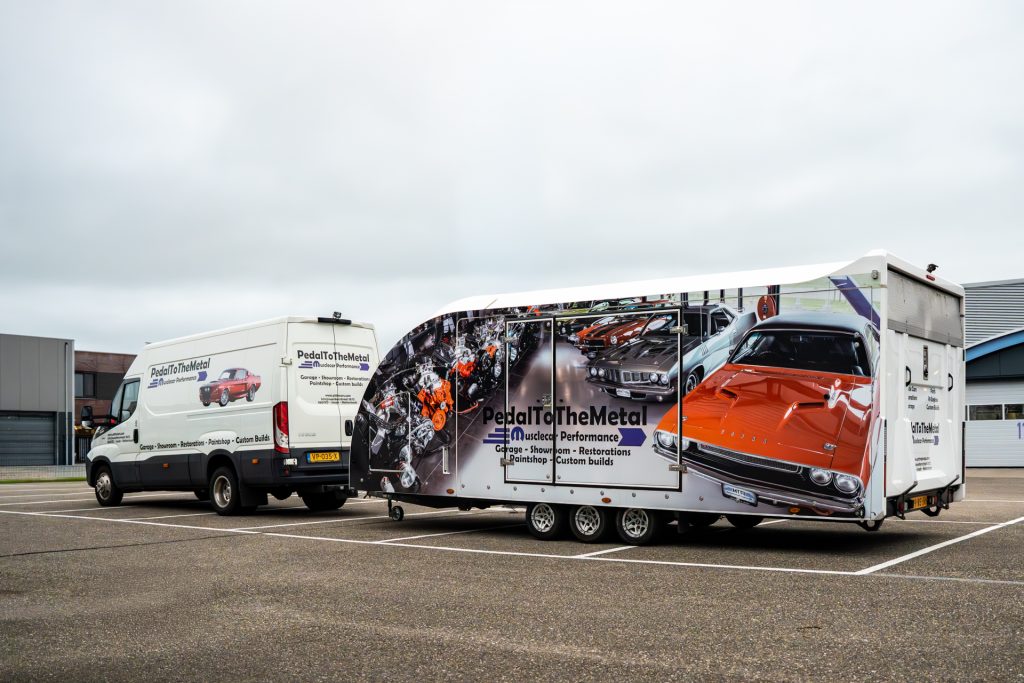
Yes. PTTM works with buyers across Europe and overseas and can coordinate transport to your country. Within Europe, cars travel by road with our own trailers or trusted partners. Intercontinental deliveries normally go by sea freight, and air freight is available on request. We confirm the transport method, insurance, costs and estimated timing for your destination before you commit. Import requirements vary by country, so share your destination when enquiring and we can explain the options.
We’re happy to discuss your plans and advise on the right next steps. Whether you’re considering a purchase, planning a restoration or build, or exploring options for selling or registration.
